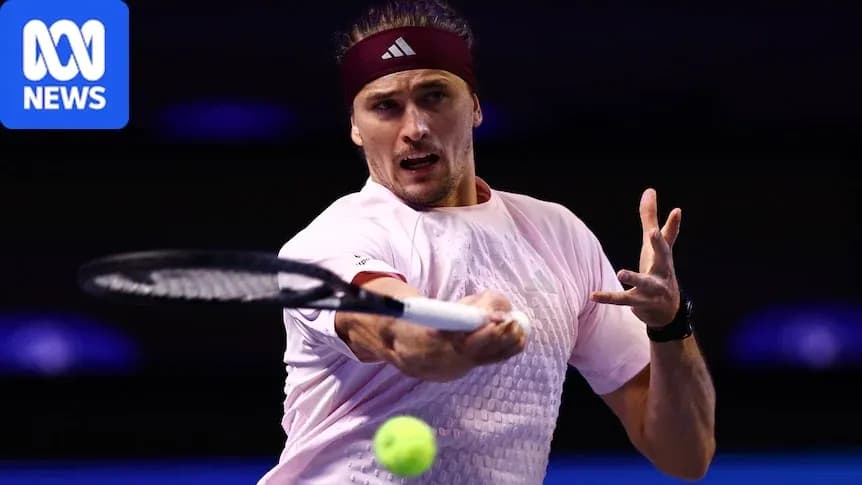
Alexander Zverev: A Decade of Persistence to World No 1
Alexander Zverev spent a decade staring up at a mountain that refused to move. First, the rock face was called Federer, Nadal, Djokovic and Murray. Then, just as the cracks finally began to show in the Big Four, two new names carved themselves into the skyline: Jannik Sinner and Carlos Alcaraz.
On Monday, at 29, Zverev will stand on the summit at last. World No 1. Officially, statistically, historically.
A generation’s nearly man finally arrives
Zverev has lived most of his career in the shadows of eras. He was the prodigy of the 2010s, the towering shot‑maker tipped to inherit men’s tennis, yet his route to the top was barricaded at every turn.
He collected big titles – two ATP Finals crowns, an Olympic gold medal in Tokyo – but the majors refused to bend. While Sinner and Alcaraz turned promise into Grand Slam trophies, Zverev became the player who threatened, who pushed, who almost.
This season tore that script up.
With Alcaraz’s year disrupted by a wrist injury and Sinner halted by knee trouble, Zverev did what so many before him had failed to do in the gaps between giants: he owned the calendar. He found another gear, another level of stubbornness, and walked through the doors that opened.
Roland Garros. Flushing Meadows. Two Grand Slam titles in one season, plus a Wimbledon final for good measure. That body of work, built on consistency and durability, has carried him past Sinner to the top of the rankings and made him the 30th man to reach No 1 since 1973.
“It’s incredibly special,” Zverev said. “It’s something I’ve worked towards for years and you have to show great tennis the whole year to be in this position.”
The climb that almost broke
This isn’t a story of a smooth rise. Zverev had been within touching distance before.
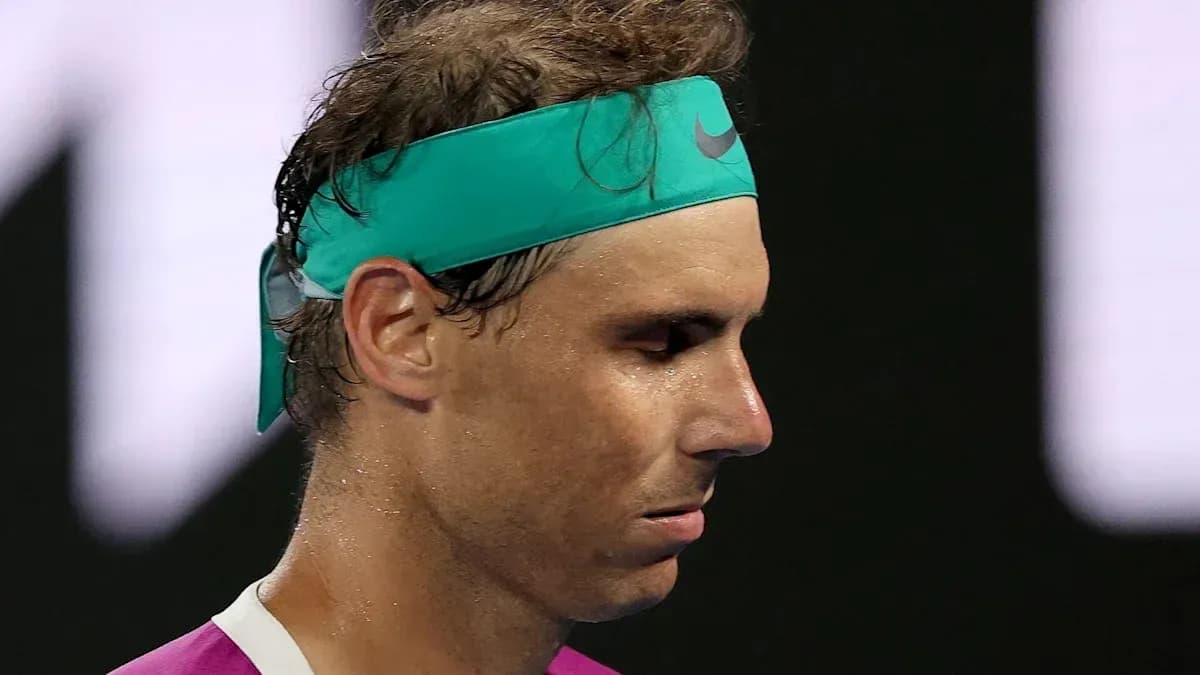
At the 2022 French Open he was toe‑to‑toe with Rafael Nadal in a brutal semi-final when his ankle buckled. The injury was gruesome, the timing cruel. His momentum vanished in a single fall. By the time he returned, the landscape had changed again: Sinner and Alcaraz were no longer chasing; they were collecting. Between them, they now own 12 majors.
Zverev’s own big-stage scars ran deeper than that one afternoon in Paris. There were the lost Grand Slam finals, the chances that slipped away under the heaviest lights. Yet he refused to accept that the story had already been written.
“I’ve had a lot of difficult moments in my career: the lost grand slam finals, the injury in 2022,” he said. “But I always somehow kept believing, kept going. This year I also took the step of changing my game a little and rebuilding it, at 29. The way this season has gone is a dream.”
Rebuilding at 29 is not the usual path to No 1. It is, however, the only one that made sense for a player whose talent was never in doubt but whose peaks too often came in isolation.
A late-blooming No 1 in a fractured era
Zverev will be only the second world No 1 – after Daniil Medvedev – from the group of players now in their late 20s and early 30s who emerged during the Big Four’s rule but never managed to shove them aside. For years, that cohort looked destined to be remembered as the lost generation, good enough to threaten, not ruthless enough to dethrone.
Now one of them has the ranking to prove he outlasted the chaos.
There will still be arguments. His 3–8 record against top-10 opponents this season offers ammunition to those who question whether the number beside his name makes him the best player on the planet. But rankings are not built on highlight wins alone.
Noted coach Patrick Mouratoglou framed it bluntly: staying on court is a skill.
“A player is not only performing on court, it’s also being healthy, managing your body,” Mouratoglou said. “If someone is never injured and others are often injured, the one that’s not injured will probably end up having a higher ranking … staying healthy when you’re a professional athlete is a real skill.”
For Zverev, who has managed type 1 diabetes since childhood, that durability has never been a given. This season, his body held. His level held with it.
Success under a cloud
His rise has not played out in a vacuum. Zverev’s path to No 1 has been marked by turbulence away from the court, with allegations of domestic abuse that he has consistently denied.
A German court closed a case involving his former partner Brenda Patea earlier this year after a 2024 settlement, without a finding of guilt. The ATP ended a separate investigation into allegations made by Olga Sharypova in 2023, citing insufficient evidence.
Those episodes have shadowed his results and coloured the public conversation around him. They will not disappear simply because a ranking has changed.
Ready – at last – for the weight of No 1?
Zverev insists that arriving at this point later in his career has left him better equipped for what comes next: the scrutiny, the demands, the target on his back.
“The number one position brings a lot with it,” said Zverev, who follows Boris Becker, in 1991, as Germany’s second men’s world No 1. “You have to be a good role model, do a lot of things right and on court that means more than returning and serving well.”
He knows the chase is not over. Sinner and Alcaraz will not vanish; they will heal, reload, and come again.
“I still have Carlos and Jannik,” he said. “Hopefully, I can keep competing with them over the next few years.”
For the first time in his career, they are the hunters and he is the man at the top of the mountain. How long he can stay there, in a sport that has rarely been more volatile, is the next question he has to answer.