Venus Williams' Late-Night Exit at the US Open
The lights were still blazing on Arthur Ashe Stadium. The clock said 2am. The seats, once promised as a primetime showcase for an American great, were mostly empty.
This was not the send-off anyone had in mind for Venus Williams.
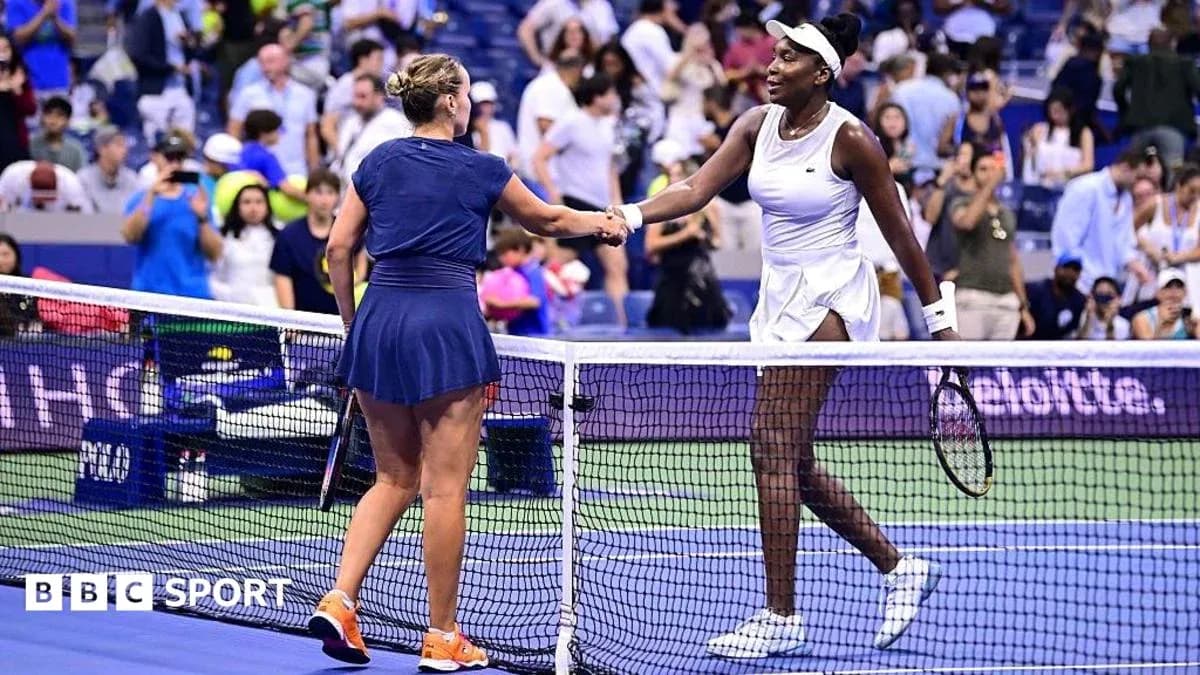
The 46-year-old had been handed a wildcard and a Sunday night slot at the US Open, a stage worthy of a seven-time Grand Slam champion who might be playing her final singles match in New York. Instead, she and Sofia Kenin walked out just after midnight on Monday, long after the headliner had finished and the city’s last trains were filling up.
Kenin did her job, winning in straight sets. The spectacle, though, had already slipped away.
Venus did not hide her frustration. The scheduling, she said, was “not ideal” and “wasn't great” for either player’s conditioning. It was her 15th singles defeat in a row, a stark number, but one wrapped inside a wider story: tennis’ increasingly bitter argument over late finishes, player welfare and the money that drives the modern Grand Slam.
Why tennis keeps pushing into the night
Three of the four majors – the Australian Open, Roland Garros and the US Open – now live on a split personality. Day session. Night session. Two separate products, two separate ticketing windows, one stadium.
In New York, that means organisers pick two matches – one men’s, one women’s – from 7pm, after a full day of play. The logic is blunt and unapologetic: revenue.
Every seat in Arthur Ashe can be sold twice, once for the day, once again for the night. The evening tickets usually cost more. They suit fans who work during the day and they tend to guarantee at least one big name under the lights. It’s tennis as event theatre, priced accordingly.
Then there is television. The US Open’s domestic broadcaster, ESPN, has committed $2.04bn to show every match until 2037, an eye-watering $170m a year. Primetime in the US stretches late, with flagship talk shows only starting around 11pm. Late-night tennis slots into that ecosystem neatly. Those hours mean premium advertising rates. Premium advertising rates mean bigger rights deals.
On the balance sheet, the night session is a triumph.
On the court, it can be a mess.
When a five-setter blows up the plan
The Williams–Kenin delay began far away from them, on Novak Djokovic’s racquet. His five-set loss to Mariano Navone dragged past four hours. It was compelling, chaotic, and exactly the kind of drama broadcasters pay for.
It also wrecked the schedule.
By the time the players for the second match stepped on to Ashe, it was after midnight. By the time they finished, the 23,933 seats were dotted with only the hardiest fans. What was billed as a primetime celebration of an icon had become a graveyard shift.
And this is the fundamental problem with tennis’ flirtation with late nights: no one knows how long anything will last. A men’s match can run past four or five hours. A three-set women’s match can comfortably clear three. Stack them back-to-back, add changeovers, warm-ups and ceremony, and the second act can easily be finishing at 3am.
Tournament directors know that is possible every single night. They schedule as if it is not.
Wimbledon’s hard stop – and softer wallet
Across the Atlantic, Wimbledon has taken a different path. Play starts at 11am. It stops at 11pm. If a match is not done, the players come back the next day.
Those rules can irritate when a contest is within a few games of the finish and the umpire calls time. But they offer certainty. Players know the limits. Fans know they will not be stranded at Southfields in the early hours. Local transport, local residents and local routines are respected.
There is another key difference. Wimbledon’s main broadcaster, the BBC, does not live or die on advertising slots. It does not need to manufacture guaranteed midnight epics to satisfy commercial partners. The financial pressure to squeeze every last second out of the night simply is not the same.
The contrast exposes the trade-off. Where tournaments chase maximum revenue, night sessions stretch later. Where the broadcast model is less commercial, the finish line comes earlier.
Players push back
For players, the late finishes are not just an annoyance. They are ammunition.
Scheduling has become a central part of an ongoing fight between the locker room and the four Grand Slams over money, workload and respect. Late-night starts, limited recovery time, ballooning media demands, and long-term issues like pension contributions all sit on the charge sheet.
At Roland Garros and Wimbledon, top names including Coco Gauff, Aryna Sabalenka and Jannik Sinner have scaled back their media duties, a pointed protest at what some see as unfair conditions. The message: if tournaments can squeeze every commercial drop out of the product, players want a bigger share and a stronger voice.
That pressure has already forced movement. Wimbledon and the US Open have agreed to increase prize money from 2026. A new Grand Slam players advisory council will launch after this US Open, promising players more say in how the majors are run.
What that means for late-night tennis is still unclear. The council has not yet set out its agenda. But the mood in the locker room is obvious: most players hate finishing in the middle of the night, then trying to recover for the next round on a few hours’ sleep.
The cost of change
Any serious attempt to rein in late finishes will collide head-on with the numbers. Start the night session earlier? New York organisers say even 7pm is tight for working fans. Cut it to one match instead of two? That reduces the ticket value and slashes guaranteed primetime content for broadcasters.
And if broadcasters pay less, the overall revenue pool shrinks. When that happens, the first place everyone looks is prize money.
So the sport stands in a familiar stalemate. Players want better conditions and more control. Tournaments want to protect the financial model that has sent prize pots soaring. Broadcasters want drama, preferably in the most lucrative slots of the evening.
Venus Williams, walking off Ashe in the small hours after another early exit, sits right at the intersection of that conflict: a legend of the game, given a marquee stage, undercut by the very system that built that stage in the first place.
The question now is simple and uncomfortable for tennis’ powerbrokers: how many more 2am finishes will it take before the sport decides that the price of those late-night lights is finally too high?