US Open Day 3: Gauff, Keys, and Zverev in Action
The US Open is only two days old, and already the draw looks shaken. Upsets have ripped through the men’s singles, seeds have scattered, and Day 3 arrives with a schedule that feels more like a second week than a settling-in period.
Queens is bracing for another long, loud day.
Gauff, Keys and Rybakina headline a loaded women’s slate
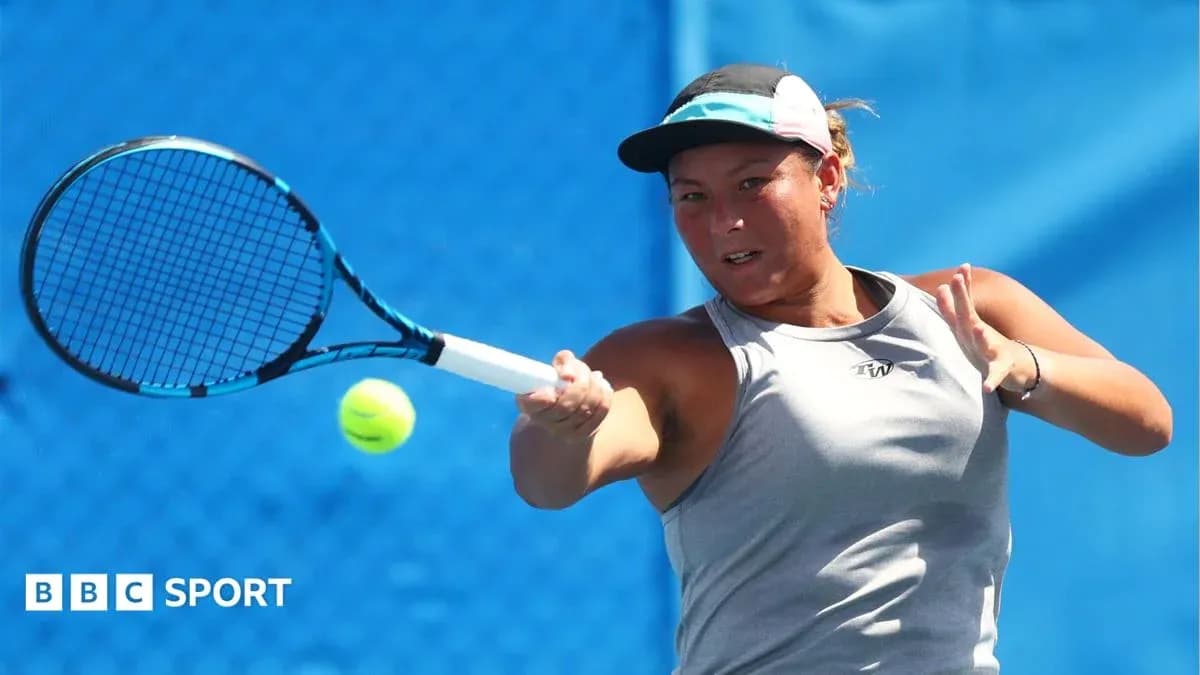
Coco Gauff steps into the New York night again, this time against Zeynep Sonmez at 7 p.m. ET. It’s the kind of prime-time stage she now treats as home territory, and with the United States boasting more players in the main draw than any other nation, she remains one of the faces of the host country’s hopes.
Before Gauff takes the court, the women’s day session is stacked.
The schedule opens at 11 a.m. ET with Maria Sakkari against Robin Montgomery, and a run of matches that rarely lets up. Elena Rybakina, seeded second in the tournament, faces Thea Frodin in the morning wave, while Belinda Bencic meets Yulia Putintseva and a string of hungry qualifiers and wildcards try to punch through the noise.
Madison Keys, a familiar force in New York, gets underway at 11:30 a.m. ET against Alina Korneeva. Later in the early afternoon, Daria Kasatkina faces Paula Badosa in one of the day’s more intriguing stylistic clashes, with their 1:10 p.m. ET start tucked into a congested mid-day window.
The conveyor belt of talent continues: Jelena Ostapenko against Tatjana Maria at 1:40 p.m. ET, Elise Mertens versus Kaitlin Quevedo at 1:50 p.m. ET, and a run of matches that stretches deep into the afternoon with Magda Linette, Mayar Sherif, Magdalena Frech and others all on court.
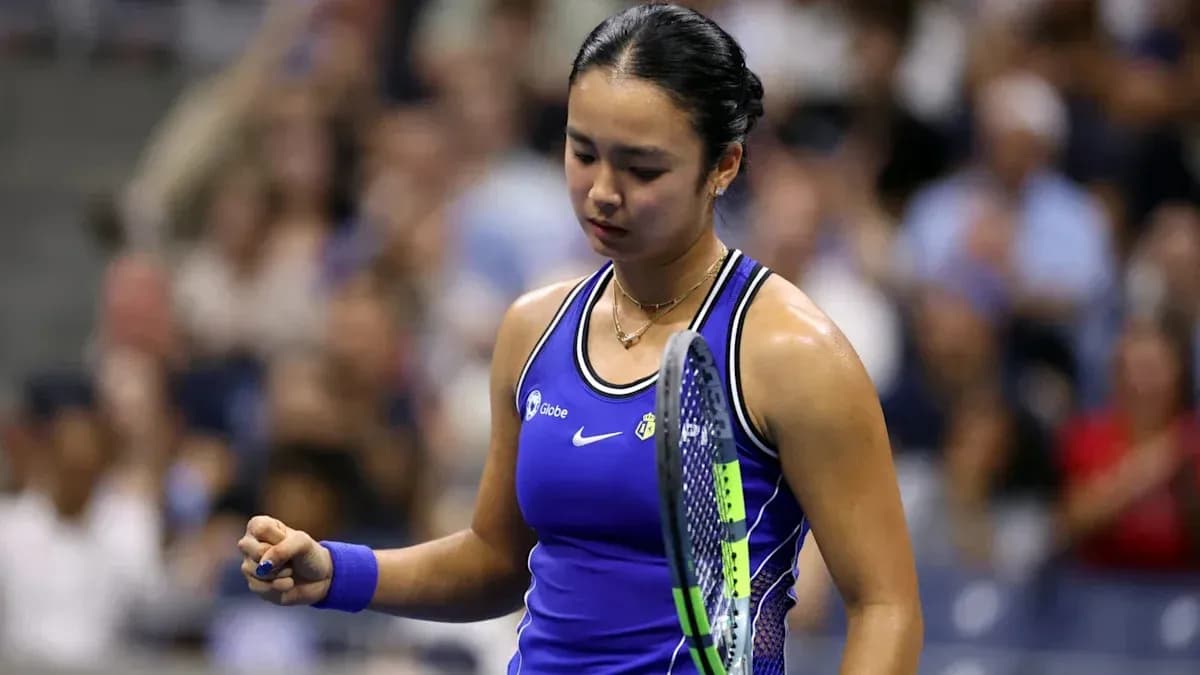
The night session doesn’t belong only to Gauff. At 8:40 p.m. ET, Alexandra Eala meets Mary Stoiana, a late-slot opportunity on one of the sport’s biggest stages.
One notable absence: Anastasia Potapova’s match against Terez Valentova has been cancelled, a rare blank space on an otherwise relentless order of play.
Zverev, Fritz and Monfils carry the men’s spotlight
On the men’s side, the storylines have already shifted. With Jannik Sinner ruled out injured before the tournament, the draw belongs to a new hierarchy. Alexander Zverev arrives as the top seed, Carlos Alcaraz as No. 2, and Felix Auger-Aliassime as No. 3. The early chaos in the men’s singles only sharpens the focus on those names.
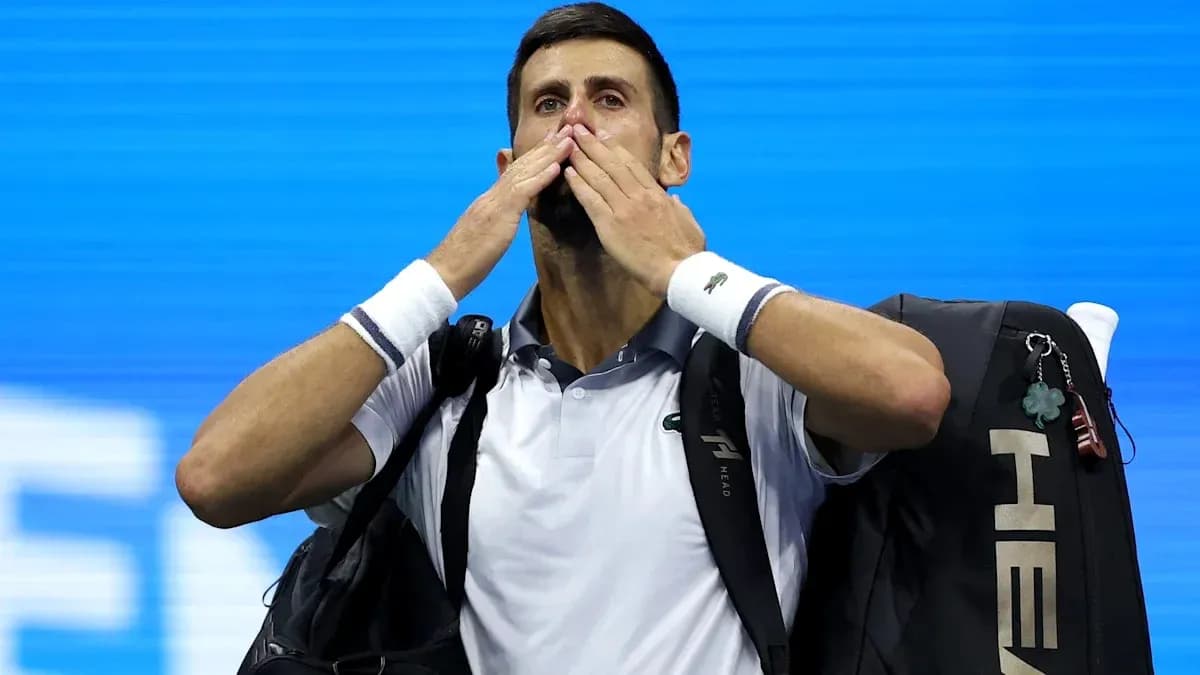
Day 3 gives Zverev center stage in the night session. He faces Lorenzo Sonego at 8:10 p.m. ET, a match that should test both his rhythm and his resolve under the lights. Just before that, Gael Monfils brings his trademark flair to the evening, taking on Adolfo Daniel Vallejos Álvarez at 7 p.m. ET. Few players light up New York like Monfils; few crowds respond quite like this one.
The day starts at 11 a.m. ET with a flurry: Francisco Comesana vs. Flavio Cobolli, Mattia Bellucci vs. Zsombor Piros, Dane Sweeny vs. Corentin Moutet, Nishesh Basavareddy vs. Tristian Schoolkate, and Filip Misolic vs. Francisco Cerundolo. It’s the kind of dense opening block that defines the early rounds here, courts buzzing simultaneously, stories starting quietly on the outer courts.
Taylor Fritz, one of the American standard-bearers, steps in at 12:50 p.m. ET against Darwin Blanch. With the U.S. fielding 28 players in the main draw—more than any other nation—Fritz’s progress will be watched closely, especially with Ben Shelton and others also pushing to go deep.
Jan-Lennard Struff faces Camilo Ugo Carabelli at 12:10 p.m. ET, while Lorenzo Musetti meets Arthur Fery at 1:10 p.m. ET. The mid-afternoon sees a steady drumbeat of matches: Carlos Taberner vs. Zizou Bergs, Jesper de Jong vs. Francesco Passaro, and a double bill at 2:20 p.m. ET with Rafael Jodar vs. Yunchaokete Bu and Juan Manuel Cerúndolo vs. Arthur Gea.
By late afternoon, the card is still full. Fabian Marozsan meets Michael Zheng, Zachary Svajda faces Daniel Altmaier, and Alex Molcan takes on Benjamin Bonzi at 2:50 p.m. ET. At 3 p.m. ET, Jan Choinski plays Botic van de Zandschulp, followed by Marcos Giron vs. Ignacio Buse at 4:30 p.m. ET and Alex de Minaur vs. Andrea Guerrieri at 5 p.m. ET.
It’s a marathon, not a session.
A three-week New York epic
All of it unfolds inside the USTA Billie Jean King National Tennis Center in Queens, where the 2026 US Open stretches across three weeks, from Sunday, August 23, to Sunday, September 13.
The structure is familiar, the stakes anything but.
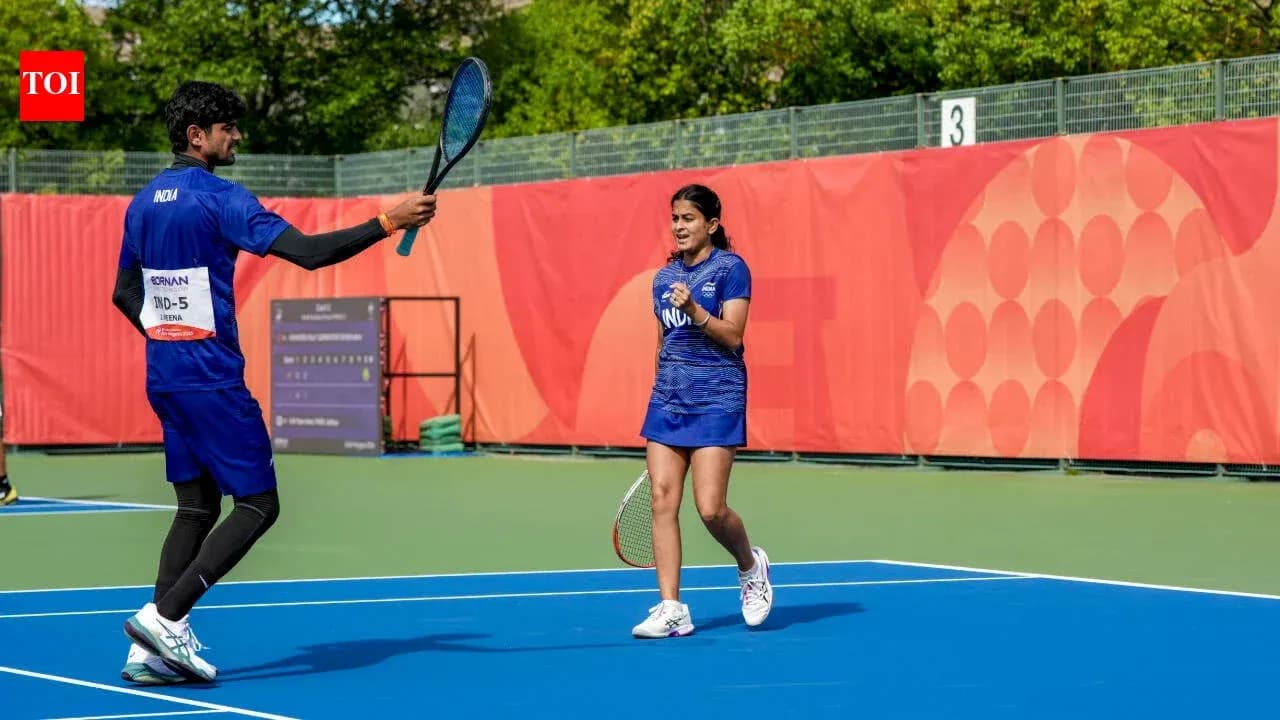
Qualifying for men’s and women’s singles, along with mixed doubles, runs from August 24–27. The main singles draws occupy August 30–September 13. Mixed doubles, already decided with Karolina Muchova and Jakub Mensik of Czechia lifting the trophy, wrapped between August 24–26. Men’s and women’s doubles take over from September 3–12, with junior events and wheelchair competitions sharing that window from September 3–12 and September 8–12 respectively.
The closing weekend is set in stone. The Women’s Doubles Final lands on Friday, September 11. Saturday, September 12, carries the Women’s Singles Final and the Men’s Doubles Final. The Men’s Singles Final, as always, closes the curtain on Sunday, September 13.
How to actually watch it
For fans, the question is simple: how do you get eyes on all of this?
In the United States, ESPN holds exclusive broadcast rights, with some matches also airing on ABC or through the ESPN app. Cable subscribers are covered. Cord-cutters need a little more planning.
ESPN’s own streaming service offers live sports and archived programming starting at $29.99 per month. Live TV streamers fill in the rest: DirecTV’s base package costs $59.99 for the first month and includes ABC and ESPN+, while Fubo’s Sports plan, at $65.99 per month, carries ABC, ESPN and ESPN 2, with a quarterly option available. Sling’s Essentials plan offers ESPN and ESPN 2 for $19.99 per month, and even a $4.99 Day Pass for those who only want to dip in. YouTube TV’s Sports Plan includes ABC, ESPN and ESPN 2 at $64.99 per month.
Those looking to watch without paying long-term can lean on free trials. DirecTV, FuboTV and YouTube TV all offer trial periods that may cover key stretches of the tournament.
Outside the U.S., the landscape shifts again. In Australia, 9Now will stream the 2026 US Open for free. Viewers in the U.S., UK or elsewhere who can’t access local free options may turn to a virtual private network (VPN) to reach that coverage. Services like ExpressVPN, with servers spread across the globe, allow users to connect to an Australian server, visit 9Now and stream the action as if they were there.
The steps are straightforward: subscribe to a streaming-friendly VPN, download the app, connect to a server in Australia, then head to 9Now. Many VPNs, including top-tier options, offer free trials, which means a carefully timed sign-up can deliver Grand Slam tennis without a long-term bill.
One last, very modern detail: viewers chasing the smoothest on-screen motion can switch on their TV’s motion-smoothing feature for live play, then remember to turn it off when the tennis stops to avoid the dreaded soap-opera look on everything else.
A field thick with champions
Strip away the broadcast logistics and the schedule grids, and the essence of this US Open lies in the names on the draw sheet.
Seventeen former Grand Slam singles champions are in the field, 10 of them past US Open winners. On the men’s side, the absence of Sinner shifts weight onto Zverev, Alcaraz and Auger-Aliassime at the top of the seeding. On the women’s side, Aryna Sabalenka leads the rankings as No. 1, with Rybakina at No. 2 and American Jessica Pegula at No. 3.
The United States sends 28 players into the main draw, the largest contingent of any nation. Alongside Pegula and Gauff, names like Amanda Anisimova, Ben Shelton, Fritz and the evergreen Venus Williams give the home crowd more than enough reasons to raise the volume.
Day 3 will not decide the title. It rarely does. But with stars on Ashe, drama on the outside courts, and a draw already rattled by early shocks, it will shape the path to the second week—and reveal who truly looks ready to own New York in September.