Untold Raygun: Breaking Badly - A Documentary Unraveled
Netflix’s new documentary on Rachael Gunn opens like a love story and unravels like a public inquest.
Untold Raygun: Breaking Badly starts with Gunn – better known by her breaking name Raygun – and her husband Samuel Free, or “Sammy (Sex)” as he’s dubbed on screen, moving in sync. They connect over a shared obsession with dance. He becomes her coach. The cameras linger on their wedding, where the first language of the relationship is obvious: choreography, not conversation. Even the vows feel like a prelude to a routine.
That intimacy makes what follows sting a little more.
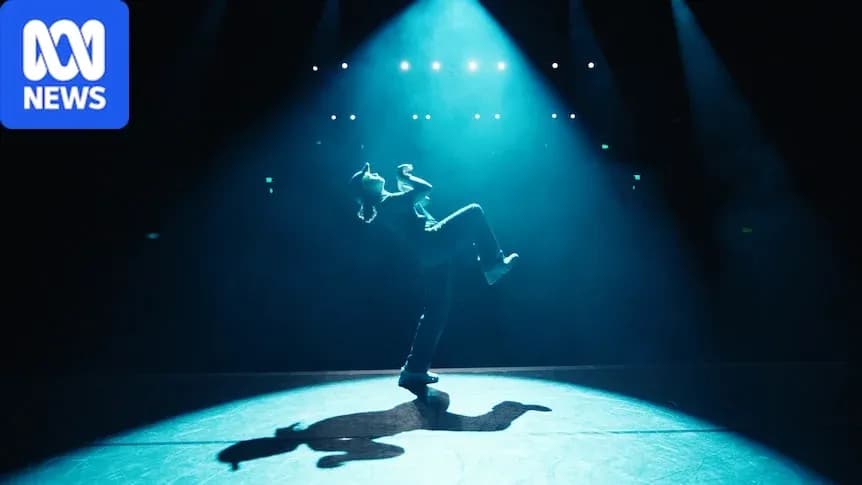
By now, everyone knows how Raygun’s Olympic debut in Paris ended. Her breaking performance went viral, not for its precision or power, but for a string of idiosyncratic moves – the kangaroo, the sprinkler – that detonated across social media. Memes. Skits. Conspiracy theories. A tidal wave of opinion, from sneering ridicule to fierce defence.
Within hours, she wasn’t just an Olympian. She was a pop culture flashpoint, dissected by everyone from Snoop Dogg to Adele.
The documentary peels back the curtain on how someone so obviously unready ended up on the most scrutinised stage in sport.
In the countdown to Paris, Gunn looks exposed. The film shows an athlete with almost no high-performance scaffolding around her. No deep bench of coaches. No obvious support team tuned to the ruthless demands of an Olympic debut – and not just any debut, but the first time breaking has ever appeared at the Games.
She does, however, see the storm coming.
“Right before the Olympics, I went to my therapist and panicked,” she says. The therapist asks the classic question: what’s the worst that could happen? Gunn’s answer lands like a prophecy. The whole world could laugh at her. Days later, that’s more or less what happens.
Her parents, Russell and Beverly, still see the girl from the suburbs. In the film, they smile at the idea they ever imagined her as an Olympian. Her mother recalls the early years: ballet, tap, jazz – the traditional stepping stones – before breaking took over. Her father admits that on his way to Paris, he thought he was travelling to console a daughter who had simply fallen short, not one who had become a global punchline.
Outside the family bubble, the reaction is harsher.
B-Girl Tinylocks, a respected figure in the breaking scene, doesn’t sugarcoat her disgust. She calls Raygun’s performance appalling and wonders aloud how it could all have gone so wrong. Tinylocks never tried out for the Olympics herself, a decision framed in the film as coming from how seriously she takes breaking as an art form.
This is the sting in the tail: Raygun wasn’t just representing herself. She was representing a culture on the day it walked into the Olympic spotlight for the first time.
Another veteran, B-Girl Flix, adds a more personal twist. She has known Raygun for 15 years and considered her a friend. Watching from afar, she says she felt “offended” and “embarrassed” by the routine. The hurt in that assessment underlines just how high the emotional stakes were for the breaking community.
The documentary rewinds to show excerpts from Raygun’s Olympic qualifier, where she faces B-Girl Molly. Both dancers look tight, almost frozen by the occasion. The footage strips away any myth of an unstoppable phenom. Neither appears especially polished; neither looks like a finished product ready for the Olympic glare.
In Paris, the judges are unequivocal. Raygun fails to earn a single vote in any of her rounds. For all the noise that followed online, the sport’s arbiters had already delivered their verdict in silence.
What the film does best is give Gunn room to breathe inside that chaos. Large chunks of screen time are dedicated to her version of events: the build-up, the moment itself, the backlash that swallowed her life. Over the top of early scenes, her voiceover sets the tone.
“Sometimes this all feels like a really wild dream,” she says. “It’s like I’ve been charged with some crime.”
The documentary tracks the cost. Gunn reveals she has walked away from her job in academia, the stable parallel life that once ran alongside her breaking career. The decision hangs there, unresolved, as the credits approach. No neat redemption arc. No quick fix.
Untold Raygun: Breaking Badly doesn’t clear her name in the court of public opinion, and it doesn’t try to. It shows a couple who built a dream around dance, a culture furious at how that dream played out on its biggest stage, and an athlete standing in the wreckage, trying to decide what comes next.
For Raygun, the question now isn’t how the world will judge her last performance. It’s whether she dares step back into the spotlight for another.