Tyson Fury's Urgent Search for a New Opponent
Tyson Fury is running out of road.
Boxing has always been the most improvisational of sports, a business where plans dissolve overnight and careers pivot on a phone call. Even by those standards, Fury’s weekend scramble felt frantic. With his proposed superfight against Anthony Joshua collapsing under the weight of venue politics, the heavyweight from Manchester tried to spin the wheel again.
This time, he turned back to an old rival: Oleksandr Usyk.
Fury reaches for a familiar name
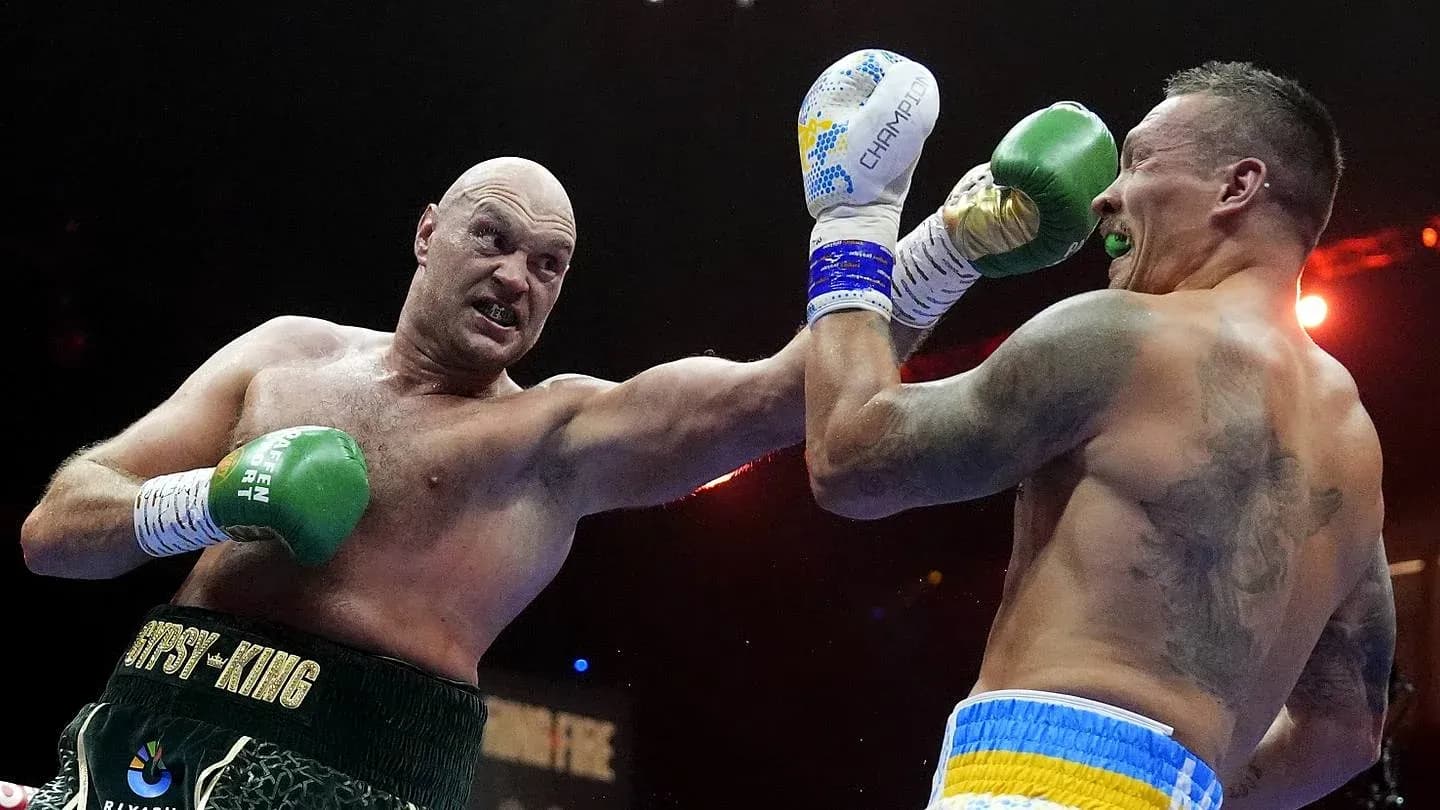
In Fury’s mind, Usyk was the obvious fallback. A proven draw. A legacy name. A man he knows well after 24 hard rounds across two fights.
The problem? Usyk and his team don’t see it that way.
The former undisputed heavyweight champion is approaching the end. He has spoken openly about a final outing, a “last dance” to close a generational career on his own terms. One more fight, the right fight, then the curtain.
That doesn’t sound like a man itching to jump into a hastily arranged trilogy.
His camp certainly don’t think so. For a fighter on the brink of retirement, they view a short-notice November date as a bad fit, the wrong stage for a farewell that’s supposed to define a legacy, not patch up somebody else’s schedule.
So Fury went public.
A call-out laced with urgency
Speaking to Sky Sports, Fury tried to drag Usyk back into the spotlight and onto his timeline.
“You got the decisions last time; fair play to you. Good luck to you; let's do it again. Let's run it back in November. The ball is now in your court... do you want to fight me this year, 2026, or are you calling it quits? Let me know because I am now looking for a new opponent.”
It sounded less like a confident champion setting terms and more like a man trying to pin down a date before the calendar shuts on him.
Because this isn’t really about Usyk. It’s about November 2026.
Fury wants that slot. He wants a name. He wants relevance. With the Joshua fight stuck in neutral, he’s searching for someone, anyone, who can fill the void.
Joshua, Wembley, and a battle for control
The Fury–Joshua saga stalled on a familiar fault line: location and control.
Fury signed off on New York. Madison Square Garden. The historic arena, the American spotlight, the sense of spectacle that still matters in heavyweight boxing.
Joshua’s side pushed back. They want Wembley. They want the home roar, the English stadium packed with 90,000 fans, the kind of night that cements a British era on British soil.
Over all of it looms Turki Alalshikh, the Saudi powerbroker behind Zuffa Boxing. His vision stretches beyond one fight. He wants more of the American market, more nights that resonate in the United States, more events that feel global, not local. From that vantage point, New York makes sense. Wembley doesn’t.
So the biggest all-British heavyweight fight of this generation sits in limbo, trapped between geography, ego, and strategy.
And Fury, restless by nature, has turned his attention elsewhere.
Usyk’s dominance still lingers
The awkward truth for Fury is that the Usyk chapter already feels closed.
Across two fights and 24 rounds, the Ukrainian solved him. Outboxed him. Controlled the tempo. There were moments of jeopardy and pockets of drama, but not enough to convince anyone that a third meeting is necessary.
If those contests had been razor-thin, Fury could lean on controversy, on debate, on the old boxing arguments that fuel trilogies. They weren’t. Usyk’s superiority over the series leaves little room for a credible demand to “run it back.”
From Usyk’s perspective, there is no obligation here. No belt to reclaim. No score to settle. No financial desperation. He has earned the right to choose his final act.
And his team made that very clear.
“Usyk is not Tyson's backup plan”
Sergey Lapin, Usyk’s manager, dismissed the idea that his fighter would be dragged into Fury’s scramble.
"Usyk is not Tyson's backup plan. If Fury needs an opponent, he should visit the Ready to Fight platform. They can help him find a worthy opponent there."
The sarcasm cut through the noise. It painted Fury not as the lineal heavyweight king calling shots, but as a star searching the marketplace for whoever is left.
It also underlined a blunt reality: Fury’s leverage is fading.
The Joshua fight, the one that could define his era, keeps slipping away. The Usyk trilogy, the quickest way to reinsert himself into the pound-for-pound conversation, is off the table. The man he’s chasing doesn’t need him. The man he really wants to fight won’t budge on terms.
So what now?
A heavyweight at a crossroads
Fury can still find an opponent. He always can. The division is full of names who would jump at the chance to share a ring with him, especially on a big November date.
But will it be the kind of fight that shapes a legacy? Or just another night to fill a slot on the calendar?
Right now, the answer to one question is clear: Tyson Fury will not be sharing the ring with Oleksandr Usyk in November.
The bigger question hangs over everything else: if the Joshua stalemate drags on and Usyk walks away for good, who will Tyson Fury be fighting for when the music finally stops—an opponent, or his own place in heavyweight history?