Test Cricket's New Era: Matches Ending Faster Than Ever
Test cricket used to be a five-day examination. Increasingly, it feels like a sprint.
As rain held up the start of Day 3 of England’s second Test against Pakistan, Michael Atherton sat in the Sky Sports studio and put words to a trend that has been staring the sport in the face: modern Tests are racing to the finish line. Many never even glimpse a fifth day.
Australia and Bangladesh had just packed an entire Test into two breathless days in Mackay, the latest in a growing catalogue of matches that barely make it to the weekend.
‘The Test matches are going quicker’
Atherton, the former England captain and now one of the game’s sharpest analysts, laid out a simple, uncomfortable truth: this is not a blip. It is the new landscape.
“If I give 4-5 reasons from the top of my head, we would go into each one: batting is higher risk now because of T20 cricket. If you take more risk, you have more chance of getting out. There's a good crop of fast bowlers around right now. DRS has had an impact; umpires are more likely to give LBWs,” he said on air, as England’s players milled around during the delay.
That first point cuts to the heart of it. Batters raised on T20 do not block and leave all day. They drive on the up, they pull from off stump, they look to dominate. It makes for thrilling passages of play, but it also means edges, mis-hits and collapses come thick and fast.
The pressure finally told in the numbers.
Pitches with teeth
Atherton didn’t leave it at batting intent. He went straight to the surfaces and the structure of the modern game.
“Pitches have become more advantageous since the advent of the World Test Championship; teams are generally looking to get home advantage more. So, whether it is turning pitches in India, or seam-friendly pitches in England, pitches have become more bowling-friendly since the advent of WTC,” he said.
The logic is ruthless. With World Test Championship points on the line, curators are arming home attacks. India lean into raging turners. England lean into green seamers. Other nations follow suit in their own way. The old, slow, lifeless deck that drifted for five days is becoming a relic.
Then there is DRS. With technology backing them up, umpires are more willing to raise the finger for lbw. Marginal calls that once drifted in the batter’s favour now swing the other way. Front pads are no longer safe armour; they are a target.
Layer on top a “good crop of fast bowlers around right now”, as Atherton put it, and you have a perfect storm: attacking batters, spicier pitches, empowered umpires, high‑class quicks.
The result? Tests that burn fast.
The numbers that tell the story
Sky Sports flashed up the data during the England–Pakistan Test. It was stark.
In the 1970s, 77.65% of Tests lasted all five days. Nearly eight in ten games went the distance.
By the 2010s, that figure had already dropped to 54.76%. Just over half.
In the 2020s, it has collapsed to 41.43%. Fewer than half of all Tests now reach a fifth day.
At the other end of the scale, the short Tests – the ones that feel over almost before they’ve begun – have multiplied. Only 2.79% of Tests in the 1970s finished within two or three days. In the 2020s, that share has rocketed to 23%. Almost a quarter.
Atherton drew on his own playing days to underline the shift. “When Nas (Nasser Hussain) and I were playing in the 1990s, the number of games finished in three days or less was around about 7 per cent (6.98 per cent). And that is now 20 per cent, so that is a big difference,” he said.
One in five Tests now ends inside three days. That used to be a curiosity. It is edging towards normal.
Then came the statistic that stopped even seasoned watchers in their tracks.
“In the last decade (from 2017-current), there have been nine occasions where Test matches have finished in two days, and there wasn't a single two-day Test between 1946 and 2000. The Test matches are going quicker,” Atherton noted.
Nine two‑day Tests in less than a decade. None in the 54 years before that.
What kind of Test cricket does the game want?
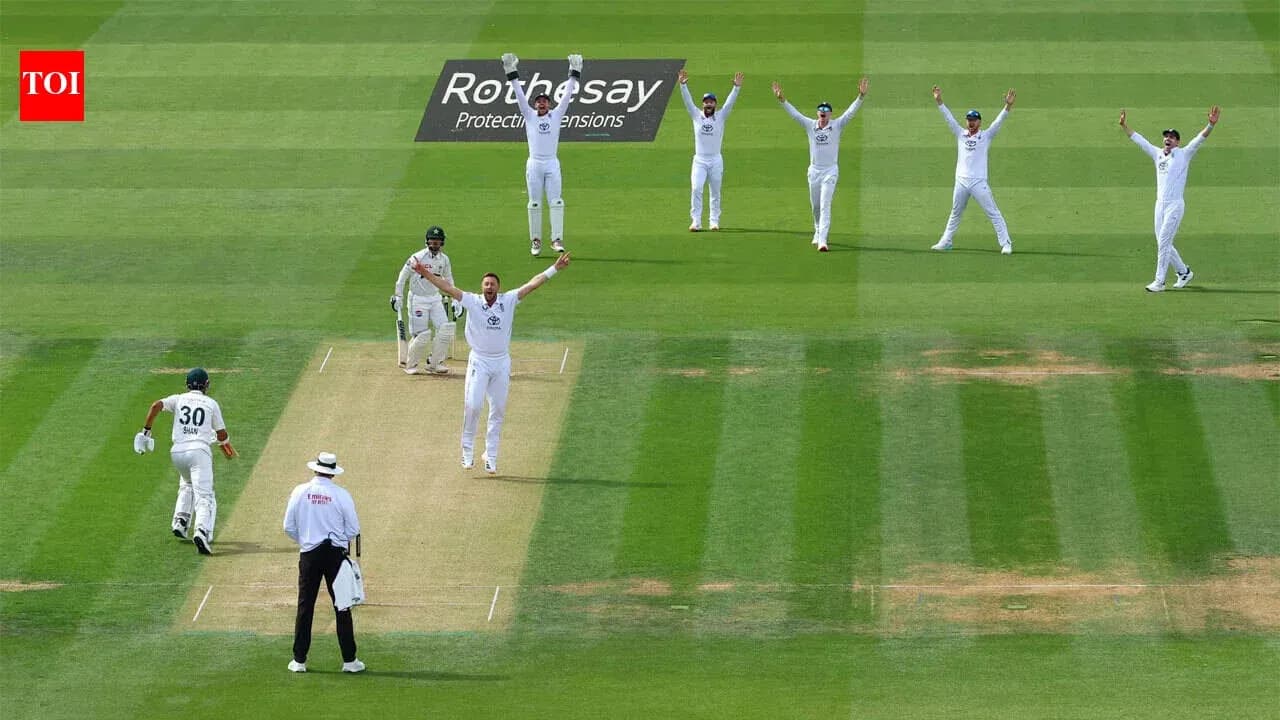
The image from Friday summed up the era: England’s fielders up in unison, appealing hard for the wicket of Pakistan’s Azan Awais, hunting another breakthrough in a match that always felt one session from tilting.
This is the modern rhythm. Spells of high‑octane action, wickets in clusters, games decided in three, sometimes even two days. Broadcasters lose their fifth‑day revenue. Purists lose their slow-burn narratives. Bowlers, at least, have their fun.
The numbers say this is no passing phase. The sport has changed its tempo. The only real question now is whether Test cricket can keep its soul while it keeps getting shorter.