South Africa’s Fast-Bowling Crisis Deepens with Ngidi Injury
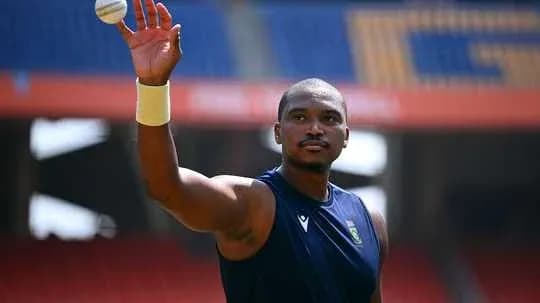
Lungi Ngidi has limped into the one South African fast-bowling club no one wants a membership card for.
The injury list is starting to look like a pace cartel: Kagiso Rabada, Ottneil Baartman, Lutho Sipamla, Nandré Burger – and now Ngidi. Four of the five are down with the same problem. Hamstrings. Again.
South Africa’s fast-bowling crisis grows
Cricket South Africa confirmed on Friday that Ngidi has been ruled out of the ODI series against Australia, which starts at Kingsmead on Thursday. The timing could hardly be worse, but the diagnosis is grimly familiar.
Like Rabada, Baartman and Sipamla, Ngidi has been sidelined by a hamstring injury. Burger is the outlier, battling a back issue that has flared up once more. Different body part, same headache for the selectors.
What’s going on with South Africa’s quicks? The pattern is obvious enough that medical experts are not exactly shocked.
“It’s not surprising, because if you look at any sport there are two peaks in hamstring injuries — the beginning of the season and the end of the season,” Shuaib Manjra, CSA’s former chief medical officer and national men’s team doctor, told Cricbuzz.
At the start of a campaign, he explained, players go from rest to full throttle in a matter of days.
“Players who have been taking breaks and suddenly there’s a ramp upward in activity. They go into the season and it’s high impact stuff, and they get injured because they’re not accustomed to it. Towards the end of the season it happens because there’s muscle fatigue and that causes it. So it’s not surprising.”
Ngidi’s breakdown fits the script. He was injured in Centurion last Friday, playing in the opening round of first-class matches for the Titans against the Dolphins. It was the first red-ball outing of the season. It may cost him far more than a domestic fixture.
Like Rabada, Ngidi has not been given a clear return date. CSA have declined to predict whether he will be fit for the Test series against Australia, which starts in Durban on October 9. Those games, not the ODIs, are the real prize.
WTC defence under threat
South Africa are defending World Test Championship champions, their victory over Australia in the final at Lord’s in June last year still the high point of this generation. Protecting that title is the priority. A “relatively random” ODI series, as some inside the camp see it, pales by comparison.
That is why a short, five-second clip of Rabada posted on his social media accounts on Wednesday sent a ripple of optimism through South African cricket. No full run-up, no snarling bouncer, just a gentle spell off a few paces. But the sight of the country’s premier fast bowler back with ball in hand was enough to shift the mood.
The challenge is not only getting them back on the park. It’s how they get there.
Rabada has not played any match since May. Burger last bowled in a game in June. Sipamla only returned to action last month after being out since July. Baartman also hadn’t played since July before his recent setback. These are not niggles; they are long layoffs that demand meticulous planning.
For fast bowlers, that means a slow, deliberate climb in workload. Overs in the legs. Spells that stretch the lungs and the muscles without snapping them. Rush that process and the hamstrings will remind you who’s in charge.
“The other risk for a hamstring injury is a previous injury,” Manjra said. “You’re more likely to pick up another injury if you go back too early.
“Doctors have a saying that the highest risk of an injury is a previous unrehabilitated injury. So we have to ensure that the player is fully rehabilitated, otherwise they are vulnerable.”
Ngidi’s workload dilemma
Ngidi’s case carries an extra twist. This is not a bowler coming in cold.
He played six ETPL games for Glasgow Cosmic between August 27 and September 6, sending down 120 of a possible 144 deliveries. That’s a meaningful workload without being extreme. Enough overs, on paper, to harden the body for the South African summer.
Yet he still broke down.
There is another way to read that schedule. Some will argue that Ngidi should have been managing his build-up more carefully, prioritising a structured pre-season over franchise commitments. South Africa’s calendar is loaded with eight Tests in the coming months. Every step, every spell, is supposed to be geared towards that.
But the counter-question is brutal and simple: who makes up the shortfall if he stays home? Ngidi is a professional cricketer. Those ETPL games pay his bills. Unless someone is prepared to compensate him for the money lost by skipping such leagues, the debate remains more moral than practical.
Either way, South Africa are without him now.
New faces, new pecking order
The response from the selectors has been swift. Nqobani Mokoena has been drafted in to replace Ngidi in the ODI squad. Gerald Coetzee comes in for Rabada, while Duan Jansen fills the gap left by Baartman.
Sipamla and Burger were not in the original ODI group, but in a parallel universe where they were fit, the domino effect of these injuries would almost certainly have pulled them closer to the national XI. Instead they watch from the treatment room as others jump the queue.
Marco Jansen will lead a remodelled ODI attack, with Corbin Bosch and Kwena Maphaka also in the frame. There is talent there, plenty of it. There is also inexperience, and a sense that South Africa are one more strain away from a full-blown fast-bowling crisis.
The hamstring club has enough members already. The question now is whether the medical staff, selectors and players can keep the door shut before the Test summer – and the defence of that WTC crown – starts to creak.