Rodri's Bold Move: From Manchester City to Barcelona
Rodri didn’t just change clubs this summer. He walked away from an era.
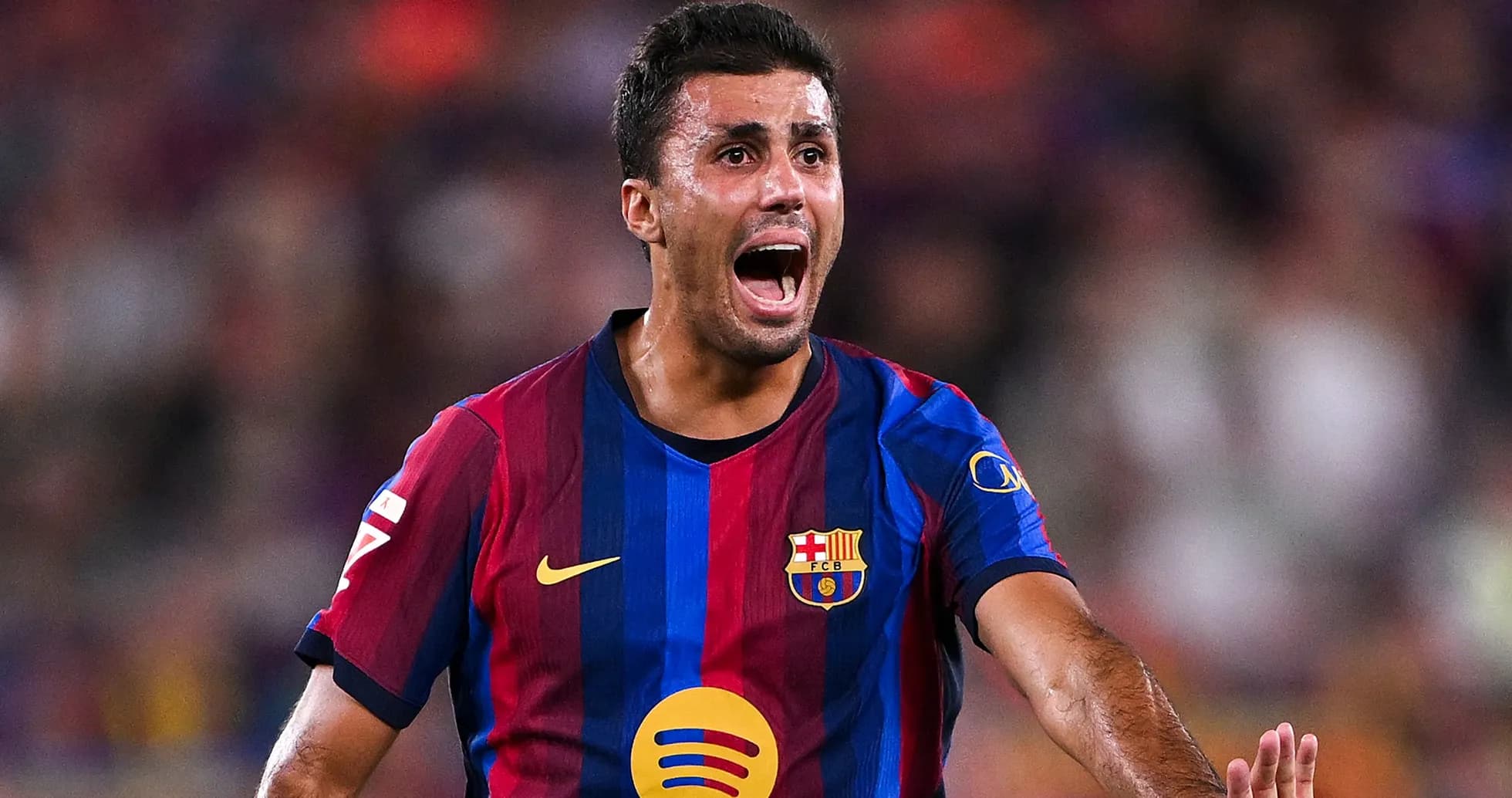
The 2024 Ballon d’Or winner, the metronome of Manchester City’s dominance, chose Barcelona over Real Madrid in a move that cut straight through the heart of Spanish football’s fiercest rivalry. England to La Liga. Guardiola’s empire to Hansi Flick’s project. And, crucially, the Bernabéu left watching.
From Etihad cornerstone to Camp Nou centrepiece
For years, Rodri felt immovable at City, the pivot around which everything spun. His departure always seemed a question for the distant future, not the next window. Yet, as he tells it, the break came gradually, not with a dramatic rupture.
“It’s been a process, rather than a decision,” he told Mundo Deportivo.
First came the realisation that his cycle in Manchester was closing, that the hunger for a new challenge had crept in. Only then did Barcelona’s call arrive — and once it did, the path sharpened.
“The moment the opportunity at Barcelona arose, I realised it was the best thing for me for many reasons,” he said. No talk of salary, no hint of commercial pull. Just football.
Flick, Deco and a football-first pitch
Rodri’s move was framed by many as a tug-of-war between Spain’s two giants. Real Madrid wanted him badly. Their interest was real, persistent, and serious. For them, seeing him in blaugrana is more than a missed signing; it’s a strategic blow.
Yet inside Rodri’s mind, the equation was simpler: where could he win, grow and enjoy his football the most?
“I’ve always based my decisions on sporting considerations – where I believe I’ll be able to win, be happy and, above all, develop as a player,” he said. Barcelona, as he saw it, offered exactly that. Not just a badge, but a blueprint.
He name-checked the people driving it. Hansi Flick on the touchline. Deco upstairs. A generation of players around him that made sense, not just on paper but in his own vision of the game. “That’s why I’ve chosen Barca – also because of the generation of players they have and what Hansi is building there. Ultimately, Deco and Hansi, at the top of the organisation, convinced me.”
It wasn’t the language of nostalgia or romance. It was the language of a player reading a project and backing it.
Saying no to Madrid
Turn down Real Madrid once and they remember. Turn them down for Barcelona and it lingers for years.
Rodri didn’t pretend it was easy. “I had to weigh up a lot of things and make such an important decision between two of the best clubs in the world,” he admitted. Madrid treated him “exceptionally well,” and he made a point of underlining that. No bridges burned, no drama. Just a choice.
In the end, it came down to what stirred him more. “I made my decision based on sporting considerations – on what sparked a bit more enthusiasm in me and on understanding where I could win and develop the most as a player. It wasn’t an easy decision at all; saying no to Madrid wasn’t easy.”
The Bernabéu will feel the rejection. Barcelona will savour the symbolism.
A ‘family club’ pitch, not a hard sell
Behind the scenes, Barcelona’s approach struck a different tone. No ultimatums. No pressure. No countdowns in the media.
Rodri spoke of a “very homely, like a family club” atmosphere during talks. That detail matters. At his level, clubs often push hard, crowding a player’s space. Barcelona chose a softer line.
“At no point did they put any pressure on me whatsoever; everyone expressed their desire to have me on board, to work together, and to see what I could bring to the team,” he said. The conversation centred on football, on roles, on responsibilities, on what he could add “both on and off the pitch.”
He liked that. It felt aligned with how he sees his own career: controlled, deliberate, rooted in the game itself rather than everything orbiting it.
Ballon d’Or storm left to one side
All of this unfolded in the shadow of a separate drama: Real Madrid’s boycott of the Ballon d’Or ceremony, where Rodri beat Vinicius to the award. The optics were explosive. The narrative almost wrote itself – snub at the gala, snub in the market.
Rodri refused to feed it.
“Anyone who knows me knows that I try to distance myself from that sort of thing, like the media hype,” he said. He insisted the controversy around the ceremony did not shape his decision. His focus, he repeated, stays on the pitch.
“In that sense, I’m very English, aren’t I? The Premier League is football and little else.”
That line lands with weight. After years in England, he has absorbed the culture of stripping the noise away and narrowing everything down to 90 minutes, 50-50s and passing lanes.
Now he brings that mentality to a Barcelona side trying to rebuild its identity under Flick, while Madrid reloads and remembers the one that got away.
Rodri has chosen his side of the divide. The rest of Spain will spend the season judging whether he picked the right one.