Rodri Chooses Barcelona: A Transfer That Shifts Power
Rodri’s decision to join Barcelona already feels bigger than a routine summer transfer. It cuts deeper, touches status, identity and rivalry, and drags the old fault line between Barcelona and Real Madrid back into sharp focus.
This was not a whim. Not a romantic return to Spain. Not a late twist engineered by agents in a hotel lobby.
According to Mundo Deportivo, the Spain midfielder weighed up offers from both Barcelona and Real Madrid before choosing the Camp Nou, and his explanation opens a window into how the very best now measure their careers. He did not speak about billboards or branding. He spoke about football.
A choice built on the sporting project
Rodri described a process that was anything but calm. Two giants trying to pull him away from Manchester City, his summer break interrupted by calls, meetings, persuasion. He insisted he had to step back and assess the “full picture” before moving.
In the end, he went where he believed the sporting pathway was clearest. The place that stirred just a little more excitement. The environment where he felt he could both win and grow.
That distinction matters. In an era when transfer sagas often dissolve into noise about wages and shirt sales, Rodri anchored his choice in the pitch. Barcelona’s leadership, with Deco and Hansi Flick at the heart of it, convinced him that their project had the sharper edge. They laid out how he would be used, how the team would be built, how his influence would shape the next cycle.
This is where big transfers are really won. Not in the headline fee, but in the detail of the plan, the quality of the conversation, the conviction with which a club explains a player’s role. Barcelona, for once, sounded like a club with a joined-up idea.
Respect for Madrid, clarity for himself
What stood out just as much was how Rodri spoke about the club he turned down. He did not trivialise Real Madrid. He did not pretend it was easy.
He underlined how difficult it was to say no and highlighted the “exemplary” way Madrid handled the talks. That is the language of a player who understands the size of the institution he has rejected. Refusing Madrid still carries weight in Spanish football. Rodri did not try to downplay that.
His remarks about José Mourinho, who pushed hard to bring him to the Bernabéu, added texture. Rodri said: “Bueno, no creo que sea lo suyo desvelar una conversación privada, pero evidentemente expresó sus ganas de que fuera y de lo que podía aportar al equipo. El trato fue muy bueno. Cuando tomé la decisión también le llamé para agradecer el interés y el trato. Me parece un grandísimo entrenador, ya lo ha demostrado allá donde ha ido en sus grandes etapas y el Real Madrid va a ser un duro rival para esta Liga.”
Polite, careful, but genuinely appreciative. He chose Barcelona, but he still picked up the phone to thank Mourinho personally. In a sport that often chews through courtesy and spits it out, that kind of gesture stands out.
He closed the door, but he did it cleanly.
Barcelona win the argument, not just the race
There is another layer here that Barcelona fans will latch onto quickly. Rodri did not frame his move as an escape from Manchester City. He did not present it as a reaction to frustration or a need to flee England.
He cast it as a positive pull towards Barça.
That nuance gives this transfer more authority. Barcelona are not simply the beneficiaries of circumstance or chaos elsewhere. They persuaded a player at the peak of his powers, with a concrete alternative at Real Madrid, that their project was the one to back.
Rodri also refused to feed the theatre around off-field theories and political noise surrounding Madrid’s interest. He pushed all that to the side and stressed that his focus stayed on football, his national team, and his own trajectory. That is the voice of a player who has lived at the summit long enough to understand the value of keeping distance from the circus.
His final observation, that in England football largely remains about football, landed with a hint of contrast. It sounded like someone shaped by the relentless demands of the Premier League, but ready for a new type of pressure, a different kind of spotlight, a different storm.
A rivalry reignited in the middle of the pitch
If Rodri hits his usual level, this is not just another big-name arrival in La Liga. It is a signing that can tilt Clasicos, shape title races, and redraw the map of control in Spain’s biggest games.
Barcelona have taken one of the sport’s most complete midfield organisers: a player who dictates tempo, kills chaos, and gives his team a sense of certainty when matches fray. They have done it while beating Real Madrid to his signature.
That carries symbolism that stretches well beyond a single deal. It speaks to pull. To planning. To the enduring magnetism of the Barcelona name at a time when their finances and results have been questioned from every angle.
For Madrid, there will be irritation, but little shame. They moved decisively, made a strong case, and treated the player with respect. They simply lost out to a rival who, on this occasion, sold a clearer vision.
For Barcelona, the satisfaction runs deeper. They have landed a player who knew exactly what the alternative looked like, who heard Madrid’s pitch in full, and still chose the Camp Nou.
The Manchester City vacuum
Seen from Manchester, the story feels different again.
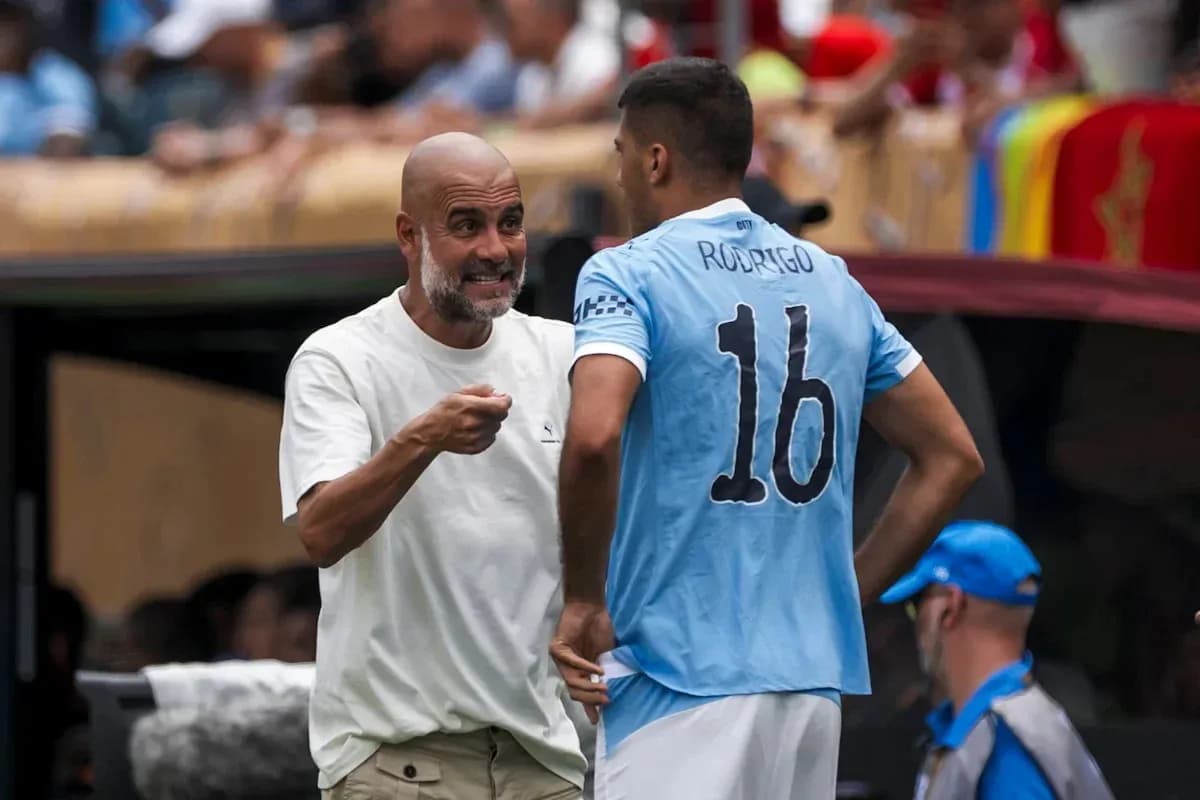
On one side, there is pride. Rodri has become the midfielder both Barcelona and Real Madrid wanted most. That alone says everything about his standing in the modern game. In Manchester he evolved into the calm in the storm, the organiser in possession, the anchor that kept a superteam balanced.
On the other, there is that familiar sense of intrusion, the feeling City fans know well when Europe’s old aristocracy circle around their stars as if they naturally belong in their orbit. This version of Rodri was forged in the Premier League. He carried enormous responsibility under the harshest glare and grew into one of the most influential players on the planet.
If he has gone, City supporters will likely wish him well while staring at the gap he leaves behind. The questions are brutally simple. Who controls the rhythm now? Who slows a game down when it runs away? Who gives that unshakeable assurance when the match descends into chaos?
That is Rodri’s legacy at City: not just trophies, but a sense of order.
Barcelona believe that order can now be theirs. Real Madrid will be determined to prove they can bend the season without him. Somewhere between those two forces, La Liga’s next chapter just found its central character.