Politics and Cricket Collide at Lord's Test
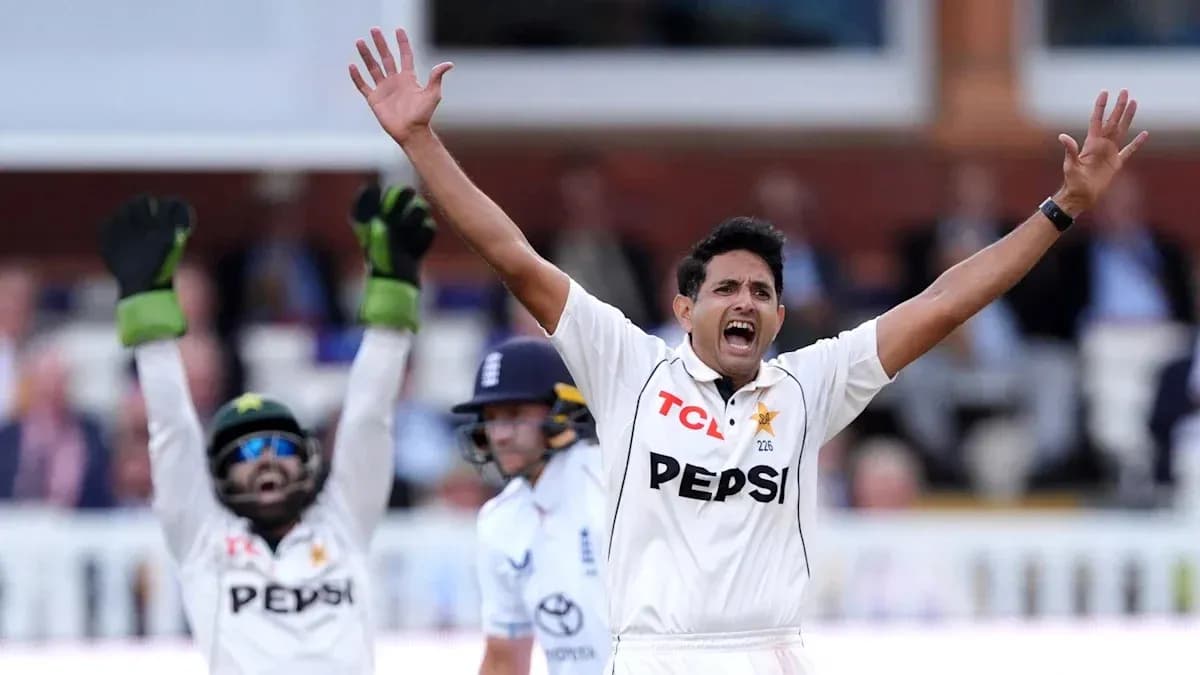
At Lord’s, where cricket usually drowns out everything beyond the pavilion walls, politics briefly threatened to walk the game off the field.
During lunch on day one of the second Test between England and Pakistan, Sky Sports aired an interview with Suleiman and Kasim Khan, the sons of Imran Khan – the World Cup-winning captain turned prime minister, now three years into a prison term he insists is unjust. What played out on television was emotional and pointed. What played out behind the scenes came close to detonating the series.
It is understood the Pakistan Cricket Board (PCB) warned the England and Wales Cricket Board (ECB) that if Sky went ahead with the interview, the Test at Lord’s – and the rest of the three-match tour – could be cancelled. That is as serious as it gets: a threat to pull a team off the field at the sport’s most famous ground over a broadcast decision.
Sky still showed a version of the interview. The players still walked back out after lunch. The game went on.
Out in the middle, Pakistan’s head coach Sarfaraz Ahmed insists he and his squad were oblivious to the storm swirling above them.
“I don't know anything. I'm just focusing on the match,” he said at the close of the second day’s play, when asked about the PCB’s stance. Pressed on the lunchtime drama, he remained blunt: “You're talking about the interview? We don't know about the interview.”
Was there ever a chance the Pakistan players might not reappear for the afternoon session on day one? Sarfaraz brushed that away with the same ease.
“All are OK. We were having lunch at that time,” the former wicketkeeper replied.
While the players ate, the politics escalated. Imran Khan, 73, is not just another former captain. He is the man who dragged Pakistan to World Cup glory in 1992, the figurehead who later rode that aura into office, serving as prime minister from 2018 to 2022. Since 2023 he has been in jail on corruption charges he denies, a fault line that cuts straight through Pakistan’s public life.
In the Sky interview, conducted by former England captain Michael Atherton, Suleiman and Kasim voiced concerns over their father’s treatment and security and criticised the UK government’s response to his situation. Before it went to air, Sky received a complaint about the plan to broadcast it. The tension ratcheted up.
The ECB did not treat that lightly. With the prospect of a Test being pulled mid-match, it sought advice from the UK government, specifically the Foreign, Commonwealth and Development Office. The stakes were clear: a broadcast decision in London could derail a tour that carries political and diplomatic weight, not just sporting significance.
Back in Pakistan, the pictures told a different story. The match is being shown by public broadcaster PTV, which takes Sky’s feed. But PTV cut away from the interview. Viewers there saw the cricket, not the conversation.
The PCB’s position carries extra clout because its chairman, Mohsin Naqvi, is also Pakistan’s interior minister – a rare overlap of cricket administration and state power that framed the entire episode.
In the end, the threat remained just that. The tourists resumed after lunch, and the Test has rolled through to the end of day two. On the field, England hold the advantage, 81-3 in their second innings and 261 runs ahead. Off it, the sense of a near-miss lingers.
Sky, for its part, is understood to have received no further complaints on Friday about the interview. The immediate crisis passed. The questions it raised will not disappear so quickly.
This is not the first time an England–Pakistan Test has brushed against the boundaries of the sport. In 2006 at The Oval, Pakistan were accused of ball tampering, refused to take the field after tea on the fourth day and were adjudged to have forfeited the match. It remains the only forfeiture in Test history, a stark reminder of how fragile a game can be once trust and politics collide.
All of that forms the backdrop to what comes next. In October, England are due in Pakistan again for a one-day tri-series with the hosts and Sri Lanka. It will be England’s fourth separate tour of Pakistan in four years, a remarkable burst of engagement after a 17-year absence caused by security concerns.
Relations between the boards have never been more important. Broadcast decisions, government pressure, political symbolism – they all now sit alongside selection, form and fitness in the modern cricket landscape.
At Lord’s this week, the players walked back out and the Test survived. The real test may arrive in October, when England land in Pakistan and everyone discovers whether this uneasy balance between cricket and politics can hold.