Pakistan’s Test Tour of England: Tensions and Royal Audience
Pakistan’s Test tour of England, already carrying enough sporting intrigue of its own, has been pulled directly into the heart of British establishment this week. The tourists are set for an audience with King Charles, only days after the series briefly teetered on the brink of collapse over a televised interview with the sons of Imran Khan.
A tour on edge
Tension spiked on day one of the second Test at Lord’s. During the lunch interval, Sky Sports prepared to air an interview with Suleiman and Kasim Khan, the sons of the former Pakistan captain and prime minister, who has been in prison for three years on corruption charges he denies.
Before a ball was bowled after the break, the Pakistan Cricket Board raised the nuclear option: not resuming the Test and cancelling the rest of the three-match series. For a moment, cricket felt secondary. The ECB, suddenly facing the possibility of a diplomatic and sporting crisis, sought guidance from the Foreign, Commonwealth and Development Office.
Sky had already received a complaint about the planned broadcast. The channel still went ahead, showing a version of Michael Atherton’s conversation with Suleiman and Kasim.
In that interview, the brothers voiced fears over their father’s treatment and security, and they criticised the UK government’s response to his situation. Heavy words, dropped into the middle of a Test match at Lord’s.
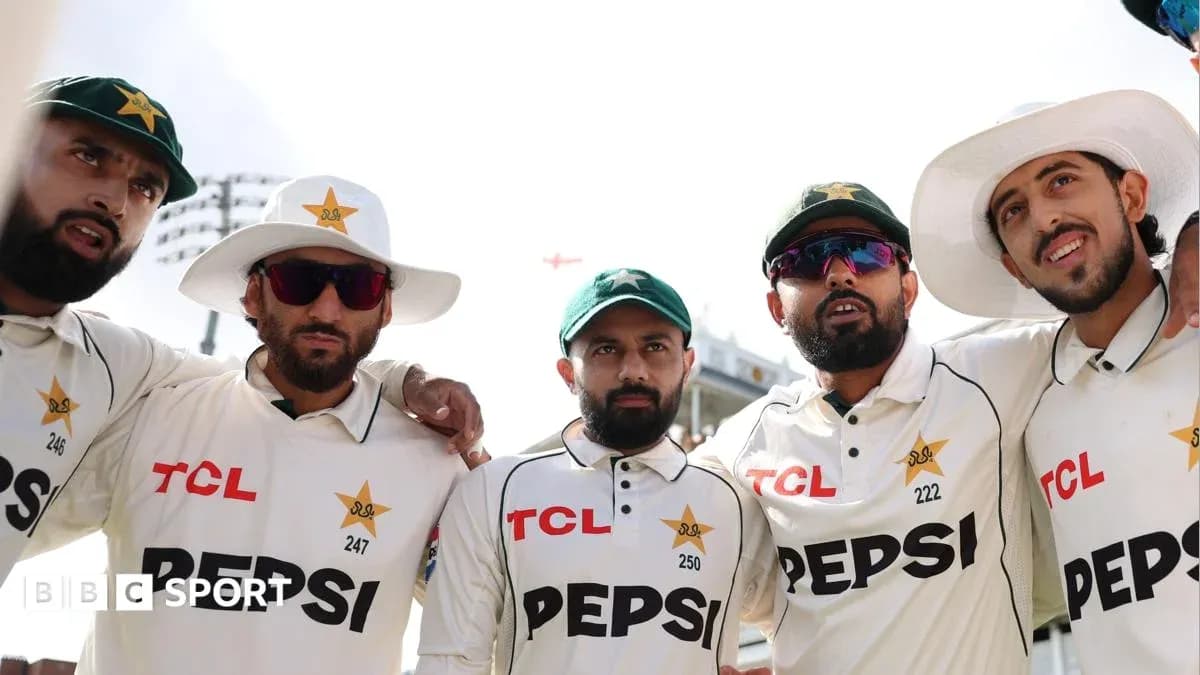
Yet when the players reappeared after lunch, the game went on. Pakistan returned to the field on schedule, the immediate threat of a walk-off defused, even if the politics swirling around the series had only intensified.
King Charles steps into the frame
Now, the tour moves from Lord’s to Clarence House.
Buckingham Palace has confirmed that King Charles, in his role as Head of the Commonwealth, will receive the Pakistan Men’s Test team later this week. The engagement, planned before the series began, will take place in the gardens of Clarence House between the second and third Tests.
“His Majesty the King, as Head of the Commonwealth, will receive the Pakistan Men's Test Cricket Team for an audience in the gardens of Clarence House, in the break between the second and third Test matches hosted in England over the summer,” read the Palace statement.
The meeting is expected to last around 15 minutes. Brief, but loaded with context.
Imran Khan, 73, remains a towering figure in Pakistan’s cricketing history, the captain who drove his side to World Cup glory in 1992 after a 21-year international career. His later rise to prime minister in 2018, and his imprisonment a year after leaving office in 2022, means any interaction between Pakistan’s cricketers and the British monarchy arrives against a charged political backdrop.
That backdrop has already brushed the Palace. In December last year, Imran’s sister, Aleema Khanum, publicly appealed to King Charles in his capacity as head of the Commonwealth to speak out about Pakistan’s political situation.
Quoting the Commonwealth charter’s principles of rule of law, democracy, and human rights, she told The Times: “A member nation is busy destroying all three fundamental principles. Member states, especially where King Charles is the head of the Commonwealth organisation, don't speak out against fascism or military dictatorship? What is the point of just organisations then?”
Those words now hang in the air as the King prepares to greet the very team whose national hero sits in jail.
PCB in the spotlight
The political threads run straight through the Pakistan Cricket Board itself. PCB chairman Mohsin Naqvi also serves as interior minister in the current Pakistan government. The board has been asked to confirm whether Naqvi will attend the audience with the King; that detail remains unclear.
On the ground, the players and coaches have tried to hold the line between cricket and politics. At the close of play on the second day of the Lord’s Test, Pakistan coach Sarfaraz Ahmed insisted he and his side had been unaware of the Sky interview when they took the field.
“I don't know anything. I'm just focusing on the match,” he said. “You're talking about the interview? We don't know about the interview.”
His words summed up the players’ dilemma. They carry the weight of a nation’s politics, willingly or not, yet their job is still to bowl, bat, and catch.
Cricket goes on – for now
For England and Pakistan, the calendar does not ease. In October, England are due in Pakistan again for a one-day tri-series involving the hosts and Sri Lanka. It will mark England’s fourth separate tour of Pakistan in four years, a remarkable shift after a 17-year absence driven by security concerns.
So the relationship between the two cricketing nations is deeper and busier than at any time in recent memory. It is also more complicated.
This week’s audience at Clarence House will last only a quarter of an hour. Fifteen minutes of handshakes, small talk, and formalities. Yet within that short window sit questions of power, loyalty, and principle that stretch far beyond the boundary rope.
The cricket will resume. The politics will not go away.