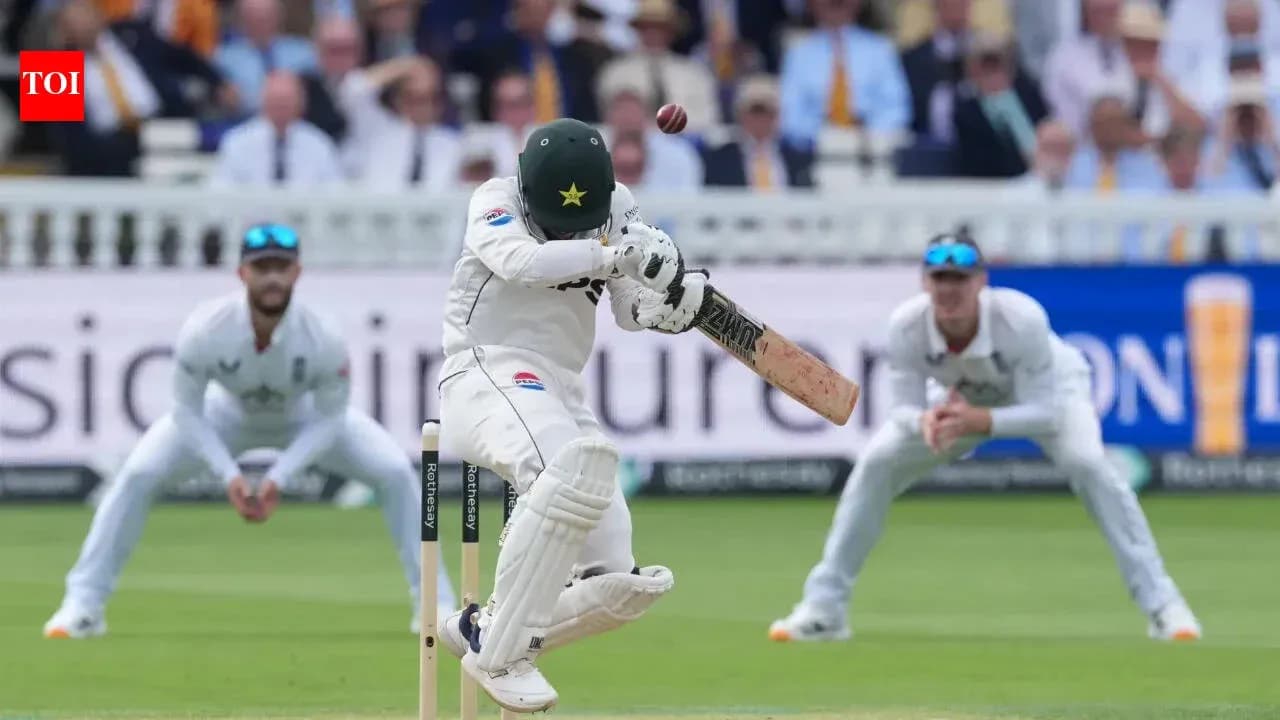
Pakistan's Struggles at Lord's: A Test Batting Crisis
Pakistan trudged off at Lord’s with just 110 on the board, and with it came a verdict as sharp as the north London breeze. Michael Vaughan did not bother with niceties.
Pakistan had arrived at the old ground wounded but hopeful, beaten by an innings and 53 runs in the first Test yet buoyed by the return of their captain. Babar Azam was back. The expectation was that his presence would steady a listing ship, that his class would bleed into a fragile top order.
It didn’t. Not even close.
Babar scratched to eight. Abdullah Shafique went for 5, Shan Masood for 1, Mohammad Rizwan for 7. The innings never found a heartbeat. Only Azan Awais, opening in a cauldron, showed any real resistance, battling his way to 46 while chaos reigned around him.
The rest folded. Quickly. Pakistan were gone inside 38 overs, skittled for 110, and England’s bowlers barely broke sweat.
“I'll be brutally honest. The England bowlers aren't being challenged at all,” he said, summing up what the scorecard already screamed.
To him, this wasn’t just a bad day. This was structural, systemic, and deeply worrying for a side that once prided itself on batting pedigree.
“This Pakistan batting lineup is possibly the easiest batting lineup I've seen in a long time to bowl to,” Vaughan continued. It was the kind of line that stings a dressing room, the sort that echoes long after the microphones are turned off.
“And not only that, I think as a bowler, I think they're all queuing up to bowl because they know there are wickets out there.”
That was the heart of his assessment: England’s attack operating without fear. No threat to their figures. No sense of peril if they missed their length. Just opportunity.
“You're not going to get hurt. There's no batter that's going to hurt them. No one's going to damage their figures, and it's really, 'roll up, roll up, who wants to get the wickets?'” he added.
For a proud cricketing nation, being painted as target practice is about as brutal as it gets.
Vaughan then went a step further, questioning whether this Pakistan batting unit even belongs at Test level. England’s bowlers kept finding ways through, and to Vaughan’s eye, it wasn’t because of genius, reverse swing, or devilish conditions. It was because Pakistan kept making it easy.
“I think they all know that Pakistan aren't going to get big scores,” he said. “So you're only going to be out there for 40 to 50 overs, so you give everything in every spell, you keep going to Joe Root saying, 'Err, I'll bowl another one.' There are so many wickets out there.”
That image — bowlers effectively volunteering for more work because the wickets feel inevitable — cuts right to the heart of Pakistan’s current malaise. Test cricket is supposed to be a grind. This looked like a giveaway.
Then came the harshest line of all.
“It's so easy. They're still doing a good job, and they're still looking very threatening. And I think this bowling attack, the way they're bowling, will challenge better batting lineups if they continue in this fashion. But this is Pakistan batting. Is it second division county cricket? There's no way that they are batting in any standard to say that, that is a Test match batting lineup.”
Second-division county. For a side wearing the star and crescent at Lord’s, that comparison lands like a punch to the ribs.
Pakistan’s problems ran deeper than poor shot selection and loose technique. They were also without Imam-ul-Haq, sidelined by a calf strain picked up while fielding and unable to bat in the first innings. His absence stripped yet another layer of experience from a top order already short on runs and confidence.
England, ruthless as ever at home, cashed in. By stumps on the second day, they were 81 for 3 in their second innings, the lead stretched to 261. The margin on the scoreboard felt every bit as large as the gap in authority between the sides.
The hosts now control the Test, the series, and the narrative. Pakistan, battered twice in a row and publicly questioned for their very right to call this a Test batting line-up, have been left with a stark challenge: respond, or accept that the second-division jibe will follow them long after Lord’s falls quiet.