Novak Djokovic's Vulnerability: A Turning Point at the US Open
Novak Djokovic does not cry on court. Not like that.
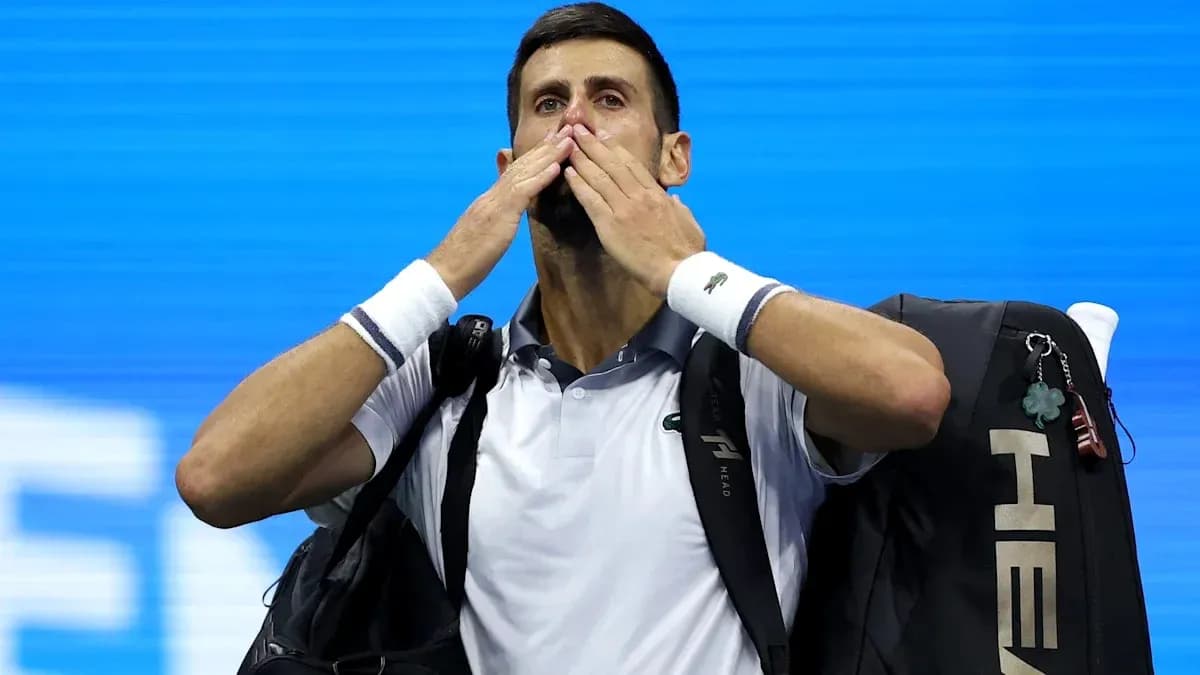
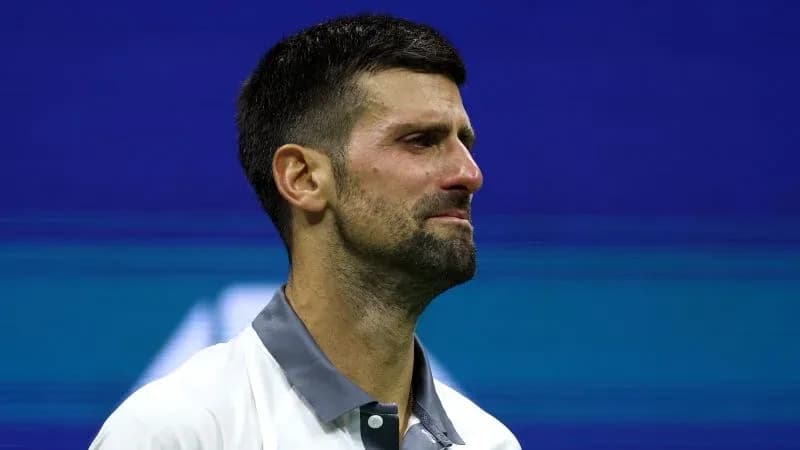
Yet there he was in New York on Sunday, eyes glassy, legs buckling, body betraying him in front of a crowd that has seen him survive almost everything the sport can throw at a champion. This was different. This felt like a line being crossed.
A first‑round loss to Mariano Navone at the US Open – his worst grand slam result in two decades – would have been shocking enough on paper. On the court, it was something more jarring: one of the rare occasions in his career when Djokovic looked unmistakably, irreversibly vulnerable.
The movement that once terrified opponents now looked hesitant. His footwork, usually so sharp it seemed pre-programmed, turned heavy. The shoulders that had carried 24 major titles sagged. The aura – that suffocating, unshakeable belief that he would find a way – flickered.
For the first time in a long time, Djokovic looked like a man losing a fight he could not win.
Only seven months ago he was in the Australian Open final, still the immovable object in the way of Carlos Alcaraz and Jannik Sinner, still the one constant as the sport’s landscape shifted around him. He pushed through to the Wimbledon semifinals in July, clinging to the hope that No. 25 was not a dream but a delayed inevitability.
Now that record-breaking major feels a long way off. Perhaps further than ever.
Djokovic has not been a week‑in, week‑out grinder on tour for some time. He has tailored his calendar, hoarding energy and fitness for the four tournaments that define his legacy, dropping into other events as tune-ups rather than targets. It was a smart, ruthless calculation from a player who has always understood his body as well as he understood his opponents.
But even that careful management cannot mask the latest, more unforgiving opponent: his own health.
Earlier this month, he revealed he has been dealing with an underlying issue that worsens in heat and humidity. In New York, that problem was not a subplot. It was the story. He vomited between points. His movement deteriorated with every game. By the end, he was barely able to move at all.
The tears in the final set were not just about a bad day. They looked like the reaction of a man feeling something slip beyond his control, a realization that the old tools no longer guarantee the old outcomes.
“I didn’t enjoy myself,” he admitted afterward. “I think it was obvious that it was an awful feeling on the court for me.”
He did not sugarcoat what has been happening this year.
“It’s something that I’ve been carrying, unfortunately, pretty much every match this year: vomiting, throwing up, a serious issue there.
“Then my whole body starts to collapse, basically cramping and pain. Yeah, the back just gave up in the end and shoulder.”
Those are not the words of a player talking about an off day. They are the words of a 39‑year‑old trying to work out whether his body can still pay the price his mind is willing to demand.
He left Flushing Meadows saying he needed time to think about his future, about how much more punishment he is prepared to absorb. After the images of him bent over, broken between points, how could retirement not be part of that conversation?
Yet this is Djokovic. He has spoken before about wanting to stretch his career all the way to the Los Angeles Olympics in 2028, to close the circle by representing Serbia one last time on the biggest stage. After Sunday, that ambition looks wildly optimistic to many. But doubting Djokovic has been a fool’s game for almost 20 years.
In 2017, he disappeared into an elbow crisis that left plenty wondering if his peak had passed for good. A year later he had two more majors in the bag. The pattern has repeated: a wave of concern, a rush to write the obituaries, then another surge of defiance.
The retirement narrative has stalked him for seasons now, hovering over every January, every stumble, every loss. Each defeat becomes a supposed signpost: this, surely, is the last chance, the final window, the closing chapter.
And yet he has kept answering. He has tweaked his game, shortened points, relied on his experience and competitive rage to drag himself through matches he once would have won on pure athleticism. That five‑set epic against Sinner at the Australian Open earlier this year felt like another of those nights – the old warrior refusing to go quietly, bending time back in his favor.
But the numbers do not lie. Djokovic has not lifted a grand slam trophy since 2023. For a player who redefined dominance, that gap is not a blip; it is a sign of the sport’s brutal timeline catching up.
Roger Federer and Rafael Nadal both signed off their major-winning days at 36. Djokovic has pushed beyond that, already stretching the boundaries of what seemed possible. He is trying to do it in an era when the physical demands are higher than ever, against a younger generation that hits harder, moves faster, and refuses to be intimidated by the names on the other side of the net.
To win another major from here, he will need more than brilliance. He will need good fortune with his health, forgiving conditions, and a body that stops rebelling at the worst possible moments.
So what was Sunday? A cruel one‑off, another false alarm in a career full of them? Or the first undeniable sign that the endgame has finally begun?
The expression on his face as he tried to summon one last surge told its own story. Djokovic has always been the conductor on court, dictating tempo, mood, and outcome. Against Navone, he looked like a man fighting not his opponent, but his own limits – and losing.
He will still leave this sport, whenever he chooses, as one of its greatest champions, perhaps its greatest. That status is not up for debate. Nor is the reality that champions often stay a little longer than the body wants, chasing one more moment, one more Sunday, one more number next to their name.
The question now is not whether Djokovic can accept a different definition of success – fewer titles, more management, maybe just the joy of competing. The question is whether a player built on relentless domination can live with that version of himself.