Novak Djokovic’s Struggles at the US Open: A Turning Point
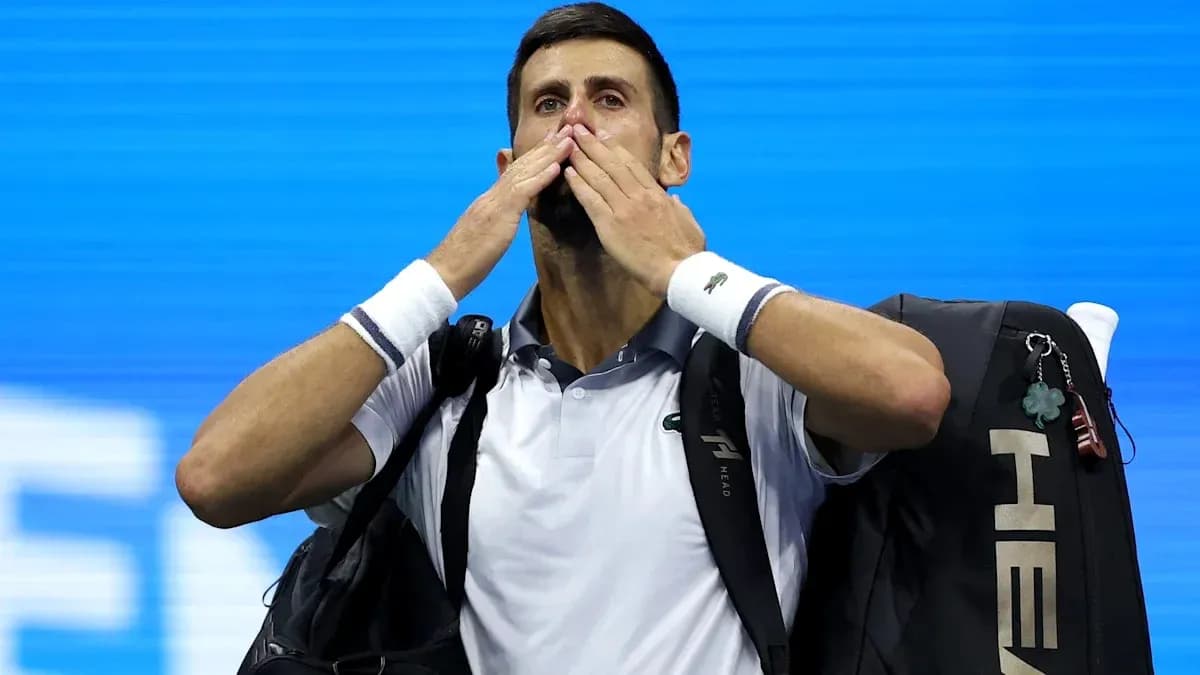
There were tears in Novak Djokovic’s eyes as he clung to his serve late in the fifth set on Sunday night in New York. Once upon a time, that sight would have signalled the inevitable: the Serb digging into his vast reserves, tightening every screw, suffocating the man across the net.
This time, the tears told a different story. His body had walked away from him.
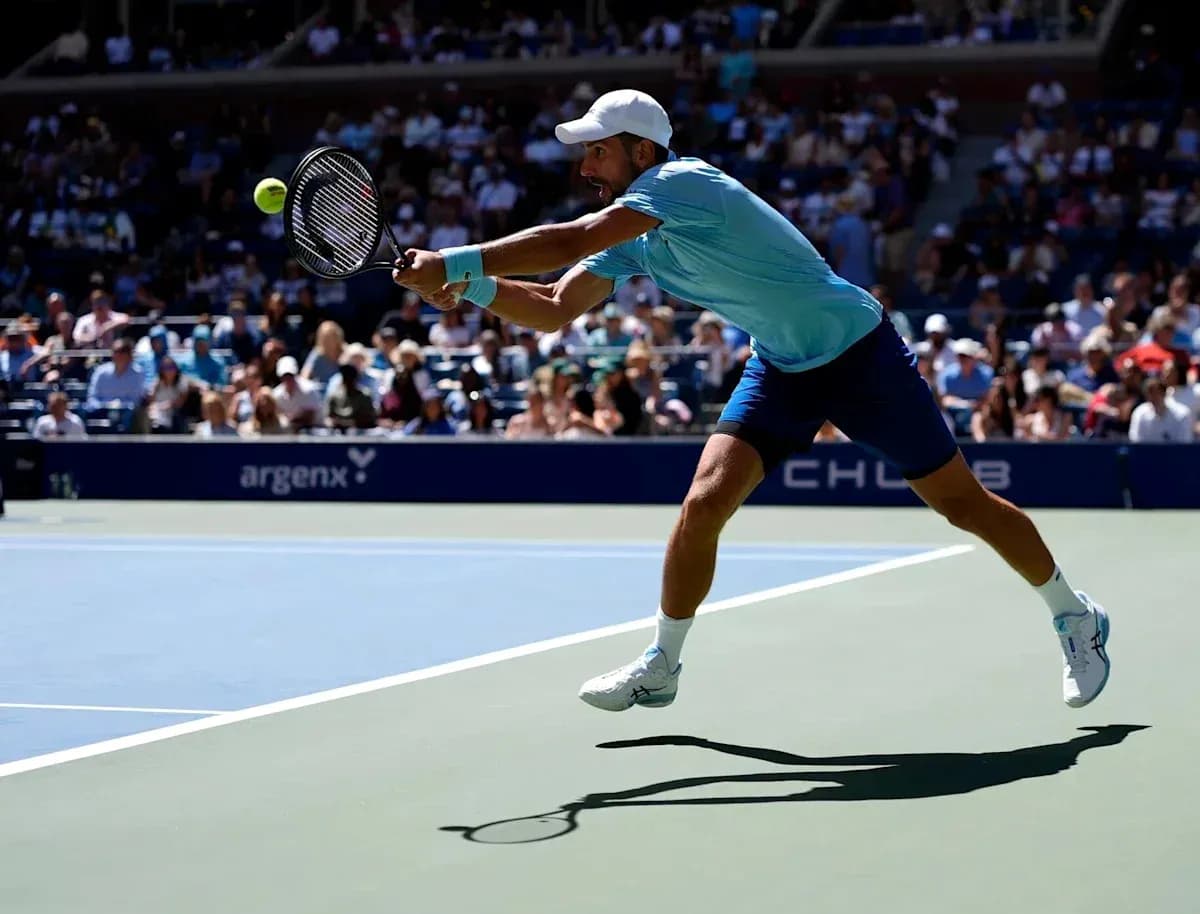
Djokovic lost 7-6 (5), 5-7, 4-6, 6-2, 6-1 to Mariano Navone in the first round of the US Open, his first opening‑round defeat at a Grand Slam since 2006. A 24-time major champion, a man who built a dynasty on endurance and defiance, now finds himself 39 years old and heading out of the Top 10.
The numbers will move. The questions will linger.
‘Awful Feeling on the Court’
Conditions were supposed to help him. A Sunday night start, no brutal afternoon sun, the sort of schedule that usually plays into a veteran’s hands.
For about an hour, it did. Djokovic jumped to a 3-0 lead, moving smoothly, striking cleanly. Then his night turned.
He began to feel sick. The lead vanished. Nausea took over. By the third set he was vomiting. In the fourth and fifth, his body cramped, his serve lost its usual bite, and the match became a survival exercise rather than a contest of champions.
Four hours and 36 minutes drained him of everything. The early flashes of brilliance gave way to a rash of mistakes: 70 unforced errors by the time Navone sealed it.
“I think it was obvious that it was an awful feeling on the court for me,” Djokovic said, as reported by The Associated Press. “This is something that, unfortunately, I’ve been dragging along in practically every match this year.”
He skipped the traditional press conference, choosing instead to speak with a small group of reporters. Ben Rothenberg of Bounces relayed more of Djokovic’s account of the physical collapse.
“Then my whole body starts to collapse, basically cramping and pain,” Djokovic said, noting that his back and shoulder “gave up.”
The language was stark. So was the reality.
Navone’s Night, Djokovic’s Alarm Bell
Credit cannot be stripped from Navone. The 25‑year‑old, who claimed his first ATP Tour title in 2026, held his nerve and his level in a match that could easily have swallowed him whole.
He hit his groundstrokes deep, refused to offer Djokovic short balls, won more than 70% of his first‑serve points, and took his chances when break points appeared. He did not blink as history, reputation, and the roars for Djokovic rolled around him.
Yet this night will be filed under Djokovic’s story, not Navone’s.
Only a year ago, Djokovic had played his way into the second week in New York, bowing out in the semifinals to Carlos Alcaraz in straight sets. Few expected him to truly threaten the eventual champion in 2025, but his presence in the last four felt like a familiar act in a long-running show.
Even then, the warnings were there. As one piece put it at the time, “as all sportsmen discover, Father Time is an opponent that no one can beat.”
Twelve months later, that opponent looks a lot closer.
Djokovic is not used to breaking down this early in a Slam, not used to his body tapping out while his mind still wants to fight. That, more than the scoreline, is what rattled the grounds.
A Strategy Under Strain
This is not an isolated blip. In August, in the heavy conditions of Cincinnati’s ATP 1000 event, Djokovic fell 2-6, 6-4, 6-4 in his opening match to Thiago Agustin Tirante. The loss came with a similar theme: physical struggle in demanding heat.
In New York, he tried to reframe that defeat as a blessing, a chance to rest, reset, and build towards the Slam that mattered most. For years, that has been his blueprint. Play less, peak at the majors, save the body for best‑of‑five.
At 39, that calculus grows more complicated.
Grand Slam tennis is unforgiving. Players need matches in their legs, rhythm in their swings, competitive miles in their lungs. Four hours on court is brutal at 19; at 39, it can be a cliff edge. When the body starts to fail half an hour into a best‑of‑five, the issue stops being about one match and starts to look like a longer-term problem.
It has been a long season, but not a heavy one. Djokovic has entered just seven tournaments in 2026. The gaps have not spared him. They have only highlighted how fragile the margins now are.
What Comes Next?
So the murmurs began almost as soon as the final ball flew long. Will he be back here next year? Or has New York just watched the last US Open swing of one of its most enduring champions?
Only Djokovic knows how he wants this to end.
He could keep going, live with being ranked around No. 20, play for the love of the game and the roar of the crowd. That version of Djokovic, stripped of invincibility but fuelled by passion, would still be a magnet for fans and a threat to anyone on a given day.
Or he could decide that life as something less than a genuine Grand Slam contender is a line he will not cross. If that’s the case, retirement could come sooner than anyone imagined, perhaps even this week.
For now, the only concrete sign of his intentions lies on an entry list: Djokovic has been confirmed for the ATP 500 event in Beijing.
His defeat to Navone underlined a harsh truth. At this stage of his career, his Grand Slam prospects hinge less on his legendary mental steel and more on whether his body can still take the strain. For years, his mind dragged his legs through matches other players would have surrendered. That may no longer be enough.
“Forever grateful, New York,” he wrote on social media after the loss.
The gratitude is mutual. But gratitude does not answer the question that now hangs over men’s tennis: how many more nights like this does Novak Djokovic have left in him?