Novak Djokovic's Epic US Open Loss: A Champion Undone
Novak Djokovic has spent two decades bending Grand Slams to his will. On Monday night in New York, his body finally refused.
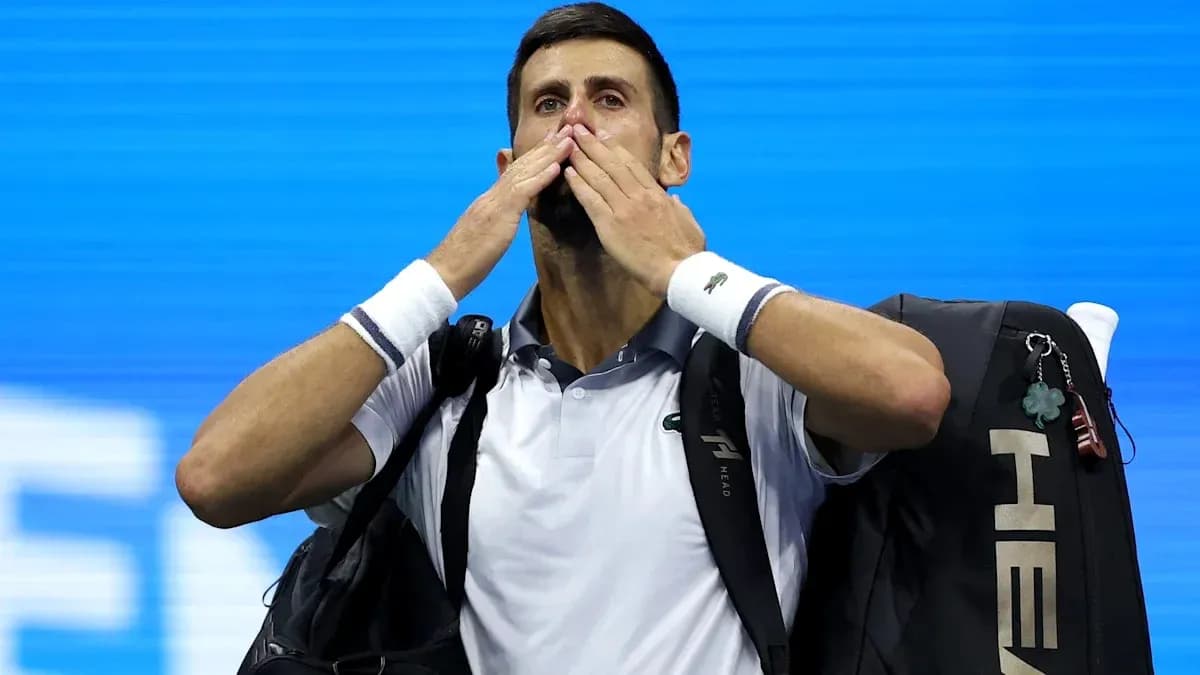
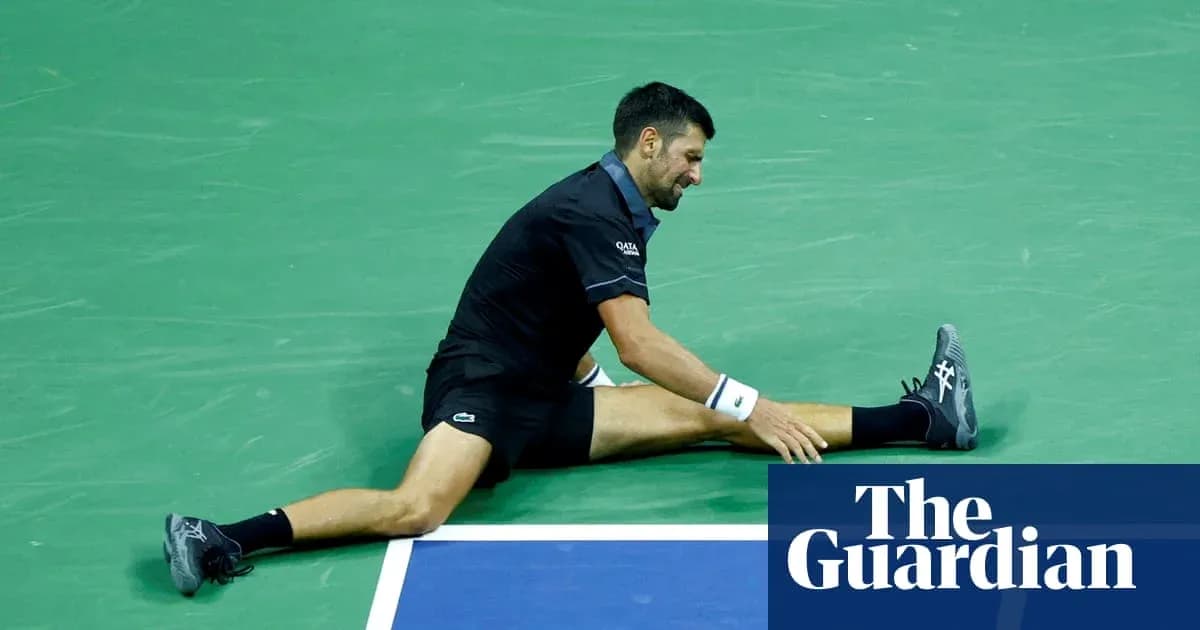
Under the lights of Arthur Ashe Stadium, in the first night session of this US Open, the 24-time major champion was reduced to something almost unrecognisable: bent double, gasping for air, retching into a courtside bin. By midnight, he was in tears, beaten 7-6 (5), 5-7, 4-6, 6-2, 6-1 by Mariano Navone in a first-round epic that ran four hours and 36 minutes and left Djokovic hollowed out.
It was his 84th main-draw appearance at a Grand Slam, a record he keeps stretching. It produced one of his bleakest nights.
A champion undone
This is only the third time in Djokovic’s career that he has lost in the opening round of a major. The last came at the 2006 Australian Open, when he was an 18-year-old still figuring out the tour. He is 39 now. The gap between those two early exits tells its own story of dominance and durability.
That made what unfolded on Ashe all the more jarring.
Barely 15 minutes had gone, Djokovic already a break up at 2-0 in the first set, when the warning signs flashed. He looked heavy-legged, his chest heaving in the New York humidity, even though the match was played at night and not in the brutal afternoon heat. Before he could consolidate his early advantage, the struggle had begun.
From there, the match turned into a grim endurance test. Djokovic drifted in and out of a daze behind the baseline, panting, wobbling, vomiting. He fought cramps. He fought his balance. He fought his back and his shoulder. By the end, he simply had nothing left.
This was not a one-off, nor some unfortunate bug arriving at the worst moment. Only a couple of weeks earlier in Cincinnati, he had been visibly stricken in similar conditions during a night match against another Argentinian, Thiago Agustín Tirante, who beat him in three sets and looked far more at ease in the humidity.
After that loss, Djokovic spoke about a specific health condition exacerbated by heat and humidity. In New York, he said it again. The symptoms were there for everyone to see.
“It was an awful feeling on the court for me,” he said, explaining he has been “carrying” the issue in “pretty much every match this year”, with vomiting leading to his “whole body” collapsing into cramps and pain, his back and shoulder giving way. He stressed he did not want to diminish Navone’s win, calling him a “nice guy” and a “fighter”, but admitted plainly: he “didn’t enjoy” a second of it.
A dream draw turns into a nightmare
On paper, this looked like a gentle start for Djokovic. Navone is a rugged competitor who has fought his way back into the top 50 after nearly dropping out of the top 100 last year, but his best work has come on clay. The hard courts of New York, the opening round of a major, a night session under the lights – this was supposed to be a launchpad, not a trapdoor.
Instead, the tension spiked after just 20 minutes. Midway through the first set, Djokovic began coughing and spluttering between points, repeatedly bending over. At 4-3, rain forced the organisers to close the Ashe roof, sealing in the air and, with it, the discomfort.
From that moment, the spectacle turned queasy.
Navone, 25, moved freely, unbothered by the conditions. Djokovic, by contrast, wrapped himself in ice towels at every changeover, searching for any relief. At 5-4 in the opening set, the doctor came to his chair and handed him pills. The serve, that most reliable of weapons, became his lifeline. For long stretches, it was the only thing keeping him afloat.
The idol and the believer
For Navone, this night had been a fantasy long before he walked onto Ashe. Djokovic is his idol. When the draw came out, fans quickly unearthed a trail of teenage devotion on social media – a 13-year-old Navone in 2014, filling his feed with praise for the Serb.
His parents had not even planned to be in New York. A Caribbean holiday was on the cards. The draw changed everything; they tore up their plans and flew to Flushing Meadows instead.
Their son did not waste the opportunity. On the biggest stage of his career, he played with clarity and nerve. He chased every lost cause. He held his ground on the baseline, hitting with depth and precision off both wings, dragging Djokovic into long, bruising rallies he simply did not have the physical reserves to survive.
Djokovic still almost found a way. Of course he did. He has built a career on refusing to yield.
He vomited repeatedly through the night, but he kept landing first serves, kept threading lines, kept leaning on instinct and muscle memory. He pinched the second set. He edged the third. He even broke early in the fourth, suddenly two sets to one up with a break in hand, the match seemingly bending, once again, towards the man who has made a habit of such turnarounds.
Then the legs went.
The serve that had propped him up began to sag. The first delivery lost its bite. By the fourth set, his movement screamed fatigue. Cramps crept in. Navone, still buzzing on adrenaline and belief, surged. He reeled off games, seized the fourth, then ran away with the fifth as Djokovic’s resistance finally cracked.
A brutal reminder
When it ended, Djokovic walked off Arthur Ashe and into the tunnel in tears, another reminder that even for the greatest, time and the body do not always negotiate.
He has made a career out of defying age, rewriting what late-thirties tennis can look like at the highest level. On this night, under the closed roof and thick New York air, his body answered back with a hard, unforgiving no.
How many more times can he drag it through nights like this?