Novak Djokovic's Shocking First-Round Exit at US Open
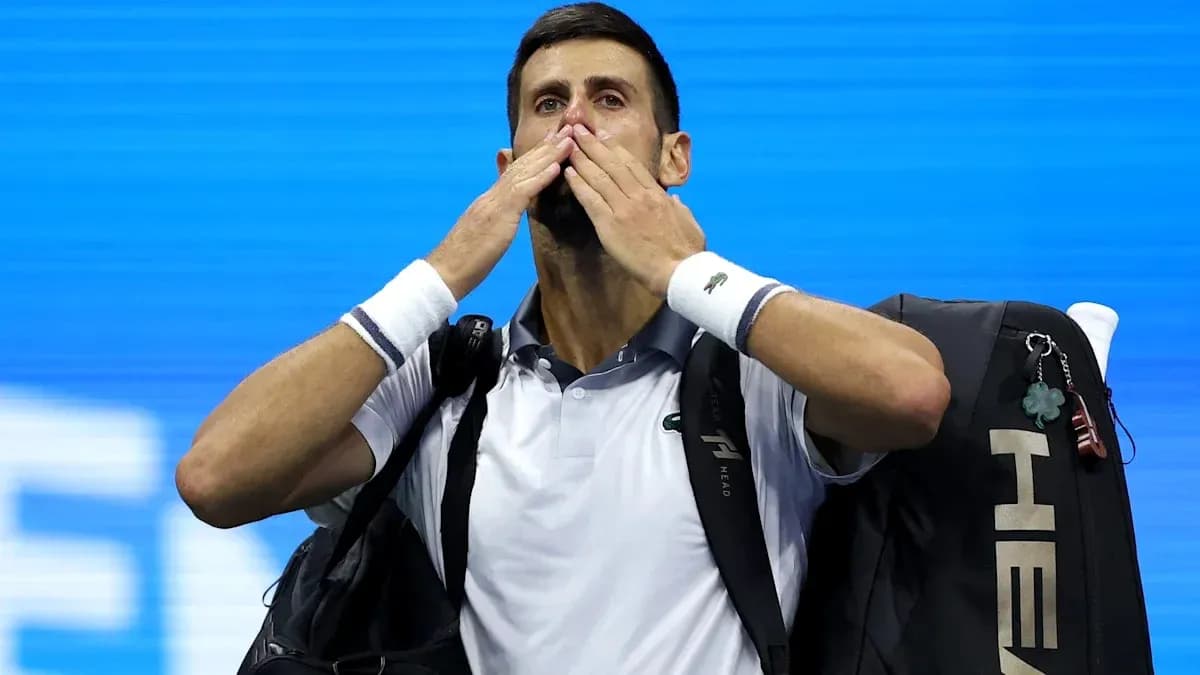
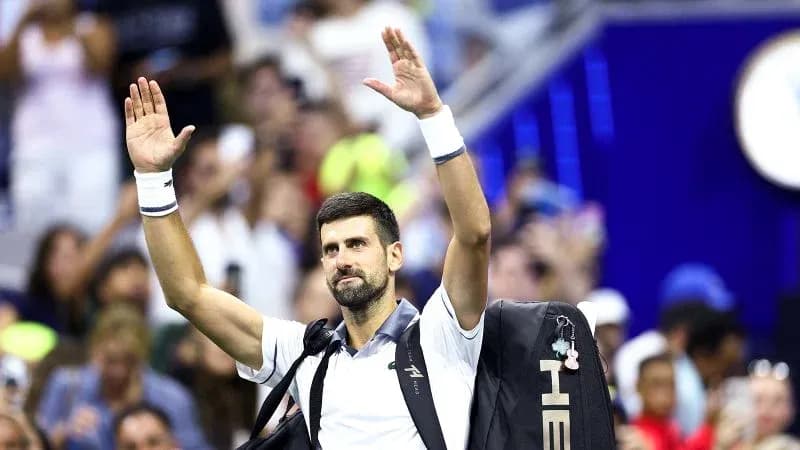
Novak Djokovic walked into Arthur Ashe Stadium on Sunday night as tennis’ immovable object. He left as its most vulnerable figure.
Under the lights where he has so often bent matches, crowds and history to his will, the 39-year-old ran out of answers, out of legs and, perhaps most worryingly, out of time. In a five-set epic that veered from gripping to grim, Djokovic fell 7-6 (5), 5-7, 4-6, 6-2, 6-1 to Mariano Navone, a 25-year-old Argentine who grew up idolizing him and then, on the biggest stage of his life, refused to be intimidated by him.
The match lasted four hours and 36 minutes, the longest opening-round contest of Djokovic’s Grand Slam career. It ended with his earliest exit at a major in 20 years, dating back to the 2006 Australian Open, and his first-ever first-round defeat at the US Open.
Twenty-one years to the day since his debut in New York, the question hung in the humid night air: was this the last time Djokovic walks into a Grand Slam as a player?
A legend looks human
From the opening games, something felt off.
Djokovic, the No. 4 seed and owner of 24 major titles, jumped out to 3-0 and 4-1 leads in the first set. This was the familiar script: suffocating start, early control, young opponent blinking under pressure. Then the script tore.
His footwork dulled. His timing frayed. The errors, usually isolated blips in a metronomic game, began to pile up. By the end of the night, he had sprayed 70 unforced errors, an astonishing number for a player whose greatness has been built on precision and relentlessness.
Navone sensed it. He steadied, took the ball early, and dragged Djokovic into longer exchanges. The Argentine edged the first-set tiebreak, handing Djokovic his first first-round opening-set loss at the US Open since 2006.
All the while, Djokovic’s body betrayed him in ways that were impossible to ignore. He threw up at least once. He grabbed at his left foot, clearly bothered. He swallowed pills brought by the doctor. His lower back needed treatment in a medical timeout between the fourth and fifth sets. Grimaces followed several swings, his movement often a half-step short of the standard that has defined his career.
His wife, Jelena, watched from the stands, her expression tightening with each labored point.
One more surge, then the fall
Even in distress, Djokovic still found pockets of his old self.
He clawed out the second set, punctuating it with a fist pump that felt less like celebration and more like defiance. In the third, he raised the volume, cupping his ear and gesturing to the crowd, demanding energy, demanding belief. The old champion still knew how to turn a stadium into a weapon.
He took that third set and, for a brief stretch, it looked like another familiar comeback. Another five-set escape. Another story of Djokovic bending a match to his iron will.
Navone refused to play the supporting role.
The Argentine, who won his first ATP singles title earlier this year, did not fade under the weight of the occasion or the identity of the man across the net. He kept attacking, kept running, kept asking questions that Djokovic’s body increasingly could not answer.
After firing a shot wide in the fourth set, Djokovic landed awkwardly and dropped his racket. The set slipped away quickly after that, almost as if he had accepted the need to save what he had left for one final push in the fifth.
That push never came.
Navone surged while Djokovic faded. The Serb, chasing what would have been his 43rd career five-set victory, had nothing left to give. Navone, chasing his first, played like a man who understood what this meant.
“(It) was very tough for me because you are playing with the ‘GOAT’ on this court,” Navone said afterward. “For sure it’s the best thing I’ve had on court. This is an amazing court and the biggest stage. It’s amazing, the way we play. I mean, five sets. … I’m very happy. I don’t know. What can I say?”
Later, he added: “It’s unbelievable. This means a lot. It’s a dream come true.”
A nightmare stretch, and an uncertain horizon
For Djokovic, this was not an isolated stumble. It was the latest drop in a worrying pattern.
He arrived in New York already on shaky footing. Earlier this month, he lost in the first round of the hardcourt event in Cincinnati, his first match since falling to world No. 1 Jannik Sinner in the Wimbledon semifinals. He had hoped that early exit would give him extra time to prepare, more hours to sharpen his game and body for one more run at Flushing Meadows.
On Saturday, he admitted that opening matches at tournaments had become increasingly difficult in recent years. The engine needed more time to warm up. The margins felt thinner. The challenge, he suggested, was to survive that first test and build from there.
This time, he never got the chance.
Djokovic now leaves New York not with another deep run, not with another night session classic in the second week, but with an abrupt, bruising defeat and a future that suddenly looks hazy. The calendar, the mileage, the sickness and soreness that stalked him on Sunday night — they all demand answers.
He has spent a career turning doubt into fuel. The question now is stark and inescapable: how many more of these nights does he have left?