Novak Djokovic's Historic Loss at US Open: A Night to Remember
Novak Djokovic walked into Arthur Ashe Stadium chasing history. He left it in tears, bent by the night, the heat and a younger man who refused to flinch.
On a suffocating New York evening, the 24-time Grand Slam champion was pushed past his physical limits and then pushed out of the US Open in the first round, beaten 7-6 (7-5) 5-7 4-6 6-2 6-1 by Argentina’s Mariano Navone.
At 39, this was more than a defeat. It felt like a line in the story of one of tennis’s greatest careers.
A champion brought to his knees
Djokovic, seeded fourth, started like a man intent on putting any doubts to bed early. He broke Navone immediately, raced to a 2-0 lead and looked ready to impose the familiar script: early pressure, control, and then the slow squeeze.
Then came the rally.
A long, lung-burning exchange in the humid air seemed to drain him in an instant. From that moment, the body language changed. The legs looked heavier. The serve lost bite. The groundstrokes, usually so precise and punishing, dipped in pace.
By the seventh game, the break was gone. Djokovic’s chest heaved between points. He called for the doctor after the ninth game, taking tablets on court as he tried to steady himself. The crowd sensed it. The usual roar on Ashe quietened into an uneasy murmur.
Navone, the world number 49, did not blink. While Djokovic bent over, hands on knees, the 25-year-old kept his head clear and his game simple. He stayed solid, attacked when invited, and walked into the tie-break with no visible nerves.
Djokovic fought, as he always does, but he was laboring. After 73 minutes, Navone snatched the opening set, and Arthur Ashe Stadium fell into an eerie hush. This was unfamiliar territory: Djokovic, in trouble physically, trailing a man who had never been beyond the second round in New York.
A flicker of the old fire
The question hung in the air: could he conjure another escape?
The body still looked reluctant, but the conditions shifted. Under the roof, with the heat easing slightly, Djokovic found just enough air to breathe and just enough strength to bite back.
He carved out the only break points of a finely balanced second set. He failed to convert early chances in the third and fifth games, but he kept coming, digging into reserves that have defined his career. At 5-5, he finally broke for 6-5, then held to love. The roar was back. So was the fist pump. One set all.
The third set brought more of that familiar edge. Djokovic grew more animated, barking at himself, gesturing to his box, feeding off the fight. The movement sharpened for a spell. The shots found their depth.
At 3-3, though, the fragility returned. He looked unsteady between points, the strides shorter, the recovery slower. Yet when Navone faltered and tossed in a poor service game at 4-4, Djokovic pounced like the champion he has been for so long. He broke for 5-4, then served it out to take a two-sets-to-one lead.
These are the positions from which the Djokovic of old shut the door. Two sets to one up, opponent feeling the weight of the occasion, the match seemingly tilting towards the inevitable.
Not this time.
The night turns cruel
What followed was brutal to watch.
Navone did not fade. He grew. Freed by the scoreboard and sensing Djokovic’s struggle, he began to hit with more conviction, more length, more authority. Djokovic, by contrast, looked trapped in a body that would not respond.
The fourth set ran away from him. Navone broke twice, sweeping through it 6-2 as the Serb’s energy bled away. The rallies that once would have been his stage became an ordeal. Between points, Djokovic’s shoulders slumped. He looked dazed, searching for air and answers.
At one changeover, he vomited into a towel bin, a stark image of just how hard the night had hit him. The stadium, usually a cauldron, fell into a subdued, almost respectful quiet. The four-time US Open champion was no longer the hunter. He was hanging on.
By the start of the fifth, the outcome felt inevitable. Djokovic’s legs were gone. His serve, once a weapon under pressure, offered little resistance. Navone smelled blood and went for it, breaking early and then again, racing to a 6-1 final set.
Djokovic’s fight never completely vanished—he chased, he stretched, he swung—but the body would not follow the mind’s command. The gap between intent and execution grew wider with every game.
A night that will linger
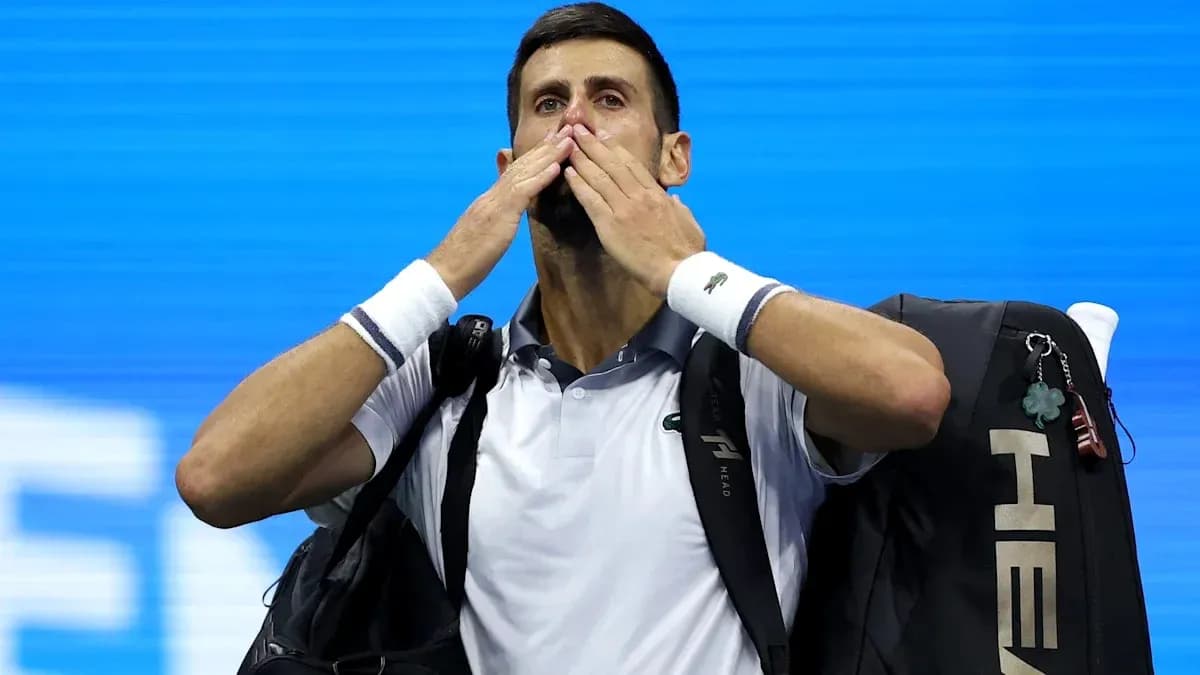
When the final point ended, Djokovic walked to the net with the grace that has long defined his victories and his defeats. He managed a smile, embraced Navone and congratulated him on the biggest win of the Argentine’s career.
Then the façade cracked.
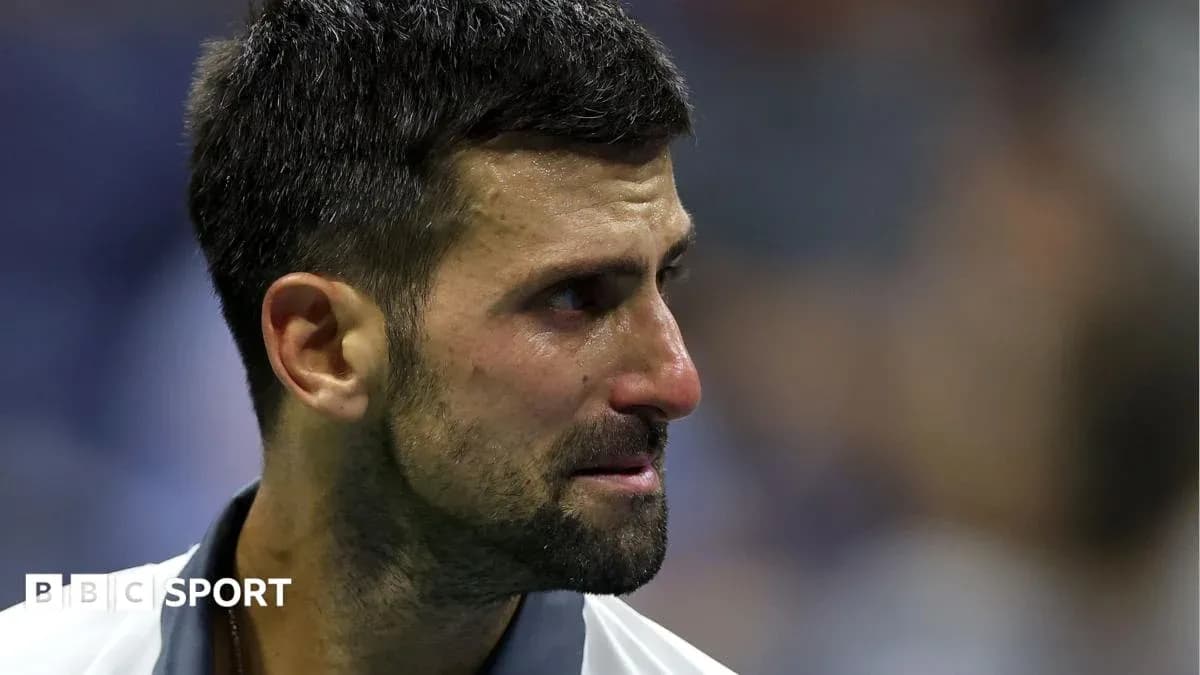
As he left the court, the 39-year-old looked shattered, his eyes glassy, his expression hollow. He appeared close to tears again as he trudged back towards the locker room, the noise of the stadium fading behind him.
The numbers are stark. This was his first opening-round loss at the US Open. His first first-round defeat at any Grand Slam since 2006. His latest attempt to stand alone with a 25th major title, and move clear of Margaret Court’s record, ended before it had really begun.
For years, Djokovic has turned nights like this into testaments to his resilience. Down, depleted, under siege—then somehow finding a way. On this humid New York night, the old script finally failed him.
Navone deserved everything he took. He stayed calm when the giant stirred, then ruthless when the giant faltered. For him, this is a career-defining moment.
For Djokovic, it feels like something else: not a farewell, not yet, but a stark reminder that even for the greatest, time does not play tie-breaks.