Novak Djokovic's Shocking First-Round Loss at the U.S. Open
Novak Djokovic looked wrong from the first ball.
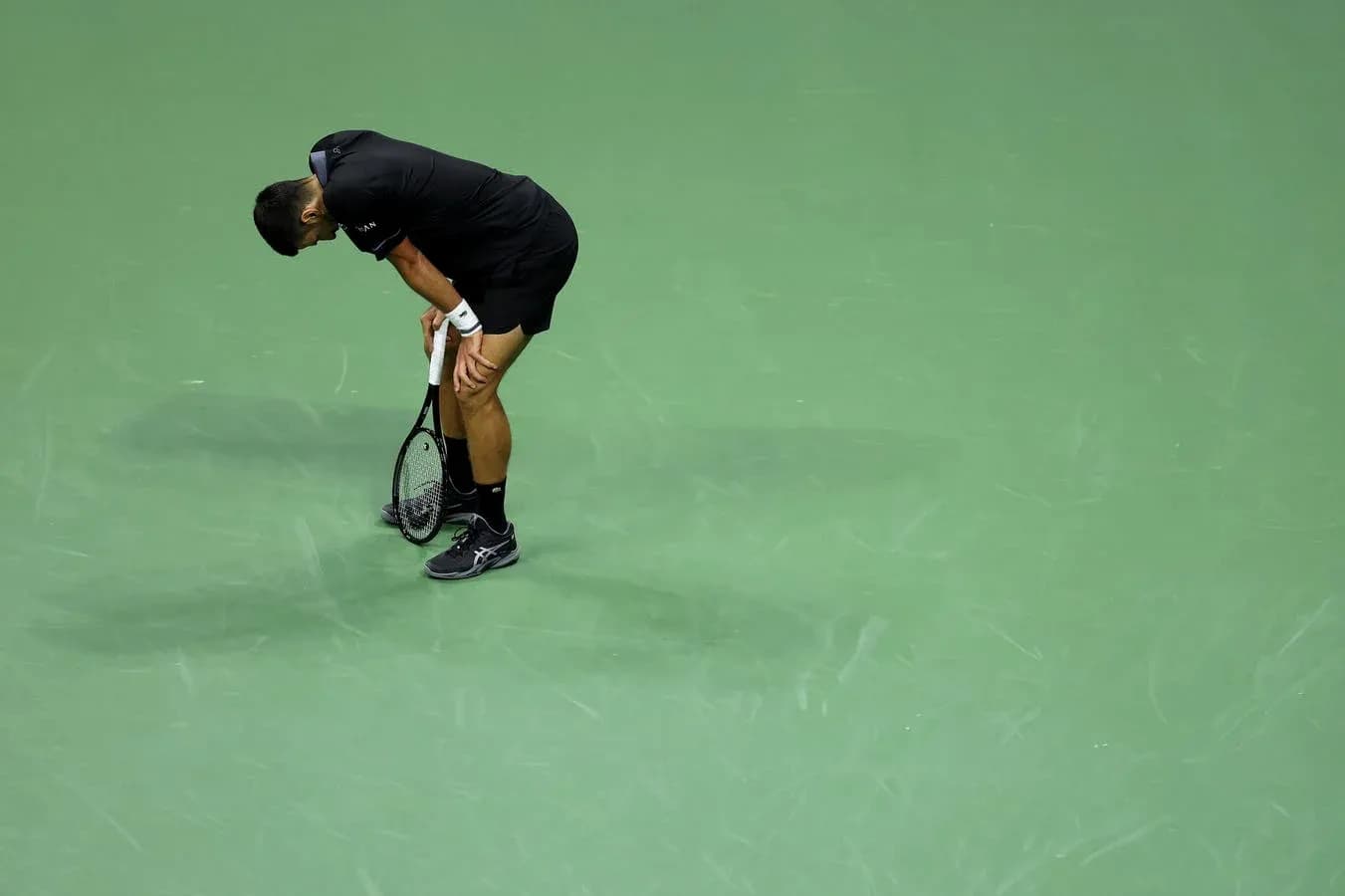
He shuffled rather than stalked to the baseline, shoulders sagging, eyes dulled. The man who normally bends Arthur Ashe Stadium to his will barely acknowledged the crowd. He gagged over a towel bin, reached for an inhaler, swallowed tablets, fought his own body as much as the opponent across the net.
Four hours and 36 minutes later, the 24-time major champion walked off Ashe a first‑round loser at the U.S. Open, beaten 7-6(5), 5-7, 4-6, 6-2, 6-1 by Mariano Navone, an unseeded Argentine ranked No. 49 who has never lifted an ATP Tour trophy.
The roof was closed. The atmosphere was heavy. The result was historic.
A giant falls, slowly
Djokovic, the No. 4 seed and 39 years old now, had not lost in the opening round of a major since 2006, back when he was still learning how to navigate best‑of‑five. On Sunday night, with his wife Jelena and children Stefan and Tara watching, he looked like a man whose body suddenly refused to follow his mind’s demands.
He has spoken of a lingering health issue since his early exit in Cincinnati, saying he has been “dealing with [a health issue] for many years now.” On Ashe, that vague concern took on vivid, uncomfortable form.
He threw up multiple times on court. He bent over, hands on knees, trying to steady himself. He stretched his legs and back between points, wary of cramping. He looked, in the words of ESPN’s Chris Fowler, like a man having “not much fun… at all.”
Yet for two and a half sets, he still looked like Novak Djokovic, the player who has made 10 U.S. Open finals and owns four titles here, the man chasing a record 25th major.
The early struggle
Djokovic actually led 4-2 in the opening set. The script felt familiar: weather the storm from an inspired underdog, tighten the screws, take the set, move on.
Navone refused to follow it.
The Argentine, who grew up idolizing Djokovic, stayed with him, matching his depth, staying bold on the forehand, and dragging the set into a tiebreak. There, Djokovic’s energy dipped. Navone held his nerve, 7-5, and suddenly the favorite was a set down, shoulders slumped, still not turning to the crowd for help.
“Almost no recognition of the crowd so far, except when he walked out,” John McEnroe noted on ESPN, surprised to see Djokovic so detached from one of his great weapons.
The second set looked like it might break away from him as well. Navone hammered a 100-mph ace to hold for 5-4, and Djokovic’s body language sagged again. Then the champion’s instincts kicked in.
He pounced on a shaky service game, broke at love for 6-5, and then held at love. One set all. McEnroe voiced what everyone was thinking: “And now all of a sudden, he’s starting to look like Novak Djokovic.”
“Boot and rally” and a turning tide
The third set brought the most surreal stretch of the night. Cameras caught Djokovic throwing up into the towel bin, prompting gallows humor from James Blake and the ESPN crew — “Boot and rally” became the line of the moment — but the scoreboard told a different story.
He did not face a single break point on his serve in that set. He stayed precise on return, patient in rallies. At 4-4, he pressed again, drew a forehand into the net from Navone on break point, and finally cupped his hand to his ear, summoning the Ashe roar he’d ignored for so long.
He served it out, 6-4. Two sets to one up, physically compromised but in command. It felt like the familiar Djokovic escape act was underway.
Then his body shut the door.
Navone senses his moment
Early in the fourth, Djokovic was sick again. The stretching became more frequent, the grimaces more obvious. His movement dulled, his footwork lost its usual precision. Navone, who had chased and counterpunched for three grinding sets, saw the shift and leaned into it.
He broke for 4-2 when Djokovic sprayed a forehand wide, the kind of routine miss that rarely appears in the Serb’s late‑match repertoire. The Argentine held his nerve, closed out the set 6-2, and dragged one of the sport’s great finishers into a deciding fifth.
By now, Djokovic’s face told the story. The eyes glassy, the steps heavy. The crowd tried to lift him; when he held for 1-3 in the fifth, the roar rolled around Ashe, and he looked close to tears as he tried to balance whatever was happening inside his body with the weight of the moment.
But the pattern was set. Serving at 0-1 in the fifth, Djokovic fell behind 0-40. Navone eventually broke for 2-0, finishing the game with a passing shot the Serb couldn’t reach after venturing forward. That was the crack the underdog needed.
From there, Navone sprinted. Djokovic faded. The final scoreline of the fifth — 6-1 — reflected the gulf in physical reserves more than any gap in tennis pedigree.
A dream realized, a dynasty receding
For Navone, this was not just an upset. It was the win of his life, delivered on the sport’s loudest stage against the player he has long called his idol.
“This is [an] amazing court on the biggest stage,” he said on court, still trying to process what he had done. “It’s amazing the way we played, I mean five sets against the GOAT is nothing to every day. I’m very happy, what can I say.”
He tried to explain what it meant to beat the man whose posters likely once hung on his bedroom wall.
“Novak means a lot for me,” he said. “It was very tough for me because you’re playing with the GOAT on this court here and he is here every day in this court when he plays the U.S. Open. This means a lot, it’s a dream come true. It’s certainly 100%. Now I have to recover, I think it’s almost 12 o’clock, we have to go to sleep.”
On a broader canvas, the loss deepened the sense of an era fading. According to ESPN, the last time none of Djokovic, Roger Federer or Rafael Nadal reached the second week of a major was Roland Garros 2003 — a different age, a different sport in many ways.
McEnroe framed the night not as a tarnish, but as an oddly humanizing chapter in an almost superhuman career.
“I think it actually turns out better for him because it shows he’s human,” he said. “It gives you an even greater sense of how amazing his accomplishments were.”
What comes next?
Djokovic’s résumé remains staggering. A 10-time U.S. Open finalist. Four titles in New York. Semifinal runs at all four majors last year. A win over current world No. 1 Jannik Sinner en route to the Australian Open final earlier this season.
But the numbers share space now with more urgent questions. He is still chasing that 25th major. He is still talking about a health issue “for many years now.” On Sunday night, the gap between his will and his body widened in public, under the lights, in front of his family.
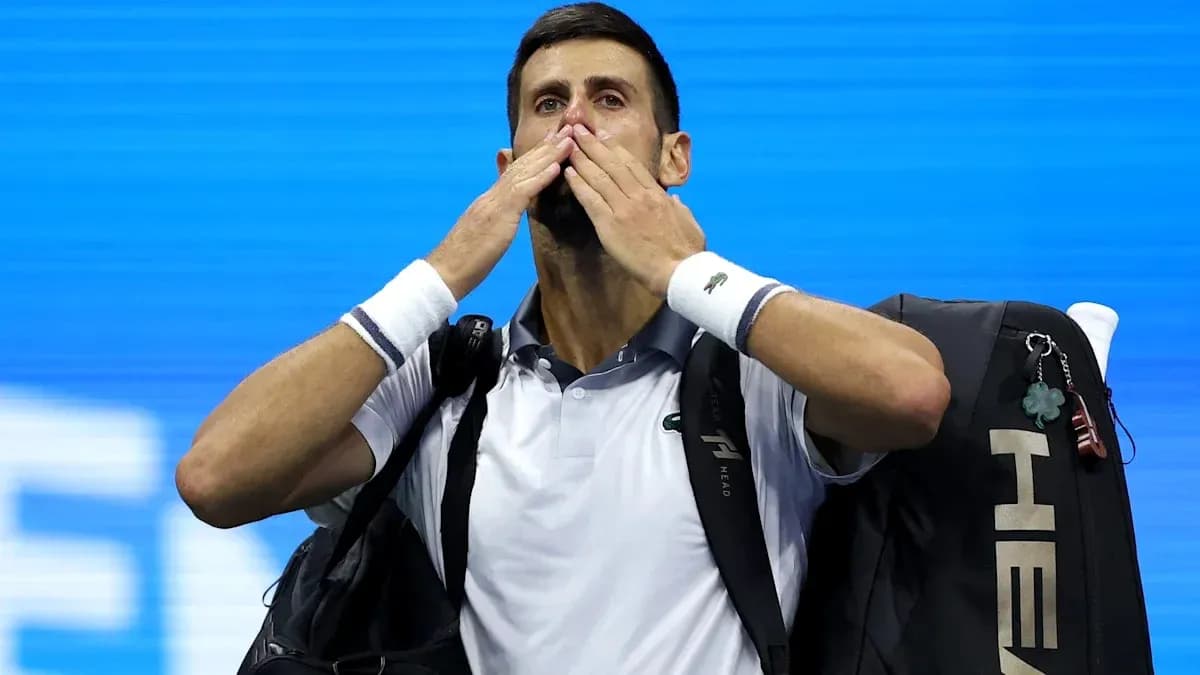
He waved to the crowd, pressed his hands into the familiar heart signal, signed autographs, then disappeared down the tunnel. Twenty-one years to the day after his U.S. Open debut against Gael Monfils in 2005, Novak Djokovic left Ashe not as the inevitable force of old, but as a legend suddenly, unmistakably mortal.
How many more nights like this — at this level, on this stage — does he have left?