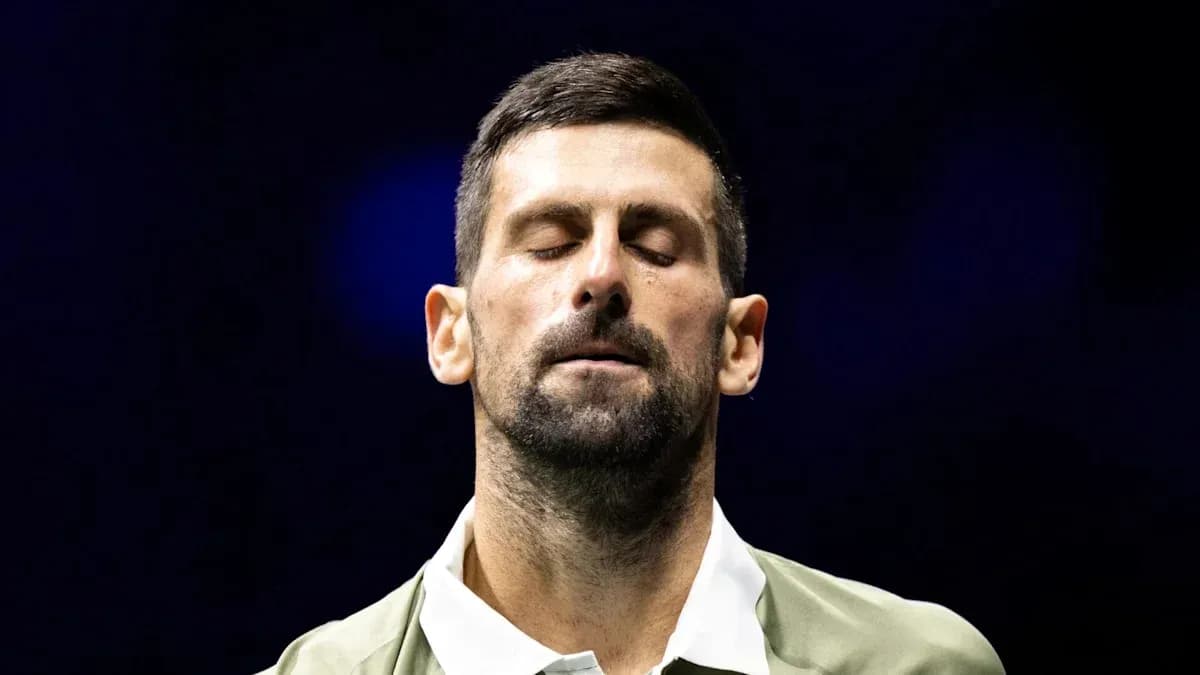
Novak Djokovic Ends 2026 Season After Paris Masters Loss
Novak Djokovic has shut down his season after a bruising defeat to Rinky Hijikata at the Paris Masters, drawing a line under one of the most turbulent years of his career.
The 39-year-old fell in the second round to the Australian, a loss that did more than end his week in Bercy. It officially killed off his late push to qualify for the ATP Finals and snapped a remarkable streak: for the first time in 21 years, Djokovic has gone through a season without reaching a Masters 1000 quarter-final.
For a player who built his legacy on turning these events into a personal playground, that statistic hits hard.
A year of unfamiliar numbers
Hijikata became the 10th different player to beat Djokovic in 2026, and the lowest ranked of the lot. Ten defeats in a season is not a crisis for most players. For Djokovic, it marks a clear break from the standards that defined his dominance.
The slide comes framed by a strange, almost cinematic campaign.
He opened 2026 in Melbourne with a surge that suggested the old order might yet reassert itself. At the Australian Open, Djokovic stunned two-time defending champion Jannik Sinner, rolling back the years to reach his first Grand Slam final since Wimbledon 2024. The stage seemed set for history: a shot at a 25th major, a chance to extend his lead in the sport’s greatest argument.
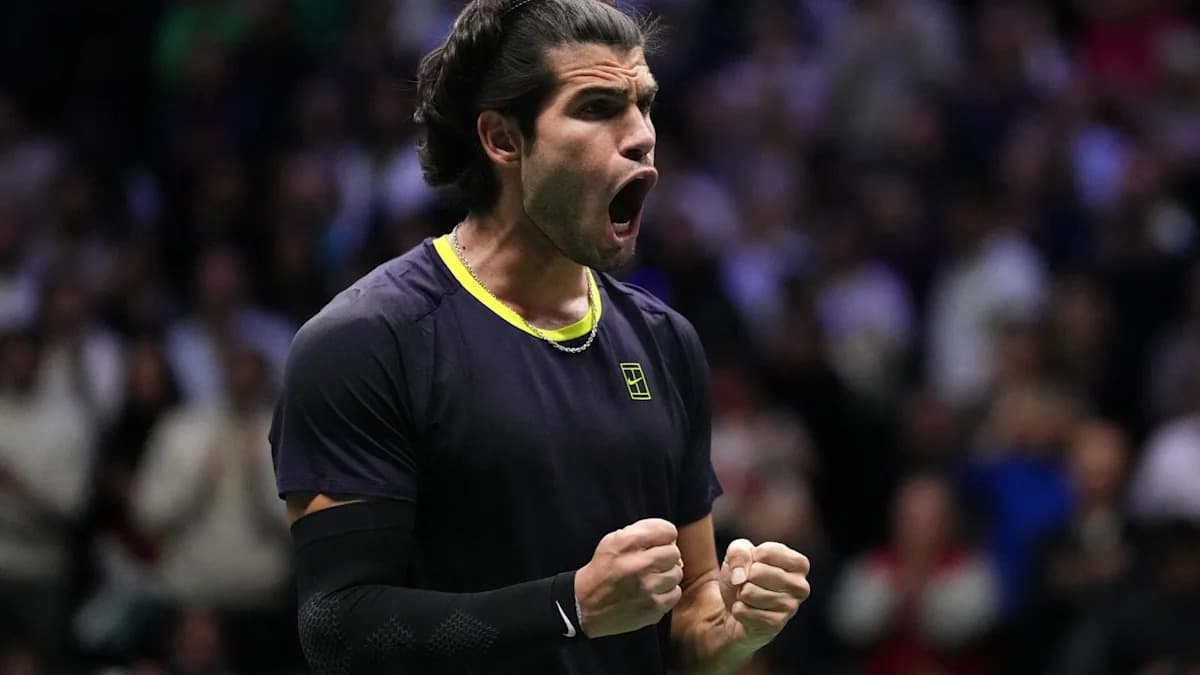
He even led Carlos Alcaraz by a set in the final. Two sets from immortality. Then the match turned. Alcaraz stormed back to hand Djokovic his first defeat of the year and leave the Serb stranded on 24 Slams, his last title at this level still the 2023 US Open.
The gap between those two moments – Melbourne hope and Paris resignation – tells the story of his season.
Stumbles on every surface
After Australia, Djokovic stepped away from competition and did not reappear until Indian Wells. There, he found some rhythm but not enough of a cutting edge, bowing out in the fourth round to Jack Draper in a thriller. For Draper, it was one of only eight wins all year. For Djokovic, it was another sign that the aura had thinned.
Clay brought no relief. At the Italian Open, he suffered a shock defeat to Croatian qualifier Dino Prizmic, a result that would have been almost unthinkable a few years ago. The clay swing never caught fire. At Roland Garros, a tournament that has come to symbolise his resilience and adaptability, he crashed out in his earliest exit for 17 years, beaten by another young name on the rise, Joao Fonseca.
On grass, the old instincts briefly resurfaced. Wimbledon felt familiar again. Djokovic marched into the semi-finals for an eighth consecutive time at the All England Club, a run that underlined how deeply rooted his game remains on Centre Court. But Sinner, the man he had dethroned in Melbourne, stopped him there, too. Another deep run, another door slammed shut before the trophy.
Then came the hard-court swing in North America, and with it, perhaps the most jarring chapter.
A North American nightmare, then Beijing brilliance
Djokovic failed to win a single match on North American hard courts. At the Cincinnati Open, Thiago Agustin Tirante took him out, a result that would have made headlines in any season, any era. The shock deepened in New York. At the US Open, Djokovic lost in the first round of a Grand Slam for the first time in 20 years.
For a man who built his reputation on being untouchable in early rounds, on strangling tournaments from day one, that statistic cut to the core of his competitive identity.
Just when it looked like the year might drift into a slow fade, he roared back in Asia. In Beijing, Djokovic reminded everyone why he remains a 24-time Grand Slam champion and one of the game’s most ruthless front-runners. He won the China Open, maintaining his flawless record in the Chinese capital and beating Alexander Zverev, Daniil Medvedev and Alex de Minaur on the way to his only title of 2026.
That run seemed to reset the narrative. With those points, Djokovic put himself in a strong position to qualify for the ATP Finals, a target he had openly set for the season. The story, briefly, felt familiar again: Djokovic, late in the year, closing in on Turin.
Then the floor gave way.
Shanghai, Basel, Paris – and the rankings bite
In Shanghai, he fell early to Hubert Hurkacz. At the Swiss Indoors in Basel, Jan-Lennard Struff sent him home sooner than expected. In Paris, Hijikata finished the job. Three consecutive early exits, all to players who had never beaten him before.
Those defeats did more than bruise his pride. They dragged his ranking down. After peaking at world number three earlier in the year, Djokovic has now slipped outside the top 10, a place he once occupied as if by right.
For the first time in a generation, the numbers around his name look ordinary. The schedule looks lighter. The questions grow louder.
Yet the story is not over.
Eyes still on 25
Djokovic has made it clear he will continue in 2027. The target has not changed: that elusive 25th Grand Slam title. The season that has just ended for him – with no ATP Finals, one title, and a string of early exits – only sharpens the edge of that pursuit.
He has walked away from 2026 with more scars than silverware, more questions than answers. But he has also walked away before, only to return sharper, meaner, more relentless.
The numbers say the era is fading. Djokovic insists the fight is not. The next time he walks into a Grand Slam locker room, will the old fear still be there – or has 2026 finally given the rest of the tour permission to believe?