Naomi Osaka's Bold US Open Statement: A Gown of Headlines
Naomi Osaka has never treated a Grand Slam entrance as a formality. She treats it like an opening statement.
The spectacular jellyfish outfit at the Australian Open. The sparkly, Eiffel Tower-inspired golden dress at Roland Garros. The refined, all-white Japanese kimono sweeping across the lawns of Wimbledon. Each look has said something about who she is and where she comes from.
New York, though, demanded something different.
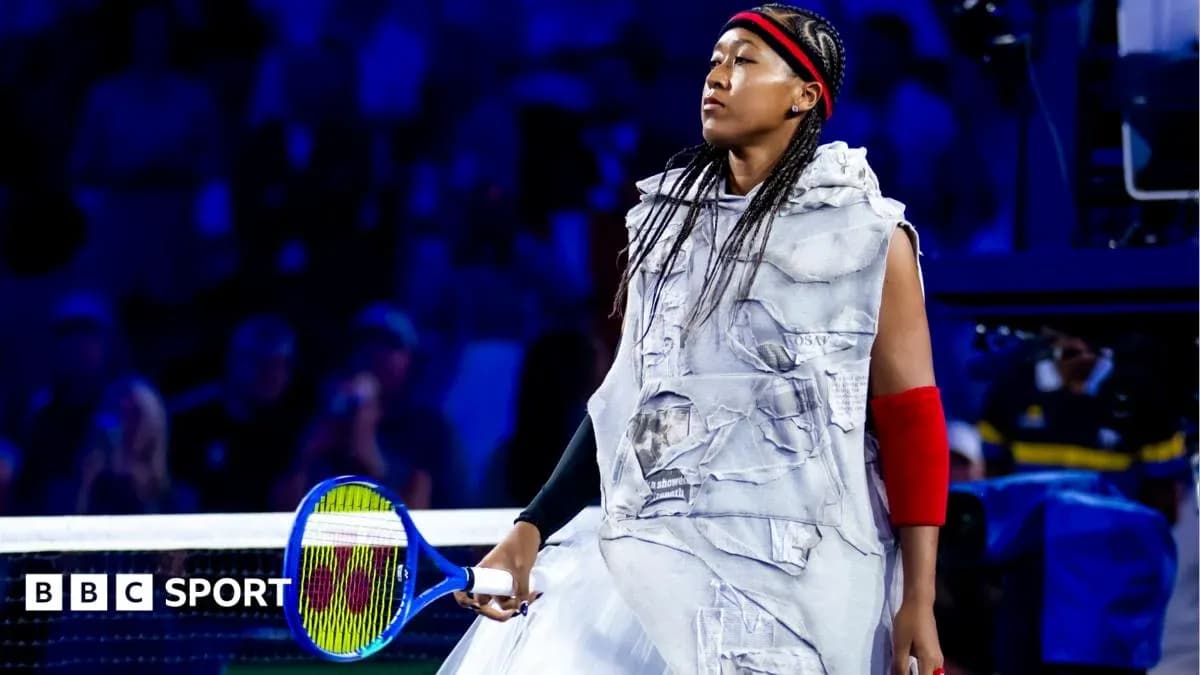
For her return to the US Open, the four-time major champion walked into Arthur Ashe Stadium draped in a hooded white gown, its fabric stitched with cuttings of newspaper headlines chronicling her career. Triumphs, turning points, the noise that has followed her since she first shook up the sport — all literally woven into the garment.
It was part red carpet, part archive.
When the hood came down and the gown slipped away, the tone changed. Underneath, Osaka wore an all-black, basketball-style kit, a sharp, street-inflected contrast to the ethereal walk-on. That was the outfit she went to work in, grinding through a tight, nervy contest to beat Russia’s Anastasia Zakharova, the world number 101, 7-6 (8-6) 7-6 (7-3) in the first round.
Two tie-breaks. No margin for rust or hesitation. Osaka, still rebuilding after time away from the tour, had to lean on her competitive instincts as much as her power, edging both breakers to keep her campaign alive on opening night.
The look on court was no accident. Osaka later explained that the black kit drew its inspiration from NBA icon Allen Iverson, a player whose influence stretched far beyond the box score.
“He’s a trailblazer. I think he’s also someone that I look up to a lot, because he’s done a lot in fashion, whether it’s on purpose or not,” Osaka said afterwards.
Iverson dragged basketball’s aesthetic into a new era, from the tunnel to the hardwood, and Osaka sees a parallel in what athletes wear when they step into their own arenas.
“He’s shifted the way that NBA players dress. I also think the whole conversation around clothes in sports and just expressing yourself through style,” she said. “I feel like he’s someone that I look up to in that regard.”
On a night when she stitched her story onto her shoulders and channelled one of basketball’s great cultural disruptors, Osaka did what she so often does in New York: she turned a first-round match into a statement about where sport, style and self-expression meet.