Moses Itauma's Heavyweight Title Fight Loss: A Lesson in Experience
Moses Itauma walked into the ring as the heir apparent. He left it on a stretcher, his aura of inevitability scattered somewhere between rounds eight and nine.
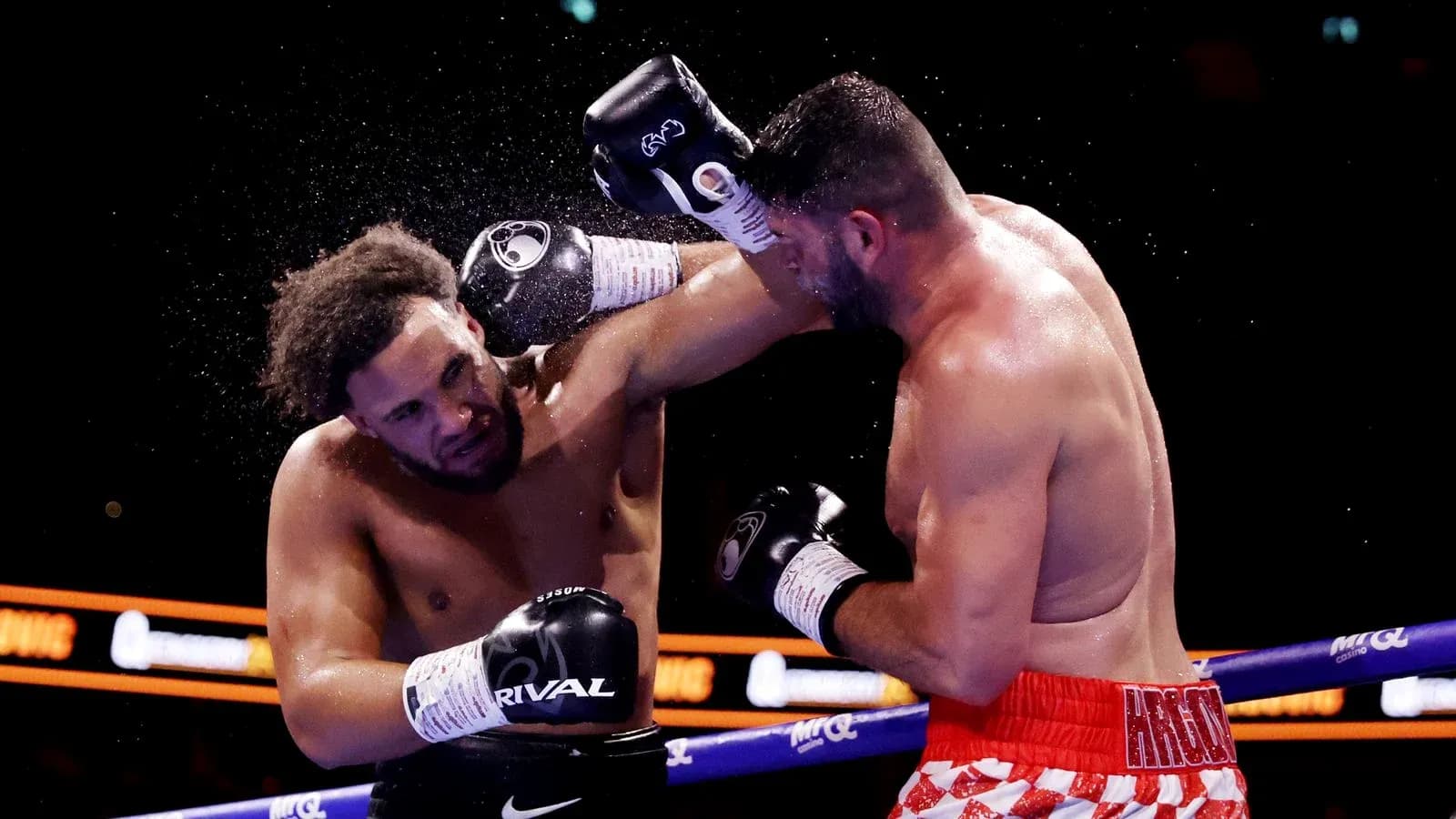
For eight rounds against Filip Hrgovic, the 21-year-old from Kent boxed with the poise and control of a man about to rewrite heavyweight history. Then the tank emptied. Suddenly. Brutally. Hrgovic didn’t just win by ninth-round TKO; he exposed a gap in Itauma’s preparation that those inside the sport now find impossible to ignore.
“You cannot learn on the job”
Delicious Orie watched it all with a mix of admiration and disbelief. The heavyweight, who knows Itauma well, couldn’t get his head around one detail in particular: Itauma had never sparred 12 rounds before stepping into a 12-round world title fight.
“It was experience,” Orie told Sky Sports. “If I was getting in a ring and knowing I've got 12 rounds ahead of me, I'm doing 15 rounds. For me, not doing 12 rounds going into a 12-round fight is crazy.”
That word – experience – hung over the entire night.
Itauma had stopped every previous opponent inside six rounds. He’d never been forced to live in the deep water he sailed into against Hrgovic. When the pace he set early began to catch up with him, there was no reserve, no reference point, no scar tissue to fall back on.
“He blew a gasket,” Orie said. “This reminded me of new boxers in a new era taking strength and conditioning so seriously. You've got to find out about yourself before you get into the ring. You cannot learn on the job when it comes to professional boxing.”
Orie didn’t dress it up. In his view, the story of the fight was simple.
“I think he should have beaten Hrgovic. I wasn't in his training camps, but we've all heard it. He didn't spar enough; it's as simple as that. Just because you can lift weights or run fast does not mean you can sustain a 12-round fight. It's a completely different beast.”
The beast swallowed Itauma in the ninth.
A talent undone by his own tempo
Like Itauma, lightweight contender Sam Noakes comes from Kent and carries his own world title ambitions. He saw less a young fighter outclassed and more a young fighter undone by his own momentum.
“I think it was more Itauma beating himself,” Noakes said. “With all the success he was having, I think he might have just gone a little too fast out of the blocks. He wasn't out of his depth at all. It was more that he got tired and obviously Hrgovic capitalised on it.”
The sight of Itauma being taken to hospital after the fight underlined how hard he’d pushed his body in those early rounds. Noakes believes a prior 12-rounder might have changed the script.
“If he'd done a 12-rounder before maybe it might have helped. It's all well and good in hindsight but he was blasting out serious level opponents. That was the next step for him. He just came up short in a world title fight at 21. That's boxing unfortunately.”
This was supposed to be the night he closed in on Mike Tyson’s record as the youngest heavyweight world champion in history. Instead, it became a harsh lesson in pacing, planning and the cruel economy of elite boxing.
Was he rushed – or just untested?
The debate around Itauma’s rise began almost before the referee waved it off. Had he been pushed too quickly? Was this a promoter’s gamble gone wrong?
Orie doesn’t buy that.
“I don't think he was being rushed. I think that was a good step up with Hrgovic,” he said. “I do think there was a lot of hype. I don't think it would have had a massive impact on the fight. Itauma doesn't strike me as someone who loves all that hype. He's just a normal guy from Kent.”
The matchmaking, in Orie’s eyes, wasn’t reckless. The preparation was.
What comes next, he believes, will define far more than the loss itself.
“Frank will more than anybody else know what the best thing is to do,” Orie added, backing promoter Frank Warren to guide the rebuild. “I think his mindset is the question here. In his mind, his world's fallen apart. What he does in the next one or two years will be the deciding factor in my opinion for the rest of his boxing career.”
The physical damage will heal quickly. The psychological bruise is deeper.
Time on his side, scars in his favour
For all the criticism of his camp and conditioning, nobody close to Itauma is writing him off. Quite the opposite.
“One thing Itauma does have is the greatest asset known to man: time,” Orie said. “21 years old, he has a lot of time in front of him and depending on his mindset, this is just the beginning. This is part of becoming a world champion.”
History offers plenty of comfort. Orie pointed to David Haye and Wladimir Klitschko – both beaten in their early to mid-20s, both future world champions.
“We've seen it time and time again with the likes of David Haye and [Wladimir] Klitschko losing in their early to mid-20s. It's the standard process.
“People just think it's smooth sailing, you turn professional, you beat Mike Tyson's record, you become world champion and retire into the sunset. Boxing doesn't work like that unfortunately and we've seen it here.”
Noakes shares the same conviction that this defeat, painful as it is, will harden rather than break Itauma.
“The experience everyone was saying he lacked, he has now gained,” Noakes said. “When he comes back, he'll be even better. As a fighter, the loss is terrible. It's like the end of the world.
“My advice to him would be just get back in the mix as quick as you can and back onto that world title chase. I have no doubt the ending will still be the same; he'll still be undisputed heavyweight champion.”
For now, the image that lingers is of a prodigy exhausted and overwhelmed in the ninth round of his first real crisis. The next image, whenever it comes, will tell us something far more important: whether Moses Itauma is simply a gifted puncher, or a future champion forged by the night everything went wrong.