Mark Wood Retires: A Thrilling Career in Fast Bowling
Mark Wood always moved at a different speed. Run‑up like a sprinter, arm whipping over, ball screaming through at 95mph and beyond. Now, at 36, one of England’s most thrilling fast bowlers has stopped dead.
An 11-year international career, two World Cups, four Ashes series, 253 international wickets. Over in a few lines, but lived at full tilt.
A career in the fast lane
Wood arrived in 2015 at Lord’s against New Zealand like a bolt out of Durham cloud. England had seen fast bowlers before, but not many who could live so consistently in the mid-90s and smile while doing it. He finished with 119 wickets from 38 Tests, 80 from 70 ODIs and 54 from 38 T20Is, making him England’s sixth-highest wicket-taker in T20Is.
The numbers only tell part of it. The memory is of stumps flying, batters hopping, and that distinctive, skidding pace that could turn a flat pitch into something hostile.
His first Ashes series came in 2015. At Trent Bridge, in the wreckage of Australia’s batting, it was Wood who took the wicket that sealed the series. Not the headline act, perhaps, but the man with the final say.
Eight years later, he returned to the Ashes with a vengeance. England were 2-0 down in 2023 and staring at a grim scoreline. At Headingley, Wood tore in and changed the mood of an entire summer. That searing spell, all raw speed and aggression, helped drag England back into a contest they eventually drew 2-2. It felt like the old Ashes again: quick bowling, genuine peril, crowd on edge.
World champion in both formats
Wood’s peak on the global stage came with white-ball cricket. He leaves with two World Cup winner’s medals, one in each format.
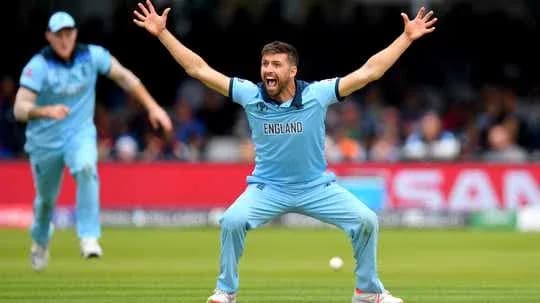
In 2019, on home soil, he was a central figure in England’s ODI World Cup triumph. Eighteen wickets, relentless pace, and a willingness to bowl the hard overs. Even in the final at Lord’s, with a side strain biting, he kept going as England edged New Zealand in that unforgettable Super Over finish. The image of Wood straining through pain for one more spell summed up his international life: never half-hearted, never safe.
Three years later, in Australia, he did it again in the shortest format. Nine wickets in four matches at the 2022 T20 World Cup, another trophy, another reminder that when England needed a point of difference, they turned to the man who could push the speed gun into the red.
Body vs dream
The story, though, always had a shadow. Injuries followed Wood around. Ankles, side strains, niggles that became layoffs, comebacks that required months of work. Each time, he fought back. Each time, he tried to prove he could still be the quickest in the room.
Eventually, the body called time before he did. His last appearance for England came in the Ashes Test in Perth last November, where he broke down again. This time, there would be no full return.
“I’ve made the decision to retire from international cricket,” Wood said, explaining that medical advice had closed the door on both Test and 50-over cricket. “On medical advice, Test cricket and 50-over cricket are not possible, so the England dream has slowly been ground out of me over the past year.”
Those words cut through the usual retirement platitudes. This wasn’t a player drifting away. This was someone being told that the thing he loved most at the highest level was no longer an option.
Yet there was no bitterness in his reflection on what came before. “Playing for England has been the greatest honour I could have ever wished for and a dream come true. The little lad in me would be so chuffed to have played so much for England. To travel the world, meet incredible people and play against the best, is something I feel incredibly lucky to have done, doing something I have loved.”
A rare kind of thrill
Inside the England set-up, they knew exactly what they had. Rob Key, England men’s managing director, called it “a privilege to watch the latter part of a great career,” and highlighted how Wood became a “point of difference in Ashes series wins, a World Cup, and… thrilled crowds every time he got the ball in his hand.”
That phrase – “point of difference” – fits. Wood was not a metronome or a compiler of records. He was the shock to the system. Captains used him when the game drifted, when they needed to jolt a contest awake, when they wanted batters to feel uncomfortable again.
He leaves without the volume of wickets that some of his peers amassed, but with moments that will live much longer in the collective memory: the World Cup charge in 2019, the thunder at Headingley, the decisive ball at Trent Bridge. Spells, not spreadsheets.
The contract is up, the medical advice is clear, and the international chapter is closed. Yet the echo of Mark Wood at full pace – that furious run, that whiplash action, that ball thudding into the gloves at chest height – will linger.
In an era obsessed with data and margins, England had a fast bowler who made crowds lean forward just to see how fast he could go. How many teams will have that luxury again?