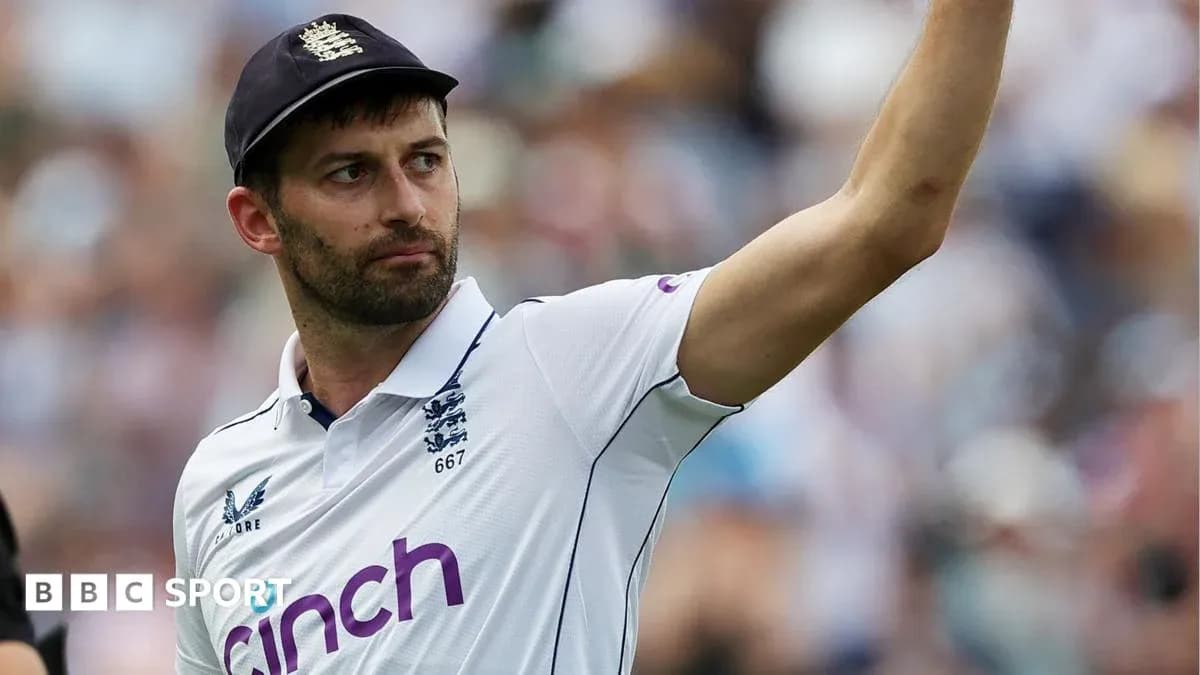
Mark Wood Retires: A Fast Bowler's Legacy
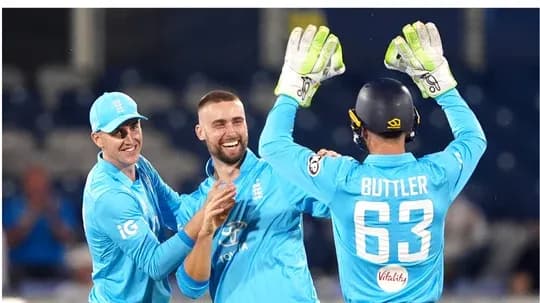
Mark Wood, one of the fastest and most wholehearted fast bowlers England has produced, has called time on his international career with immediate effect at the age of 36.
The Durham quick, whose run-up ended in a whirl of arms and raw pace, has finally been beaten by the one opponent he could never quite shake: his own body.
A career stopped in full sprint
Wood’s decision comes at the end of his central contract, after another year lost to injury. He had only just fought his way back into the Test side for the first Ashes Test in Perth last November, returning after 15 months out with an elbow problem and subsequent knee surgery.
The comeback barely got going. He managed just 11 overs before the same left knee flared up again, swelling that sent him straight back home for treatment. He has not played for England since.
“Although this may not come as a surprise given the past year, it just feels like a natural time at the end of my contract,” Wood said in a statement on social media. The words carried the weight of a man who has spent a career sprinting into the wind.
“I've always tried to be resilient and come back from injury to prove people wrong and show everyone what I can do. Unfortunately, this time I lost the battle.
“On medical advice, Test cricket and 50-over cricket are not possible, so the England dream has slowly been ground out of me over the last year.
“Playing for England has been the greatest honour I could have ever wished for and a dream come true.”
He added that he hopes to keep playing the game in some capacity, even if the international stage is now closed.
Pace, pain and pivotal moments
Wood’s numbers only tell part of the story, but they are not insignificant. Since his Test debut in 2015, he claimed 119 wickets in 38 matches, often on unforgiving surfaces and often as the enforcer, the man asked to bend his back when others tired.
That debut summer ended with England regaining the Ashes on home soil, and Wood was in the thick of it. His speed, hostility and willingness to bowl the ugly overs made him a point of difference in a bowling attack built around more classical seamers.
The price was brutal. Ankle, knee, elbow – the injuries came in waves. Every time he seemed to be building rhythm, something gave way. By 2018, in an attempt to ease the strain, he lengthened his run-up, a counterintuitive tweak for a bowler already straining at the limits.
It worked. The pace stayed. The impact grew.
Wood became a central figure in some of England’s greatest white-ball triumphs. He was part of the side that lifted the 2019 50-over World Cup, taking 18 wickets in the tournament and hurtling in at full tilt even as the pressure of a home World Cup closed in.
He was again in the squad when England won the T20 World Cup in 2022, his speed a weapon few teams could handle. A calf problem robbed him of the closing stages of that tournament, another cruelly timed setback in a career full of them.
White-ball weapon, Ashes firestarter
Across formats, Wood leaves a serious white-ball legacy. In men’s T20 internationals he finishes as England’s sixth-highest wicket-taker, with 54 wickets from just 38 matches. In one-day internationals he added 80 wickets in 70 games, often operating in the hardest overs: new ball, death, and the moments captains usually dread.
His most recent great spell of influence came in the 2023 Ashes. England trailed 2-0, the series seemingly slipping away. Wood returned, the speed gun lit up, and the mood shifted. His blistering spells helped jolt England back into the contest and they eventually levelled the series, his presence as much psychological as tactical.
For Rob Key, managing director of England men’s cricket, the view from the dressing room was clear.
“It's been a privilege to watch the latter part of a great career,” Key said. “To have been a point of difference in Ashes series wins, two World Cup wins, and to have thrilled crowds every time he got the ball in his hand is something very few players achieve. He can look back with enormous pride on a career very well spent.”
The fast bowler’s bargain
Wood’s story is the fast bowler’s bargain laid bare. Every spell at 90mph-plus takes something. For a decade, he kept paying, often on one leg, often through gritted teeth, chasing the next spell, the next roar, the next wicket.
The body has finally called time. The memories he leaves – the skidding bouncer, the off stump cartwheeling, the sprint back to his mark with a grin that said he’d do it all again – will not fade as quickly.
He won Ashes series, he won World Cups, he thrilled crowds. The speed was the headline, but the resilience was the story.
Now the international chapter closes, and the question shifts. Not whether Mark Wood could have done more, but how long England will have to wait to see another fast bowler quite like him.