Mark Wood's Legacy: A Fast Bowler's Journey in International Cricket
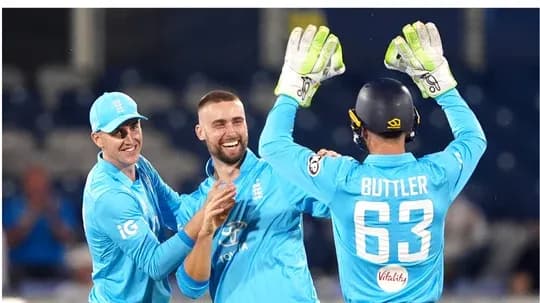
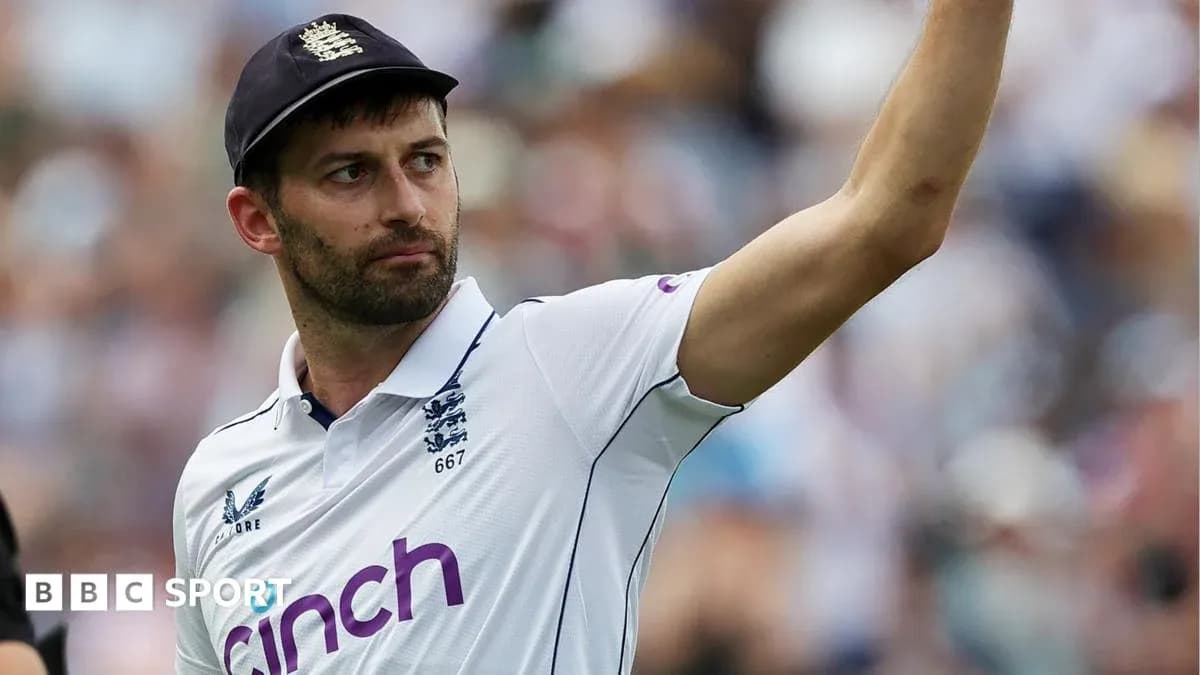
Mark Wood, England’s whirling dervish of pace, has bowled his last ball in international cricket.
The 36-year-old Durham quick, one of the fastest bowlers ever to pull on an England shirt, has called time on a career that thrilled crowds, terrified batters and repeatedly tested the limits of his own body.
A body that wouldn’t bend, then finally broke
Wood’s story is as much about stubborn resilience as it is about raw speed. He spent 15 months out of the game with an elbow injury and subsequent knee surgery, only to fight his way back for the first Ashes Test in Perth last November.
He lasted 11 overs.
Swelling in his left knee – the same one that had just been under the surgeon’s knife – ended his series before it had even begun. He flew home, again, for treatment. He never played for England again.
So when the announcement came, it felt less like a shock and more like an inevitability finally spoken aloud.
“Although this may not come as a surprise given the past year, it just feels like a natural time at the end of my contract,” Wood said in a statement on social media. He admitted that, this time, the battle with his body was one he could not win. Medical advice was blunt: no more Test cricket, no more 50-over internationals.
The dream, as he put it, had been “ground out” of him over the past year.
Numbers that only tell half the story
On paper, Wood’s Test career reads 119 wickets in 38 matches, from his debut in 2015 to that final, faltering return in Perth. Across formats, he finished with 80 wickets in 70 one-day internationals and 54 in 38 T20s, making him England’s sixth-highest wicket-taker in men’s T20 internationals.
Useful numbers. Impressive, even. But they don’t quite capture the chaos he brought when everything clicked.
He helped win back the Ashes in 2015, part of the last England side to regain the urn. He played in the XI on that surreal day at Lord’s in 2019 when England won the 50-over World Cup, hobbling out to bat with Ben Stokes despite carrying an injury. He was also in the squad that lifted the T20 World Cup in 2022, even if a calf problem kept him out of the closing stages.
Few English cricketers can say they have won both white-ball World Cups and the Ashes. Wood can.
Rebuilt run-up, same fearsome pace
Years of ankle, knee and elbow trouble forced him into reinvention. In 2018 he lengthened his run-up, a calculated gamble to ease the stress on his body. It worked, up to a point.
The pace stayed. The impact sharpened.
St Lucia in 2019 offered a glimpse of what the remodelled Wood could be. He tore through West Indies with a spell that felt like a statement: this is what I’m capable of if the body holds.
It rarely did for long. But when it did, stadiums crackled.
Ashes theatre and Headingley lightning
Wood’s relationship with the Ashes is complicated, scarred by injuries yet studded with moments of pure theatre.
He was one of the few England players to emerge with credit from the grim 2021–22 tour of Australia, pounding in on unforgiving pitches while others wilted. Then came 2023, and his delayed entrance into one of the great modern series.
Held back until the third Test at Headingley with England 2-0 down, Wood arrived like a storm. His first spell there will live for years in Ashes folklore. He bowled at blistering pace, touching 95mph, and flattened Usman Khawaja with a thunderbolt that felt like a turning point not just in the match, but in the mood of the entire summer.
The impact went beyond wickets. He changed the temperature of the contest.
By the end of that Test, the fast bowler who so often watched nervy finishes from the dressing room found himself in the middle of one. Bat in hand, alongside his great friend Chris Woakes, Wood helped drag England over the line in a tense chase. Without that partnership – and without Wood’s searing spells across the series – England don’t fight back to level 2-2 from 2-0 down.
He didn’t just bowl them back into the Ashes. He hit them there too.
Pace, personality, and a bond with the crowd
Anyone who has ever tried to bowl fast knows the fantasy: sprint in, unleash something so quick that batters flinch and stumps cartwheel. Wood lived that fantasy for real.
He didn’t just run in. He flew. Often literally bowling himself off his feet, he turned each delivery into an event. There was a sense, whenever he had the ball, that something might happen – good, bad, spectacular, but never dull.
What set him apart was not only speed, but spirit. Wood played with a grin, a joke, an awareness that cricket is still a game. He engaged with fans, laughed at himself, and never gave the impression that he saw his role as a burden. For a generation of supporters, he became a reminder that elite sport can still look like fun.
A career of what-ifs, and what-was
There will always be the nagging question: what if his body had held?
Fast bowling is an unnatural act, a biomechanical rebellion against how the human frame wants to move. It punished Wood more than most. Elbow, knee, ankle, calf – each took its turn to betray him.
Yet when the stars aligned, he was one of the most exhilarating cricketers on the planet. He scared top-order batters, cracked open dead games, and gave England something they rarely produce: a genuine 90mph-plus quick who could change a match in a single spell.
He leaves with medals, memories and a cabinet of moments that matter: Ashes wins, World Cups, and those roaring afternoons when his name echoed around grounds as he charged in again.
The end of an era
Wood insists he hopes to keep playing in some form, even as his international days end. The shirt, though, is folded away.
“Playing for England has been the greatest honour I could have ever wished for and a dream come true,” he said. It sounded final. It sounded honest.
Rob Key, England men’s managing director, framed it simply: “To have been a point of difference in Ashes series wins, two World Cup wins, and to have thrilled crowds every time he got the ball in his hand is something very few players achieve. He can look back with enormous pride on a career very well spent.”
His departure also underlines a broader shift. In less than three years, England have waved goodbye to Stuart Broad, James Anderson, Chris Woakes and now Mark Wood from their Test attack. Add in Ben Stokes’ all-round workload and that’s 1,871 Test wickets gone from the dressing room.
With Wood’s exit, Joe Root stands alone as the only current England Test player to have tasted Ashes glory.
The roar that followed Wood to his mark has fallen silent. The question now is stark: who will generate that kind of fear, that kind of thrill, for England the next time the ball is thrown to a fast bowler and a series hangs in the balance?