Katie Taylor's Emotional Retirement Celebration in Croke Park
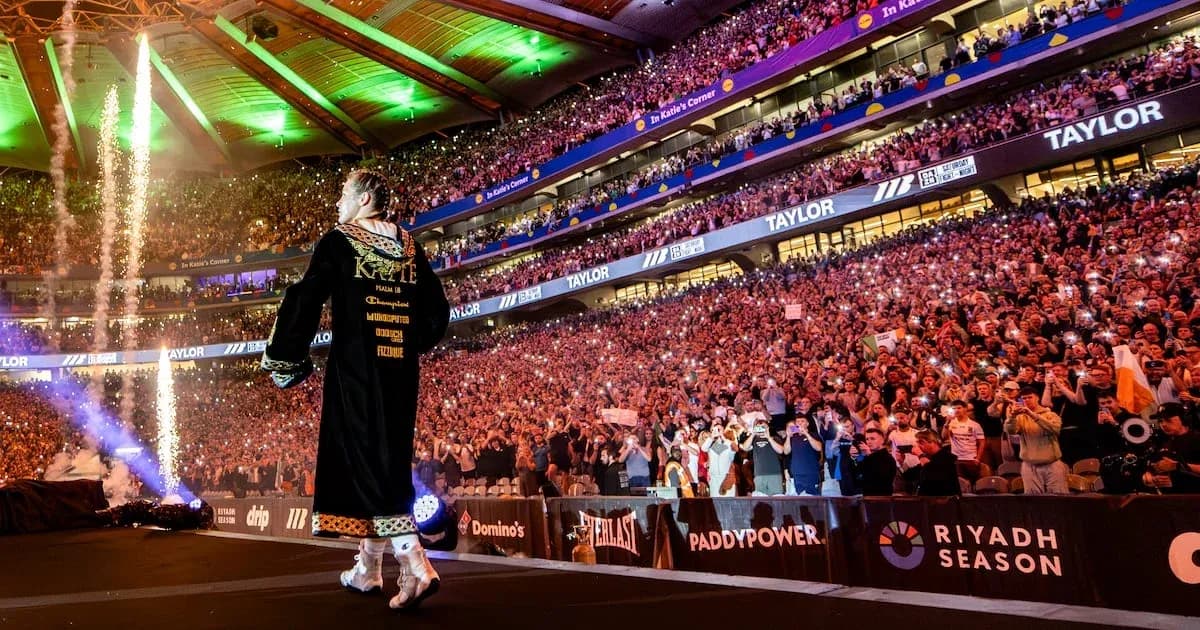
Katie Taylor walked away from boxing on Saturday night without a belt on the line and without a punch that will live forever on highlight reels. She left with something heavier. Eighty thousand people in Croke Park singing her into retirement.
No gold watch. No lawnmower. Just a wall of noise and a city holding its breath for one of its own.
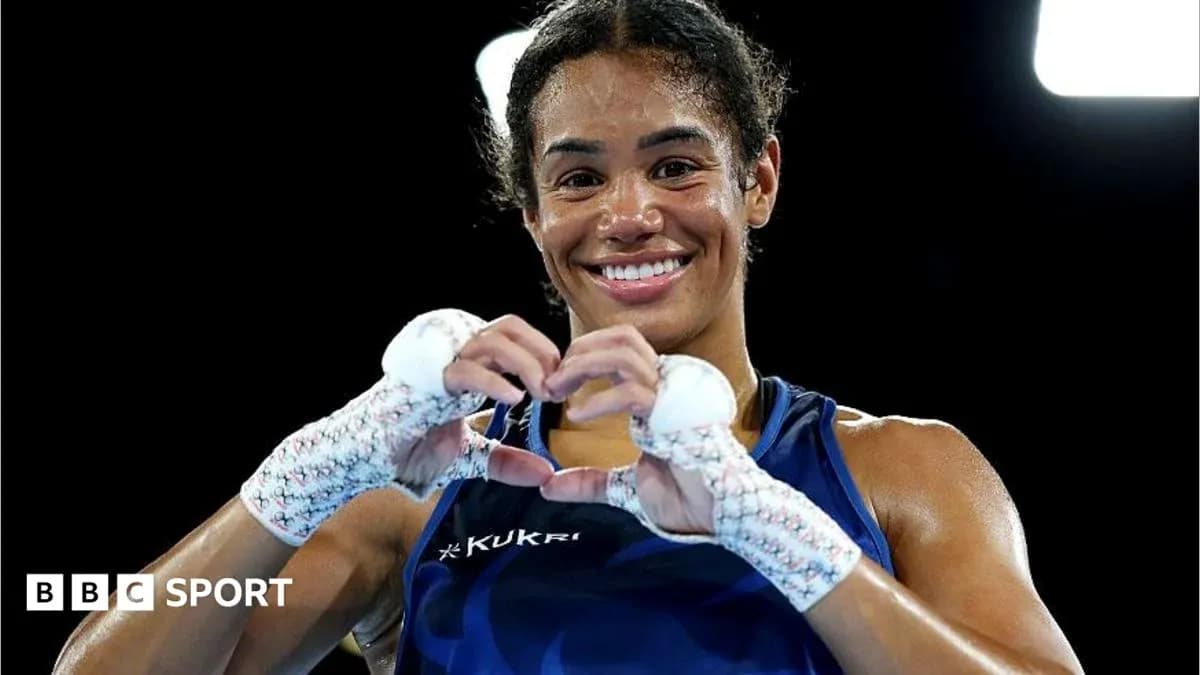
Natasha Jonas, once an opponent and now a pundit on RTÉ, watched it all and summed it up in two words: “it’s unreal”. She wasn’t talking about the result. She was talking about the scale of it, the emotion of it, the sense that this was less a fight and more a national gathering.
Jonas has seen this before. She remembered chasing Olympic qualification for London 2012 “in the middle of nowhere in China”, hearing a roar from some distant corner of the arena. She went to investigate, certain those fans couldn’t possibly be Irish. They were. They’d come from Beijing to watch Katie Taylor. That was the point: where Taylor goes, people follow.
Croke Park proved it again. Some in the stadium assumed they were witnessing a record crowd for a fight. The internet had other ideas, pointing instead to Tony Zale v Billy Pryor in Juneau Park, Milwaukee, when an estimated 135,132 turned up in 1941. No big screens then, no giant replay boards, just a sea of faces and a ring in the distance. You suspect most of them went home unsure who had their hand raised.
There was no such doubt in Dublin. The stadium looked magnificent, bathed in carefully choreographed light. Whoever designed the pre-fight show earned every cent. Beams swept across the stands, colours shifted with the music, and Croke Park took on the feel of a cathedral with a soundtrack.
The songs rolled out, and the crowd responded. Grace. The Fields of Athenry. Zombie. They belted them out, tens of thousands of voices wrapped around ballads of execution, famine, deportation and the dead of The Troubles. Visitors from abroad might have struggled to square the joyful noise with the subject matter. This is Ireland: the party is loud, the lyrics are laced with grief.
RTÉ leaned hard into the sentiment. Montage after montage. Archive footage. Slow motion. Bernard Dunne, sitting beside Jonas, fought to keep his composure. “This is more than just a boxing match,” he told host Jacqui Hurley. “It’s a celebration, a thanks for what Katie’s given us over the years.” As he spoke, My Way thundered out over the speakers. Any remaining resistance in the tear ducts didn’t last long.
Then came the phones. Eighty thousand tiny lights in the dark as three quarters of Westlife delivered You Raise Me Up. It was part concert, part vigil. When Olé Olé Olé swept around the ground, Marty Morrissey danced with Michael Flatley at ringside, the sort of surreal detail that only ever seems to happen at Irish sporting nights. Hurley nailed it: “It’s like a rave that meets a football occasion.”
Ringside, Paul O’Flynn grabbed a word with Shane Lowry. On the big screens, tributes poured in from Bono, Ed Sheeran, Niall Horan and Rory McIlroy, all paying homage to a fighter who had long since crossed into national treasure territory. Just before the anthem, Barry Keoghan’s voice took over.
“All stories begin at home. The rare ones end there, too. And so, Katie returns for every fan who walked the journey beside her ... for all Ireland. When they ask you about Katie, you can begin with four simple words. Once upon a time.”
You could almost hear the tissue boxes emptying.
Then, finally, the boxing.
Flora Pili emerged first, stepping into a cauldron. She took one look around and her expression said everything: mon Dieu. Lesser fighters might have looked for the nearest exit and the first ferry from Rosslare. Pili stayed put, braced herself and went to work.
Taylor arrived to All Hail King Jesus, a more subdued singalong, the crowd unsure of the words but not the meaning of the moment. Fireworks ripped across the sky, a full-throttle display that turned the stadium into a blaze of colour. Taylor paused, puffed out her cheeks, and took it all in. On nights like this, Madison Square Garden feels like a club show. This was home, and it was bigger.
“I’m feeling pretty emotional myself here and it hasn’t even started,” commentator Hugh Cahill admitted. Beside him, Eric Donovan could only gasp: “Oh my gosh, this is extraordinary.”
When the bell rang, the spectacle narrowed to its simplest form: two fighters, one ring. The contest never matched the theatre around it. Taylor controlled it, boxed within herself, and kept danger at arm’s length. Pili showed courage but landed little of consequence. Any clean shot on Taylor would have felt like an affront to the 80,000 watching; Pili never really threatened to test that theory.
The judges’ unanimous decision came as no surprise and was greeted with warmth rather than shock. This was the result everyone had come for. The win mattered, but not as much as the goodbye.
Then Taylor did the thing every fighter thinks about and few get to script so cleanly. She took off her gloves and walked them to the centre of the ring. She placed them down, not on some neutral patch of canvas but squarely on the Lidl logo, an image that will delight one sponsor as much as Nike’s famous swoosh did when Tiger Woods’ ball paused on the lip at Augusta. Somewhere, you imagine, Aldi winced.
O’Flynn climbed through the ropes for the last in-ring interview of her career. “What now?” he asked.
Taylor didn’t talk about coaching, or punditry, or legacy. “I’m just going to enjoy the fruits of my labour,” she said. “I’m going to eat chocolate.”
A Time Out bar would fit the script. She has earned every bite.