Katie Taylor's Last Fight: A Legacy at Croke Park
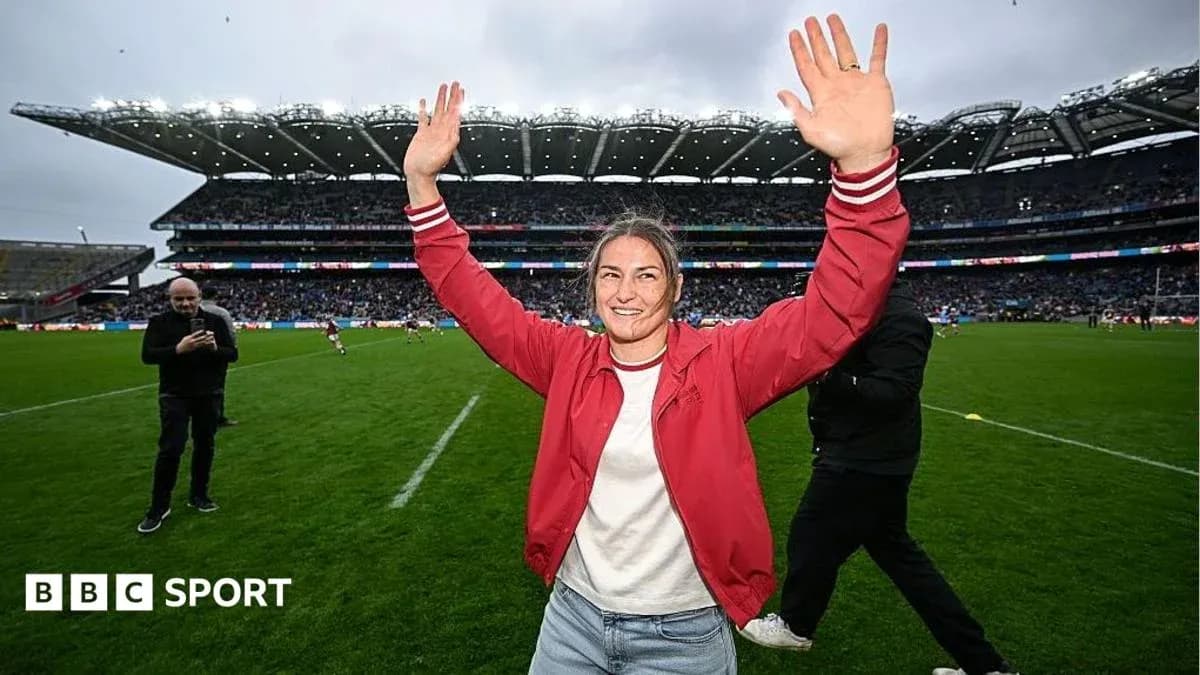
On Saturday night, Katie Taylor will walk alone towards the ropes at Croke Park, 82,000 voices swirling around her, knowing this is the last time. One more ring walk. One more set of instructions in the corner. One last chance to leave as an undisputed champion, this time at light-welterweight, on the most sacred sporting turf in Ireland.
If she beats France’s Flora Pili in Dublin, it will feel less like a win and more like the closing line of a story that has already reshaped an entire sport.
The letter that lit the fuse
Before the medals, before Madison Square Garden, before the sold-out arenas, there was a 10-year-old girl in Bray who simply wanted to fight.
Back then, there was nowhere for her to go. Women’s boxing in Ireland wasn’t sanctioned. It wasn’t at the Olympics. It barely existed as a professional dream. The pathway was a blank page.
But there was Deirdre Gogarty.
Gogarty had left Ireland for the United States and, in 1997, became the country’s first female professional world champion, beating Bonnie Canino for the WIBF featherweight title in Louisiana. For a young Katie Taylor, that belt, that name, that story, became a lifeline.
So she wrote a letter.
“How did you do it when everyone tried to stop you?” the 10-year-old asked her hero.
Gogarty wrote back. Her answer was simple, but it cut straight through the fog: if Taylor kept working, kept showing her skills, “somebody’s going to say ‘we’ve got to let this girl box’.”
Years later, Gogarty would look back at that letter and recall the line that stopped her in her tracks: “Maybe one day they’ll let us box in the Olympics.”
That scrap of paper did not single-handedly create a champion, but it did something just as important at the time. It proved to a child with no obvious future in the sport that someone had already walked the road she wanted to take.
Without it, perhaps Taylor still climbs the same mountain. But in a landscape where hope was in short supply, Gogarty’s reply gave her something priceless: proof that the impossible was negotiable.
Forcing open the Olympic door
Years later, Taylor would do for others what Gogarty had done for her.
When the International Olympic Committee hesitated over whether women’s boxing belonged at the Games, Taylor became the sport’s most persuasive argument. Officials needed convincing; the Irish lightweight was brought to Chicago for showcase bouts in front of sceptical eyes and folded arms.
She didn’t lobby. She didn’t campaign. She boxed.
Her performances shredded the doubts. Punch by punch, round by round, she dismantled the idea that women’s boxing was an afterthought.
“Katie won’t say this, and I’ve been holding back from saying this, but single-handedly, Katie Taylor got women’s boxing into the Olympics,” her manager Brian Peters says.
When women’s boxing finally made its Olympic debut at London 2012, Taylor was the face of it. She carried a nation’s expectation and the weight of a decade’s argument into the ring – and left with lightweight gold.
The dream that had once lived in the line of a childhood letter was now hanging around her neck.
Four years later in Rio, the script turned. A split-decision defeat in the quarter-finals ended her title defence and, with it, her amateur journey. No gold. No podium. No fairytale repeat.
“It was probably the worst year of my career,” Taylor admitted later. “I needed a change. I needed a new mindset.”
That loss did more than sting. It forced a decision. She could rebuild for another Olympic cycle or step into a professional world that still treated women’s boxing as a niche, underfunded sideshow.
Had she stood on the top step again in Rio, with a second gold around her neck, maybe the urgency to gamble on a neglected pro scene would have faded. Defeat pushed her towards reinvention.
A DM that changed everything
Turning professional was only half the battle. Doing it properly was the real fight.
First came Peters, who initially moved to protect her from the sport’s darker corners.
“I only took her on not to see her end up with people who didn’t know what they were doing,” he says.
Then came the sliding door that looked, at first glance, like nothing more than a modern reflex: a social media message.
On 4 October 2016, Taylor opened Twitter – now X – and sent a direct message to Matchroom’s Eddie Hearn. Would he consider promoting her?
Hearn replied the next day. He invited Taylor, Peters and her mother Bridget to a restaurant in London. He even borrowed his father Barry’s car to make the right impression.
The charm offensive landed. Within a month, Taylor was making her professional debut at Wembley Arena under the Matchroom banner.
In a sport where alliances crack and implode at the first hint of conflict, Taylor’s inner circle has barely shifted. Peters, Hearn, trainer Ross Enamait – the same core from the first pro bell to what is now the final one.
“In a business full of egos, she’s stayed loyal to everyone around her and remained the most humble person you could ever meet,” Peters says.
If Hearn had ignored that DM, or if Taylor had drifted from the team that built around her, the promotional machine that helped drag women’s boxing into the mainstream might never have gathered such force. The fights, the belts, the headlining nights – all of it needed that one message to land, and that one reply to come back.
Madison Square Garden and the Serrano storm
By April 2022, Taylor had cleaned out the lightweight division. Undisputed champion. The belts were stacked, the resume already historic.
She had survived a brutal, razor-thin majority decision against Delfine Persoon at Madison Square Garden three years earlier to unify the titles. That night, many felt the aura of invincibility flicker. She won, but the margin was paper-thin, the toll obvious.
Returning to MSG to face Amanda Serrano was different again. Serrano, a seven-division world champion, carried danger in every punch and a reputation to match.
Two women headlining the Garden for the first time. A sellout crowd of 19,187. A stage that had once seemed reserved for heavyweight epics and all-time greats.
The fight delivered everything it promised. Violence. Skill. Momentum swings. Taylor, hurt and under siege at times, refused to bend. At the final bell, the arena rose. She took a split-decision victory in a bout widely hailed as the fight of the year.
If one judge had seen it differently, the narrative around women’s mega-fights could have stalled. If the bout had failed to ignite, the sceptics would have circled.
Instead, that night lit the fuse on a rivalry that stretched across years and platforms. Their 2024 rematch, on the undercard of Jake Paul v Mike Tyson, drew vast global audiences on Netflix. Taylor then closed the trilogy at the Garden again in 2025, sealing a rivalry that pushed the women’s game into living rooms and conversations it had never reached before.
Those nights did not just define her. They shifted the sport’s centre of gravity.
Croke Park or nothing
And so it comes to this.
Croke Park is not another turning point. It is the bill finally coming due on a lifetime of choices, sacrifices and small moments that could easily have gone another way.
After beating Serrano in last year’s trilogy decider, Taylor had already made up her mind.
“She actually retired that night,” Peters reveals. “She said, ‘We convincingly beat Serrano – where do we go from there?’ I said I’ll agree on one condition.”
The condition was blunt: Croke Park or nothing.
“Croke Park – no disrespect to Wembley – is the greatest stadium in the world,” Peters says. “You cut an Irish person and they’ll bleed Croke Park.”
This, then, is the deal. One last walk in an arena that sits at the heart of Irish sport and identity. One last fight in front of a crowd that has grown up with her, watched her, claimed her as their own.
Peters is adamant. There will be no late change of heart, no third fight with Chantelle Cameron, no surprise comebacks once the lights go down.
“When Katie gives her word, that is it,” he says.
Whatever happens against Flora Pili, the verdict on Taylor’s legacy is already in. She did not just win titles. She kicked the door off its hinges so that others could walk through.
On Saturday, she steps through the ropes one final time. The question now is not what she has done for boxing. It’s who dares to follow the path she carved.