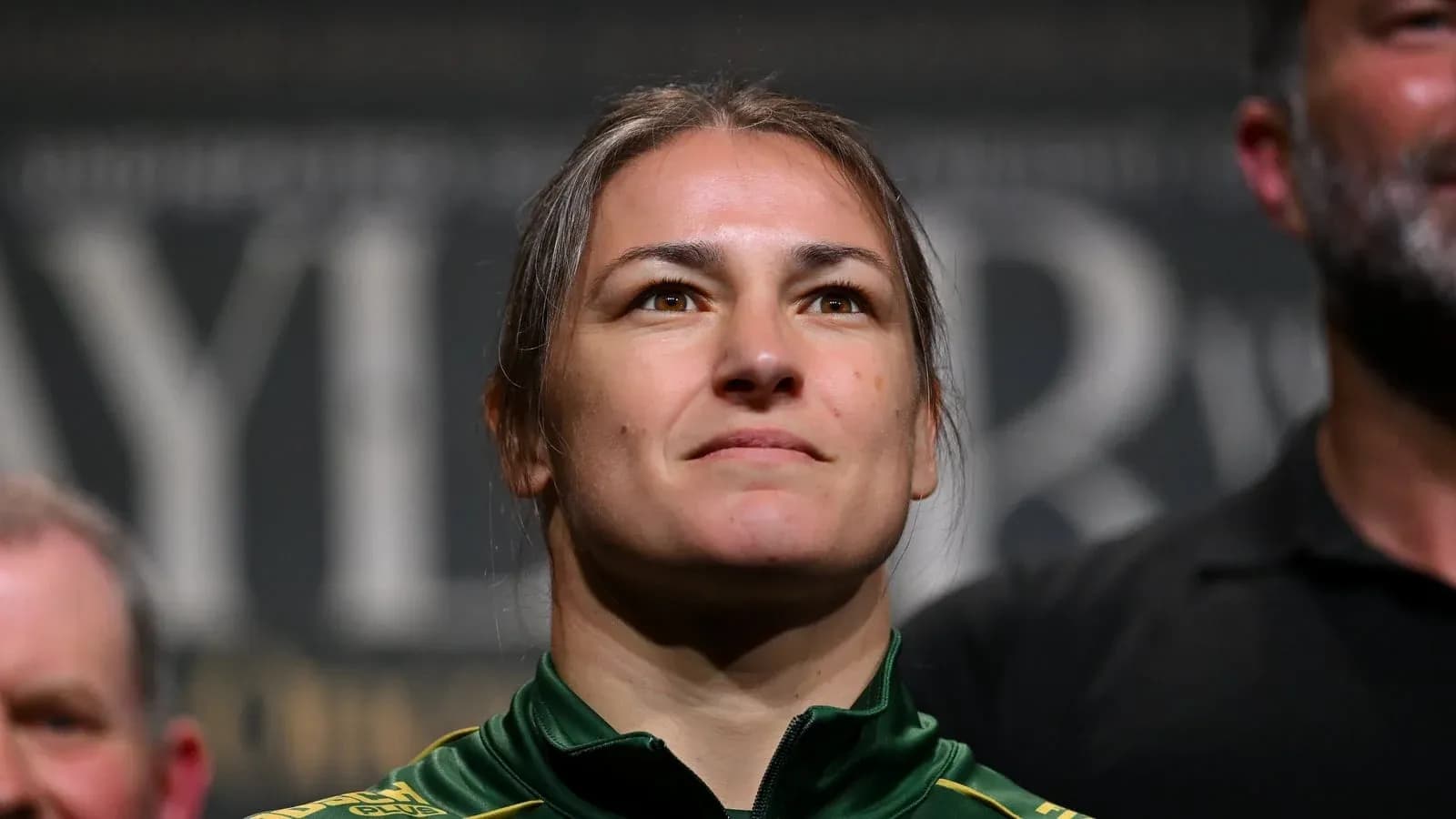
Katie Taylor's Journey: From Quitting to Croke Park Glory
Katie Taylor once thought about walking away before the rest of us had even heard her name.
Long before Olympic gold, undisputed titles and sold‑out arenas from New York to London, the Bray fighter stood at a crossroads in 2006, staring at a future that did not seem to want her. Now, with Croke Park sold out for Saturday’s farewell against Flora Pili, she can finally admit how close she came to quitting.
A dream with no stage
Taylor spoke to RTÉ Radio 1's Inside Sport about the peaks and the hard, lonely valleys of a career that has come to define Irish sport. The pivotal moment came when the International Olympic Committee announced the new events for the 2008 Beijing Games.
Women’s sport was clearly pushing through barriers. The women’s 3000m steeplechase, women’s BMX, extra women’s fencing events, women’s marathon swimming – all added. Women’s boxing? Left outside the door, its global appeal questioned, its campaign rejected.
Taylor, then rising fast through the amateur ranks, suddenly faced a brutal calculation. Another four-year wait. Another cycle of sacrifice just to see if her dream might one day be allowed, never mind realised.
She thought about stopping.
Fighting to exist
Her story had always started in defiance. When she first laced up gloves as a nine or ten-year-old, women’s boxing was not even a sanctioned sport in Ireland. To get bouts, she had to pretend to be a boy. That is not folklore; it is the foundation.
Those days shaped her philosophy. She decided early that she would not talk her way into anything. No bluster, no manufactured persona. Just performances. Let the excellence speak. Let the fights force doors open.
It worked, but it was brutal.
Taylor recalled how her family fought for her in the background, pushing, lobbying, refusing to accept that women’s boxing should remain an afterthought. Even then, doubt gnawed away. The Olympic dream felt like a mirage.
There were moments, she admitted, when she thought women’s boxing would never make the Games. She was told it was on course for Beijing. Then the news came back: it would not be included. That, she said, was the closest she has ever come to walking away from the sport.
Instead of competing in China, she ended up analysing the boxing for RTÉ, watching the tournament she had wanted to light up. The question hung over everything: was this ever going to happen? Four more years, for any athlete, is an eternity.
She chose to push on. The decision changed not just her life, but the sport itself.
London opens the gates
A year after Beijing, the IOC finally added women’s boxing to the Olympic programme. Even then, the window was narrow. London 2012 offered only three women’s weight classes. Taylor landed in the one that mattered most to her: lightweight, 60kg.
The rest is etched into Irish sporting history. She won gold. She turned into a national phenomenon almost overnight.
The impact was immediate inside the arena too. Her quarter-final win over GB’s Natasha Jonas generated a staggering 113.7 decibels of noise. For context, a jet engine hits around 140. For women’s boxing, those roars were a statement as loud as any punch.
From there, the support never left her. It travelled with her through the disappointment of Rio. It followed her to Wembley, to Madison Square Garden, to arenas across America as she stacked up professional world titles and carried a sport on her shoulders.
From Ali’s shadow to centre stage
Now that same army of supporters will pack Croke Park, the home of the GAA and a venue long associated with another icon of the ring. Muhammad Ali fought Alvin Lewis there in 1972, drawing around 18,000. Taylor has blown past that figure, selling out the stadium faster than one of her trademark combinations.
For her, there was never any doubt that Ireland would come with her one more time. Gender has never been the issue. She is one of their own.
She spoke of being “blown away” by the last few months, by 80,000 tickets vanishing in minutes. She believes Ireland can be proud of that response, proud of the way it has rallied behind a female athlete on such a scale. She is not convinced any other country would turn out quite like this.
The gratitude runs deep. She wants to repay it the only way she knows how: by delivering a performance worthy of the occasion, a career-best display in what she has framed as her final fight.
A nation in her corner
Taylor has never forgotten where the journey really began – not in London, but in small halls and half-empty venues, when only a handful believed women’s boxing could ever be more than a curiosity.
She listed the stops on this shared pilgrimage: before London as an amateur, during those golden days at the ExCeL Arena when Amhrán na bhFiann rang out, through the heartbreak of Rio, then across the professional circuit – London, Wembley, Manchester, Leeds, Boston, Brooklyn, Dallas, New York.
The same people kept turning up. The same flags. The same voices.
Now they will be there again at Croke Park, closing the circle. Taylor spoke of disbelief at the scale of the backing she has received, of pride in the country that has stood behind her and, in doing so, helped build a market for female professional boxing that once seemed impossible.
Because a pro career cannot exist in a vacuum. It needs full arenas, travelling fans, a public willing to invest not just money but emotion. Ireland did that for her. In return, she gave them nights they will talk about for decades.
On Saturday, under the lights at Croke Park, the fighter who almost quit before it all began will walk out to the noise of a nation that refused to let her dream die.