Katie Taylor's Farewell Fight at Croke Park: A Historic Moment
Four days out from Katie Taylor’s long goodbye at Croke Park, her camp is walking around in a kind of dazed delight. The hard part is done. The tickets are gone. The dream venue is secured. All that’s left is the fight – which, in the swirl of back-slapping and business talk, almost feels like the quietest part of the week.
From Hogan Stand to Helix
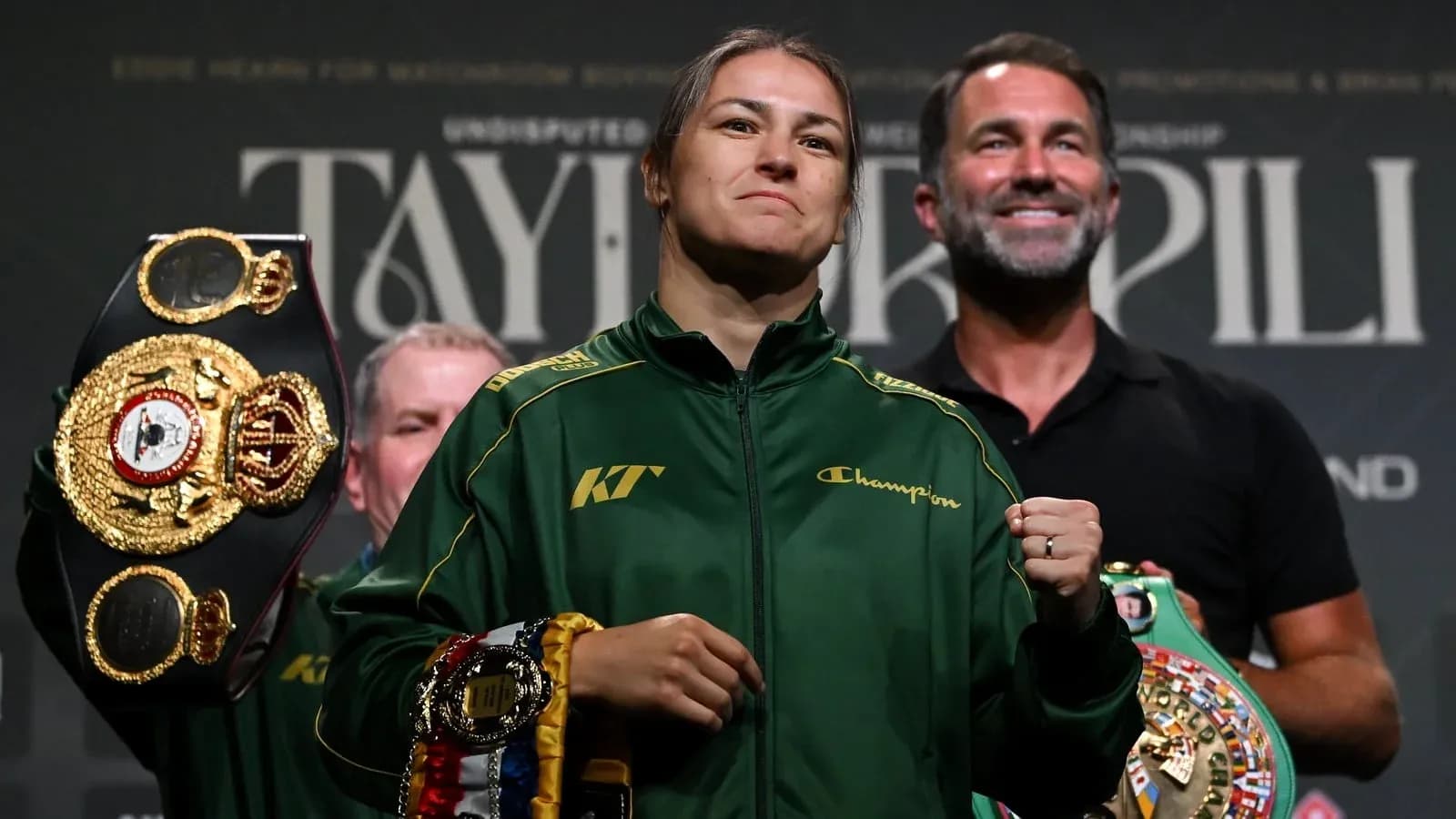
Tuesday’s press conference was essentially a rerun of June’s big announcement, only with a change of scenery. The Hogan Stand’s plush surrounds were swapped for the more modest Helix Theatre on the DCU campus.
Outside, students drifted by, earbuds in, heads down, barely registering that Ireland’s most decorated fighter was in their midst. Inside, it felt like a collision of worlds. GAA reporters, more used to tracking county managers than promoters, mixed with Matchroom and DAZN staff, their London accents cutting through the low hum of conversation. Over it all, that familiar tin whistle instrumental – the one that loops endlessly in Croke Park before throw-in – played like a prelude to something bigger.
The anxiety that hung over June’s event was gone. No more nervous glances about ticket sales, no more talk of risk. The numbers have answered everything.
Taylor will become the first boxer to headline a fight at Croke Park since Muhammad Ali in 1972. Brian Peters, her long-time manager, might argue that it’s Ali who’s in exalted company here. Back then, Ali versus Al “Blue” Lewis drew only around 18,000, a figure that prompted a furious rebuke from the GAA director general over ticket pricing.
This time, there was no such miscalculation. Half of the 80,000 tickets vanished in pre-sale. The rest were gone within 17 minutes on 28 July. A generation raised on Taylor’s Olympic heroics and professional dominance had simply been waiting for the chance.
Hearn’s Regret and Redemption
Before the live-stream began, 18 journalists were squeezed into a cramped dressing room, awaiting Eddie Hearn. When he finally ducked in, he took one look around.
“Wow, blimey! This is small!” he said, half-laughing, half-genuinely surprised.
Pressed on the blistering speed of the sellout, Hearn allowed himself a flicker of regret. Why had it taken so long to get to this point? Why not Croke Park sooner?
Back in June, he had traded easy banter with Croke Park’s commercial director Peter McKenna – “Peter, me old mate, me old mucca!” – but the road to this week was anything but smooth. On Tuesday he dipped back into those more fractious negotiations, still irked by what he saw as a lack of belief from the stadium side.
“People can sort of deflate your spirit, which is quite unusual for me,” Hearn said. “They did deflate my spirit a bit over the years. They made me question whether we could do it or whether it would actually work.
“I’m disappointed with myself that I allowed that to happen because maybe we could have done it earlier.
“If Croker had originally gone, ‘Yes, this is going to be massive!’, we would have done it.
“But they was like, ‘Hmm... I dunno’. And it was like, well blimey, if they’re not sure, do we really want to be gambling with these costs?
“Listen, they [Croke Park] helped out as well, they were fantastic in the end,” he added, softening the jab.
The promoter slipped naturally into one of his favourite stories: the day Katie Taylor and Brian Peters came to his office after the heartbreak of Rio, pitching a professional career that many in the sport still doubted would sell.
Eddie Hearn has inherited his father Barry’s gift of the gab, but not all of his instincts. Barry, who brought Chris Eubank to Ireland to fight Steve Collins in Millstreet in 1995 after being assured it was “just around the corner” from Cork airport – “IT WAS ABOU’ AN ’OUR ’N A ’ALF FROM CAAAUK AIRPORT!!!” – wasn’t convinced that Taylor could become a commercial force.
“We decided to headline her in November [in 2016],” Eddie recalled. “I think we paid her – she’s still having a go at me about this – six grand for her debut. For a four rounder.
“Which at the time, in women’s boxing by the way, was a lot of money.
“I said to my Dad, I’m going to put Katie Taylor on last. And he’s like, ‘What? A women’s fight?’
“I was like, ‘yeah, dad, like she’s unbelievable. You’ve got to watch her.’
“He said, ‘No one’s interested in women’s boxing, son.’ It’s the same sort of thing Frank Warren would say – or anyone from that era. And he [Barry Hearn] watched her and went ‘oh my God!’”
That “oh my God” has since been echoed in arenas from New York to London. On Saturday, it will ring around Croke Park.
Art of the Deal, Not Rocky
As is often the way in modern boxing, the build-up has become a celebration of logistics and sales as much as sport. Tuesday had the feel of a victory lap for the event itself.
It was, as one observer put it, more “Art of the Deal” than “Rocky”.
At the top table, promoter Peter Aiken batted away praise for the sellout, insisting that “she [Taylor] sold the tickets.” Peters, less tearful than in June but no less effusive, went further, proclaiming Taylor the greatest Irish sportsperson of all time – with a nod to Roy Keane as “a good second”.
He even found room to tip Barry Keoghan for an Oscar for his turn in the promotional material and joked that he had arranged with “God almighty” for no rain after 5 o’clock on fight night.
The mood in the room veered between giddy and self-congratulatory, yet every so often Hearn and others felt the need to pull it back to the ring.
“This is a real fight,” they reminded anyone getting too swept away by the occasion.
The Challenger in the Shadows
On the other side of the table sat Flora Pili, the woman tasked with trying to spoil the farewell. For the wider public, she might as well be “AN Other”, but inside the Helix she received a polite, respectful round of applause.
She walked out with dreadlocks painted in the French tricolour, a small but striking statement of identity in a room dominated by Taylor’s story.
Pili knows Dublin. She boxed here in a low-key international round-robin at the National Stadium in 2017, losing to Kellie Harrington and Italy’s Irma Testa. Those defeats came in the unpaid ranks. As a professional, she has yet to slip: 12 fights, 12 wins, and an IBO super lightweight title collected in her most recent outing – the very belt Taylor vacated in late 2025.
Her record is neat, her momentum real. She just happens to be walking into the biggest night of another woman’s life.
Legacy in Real Time
Taylor did not sit down with the written press on Tuesday, but she did address the room and the thousands watching online. As ever, she turned the focus outward, back towards the people who filled those 80,000 seats in minutes.
“I’m not sure there’s another country in the world where 80,000 people would turn up for a female athlete,” she said, voice tightening slightly as she spoke.
Then the fighter who once had to disguise herself as a boy to get a bout in a club ring allowed herself to look back.
“I was walking into some boxing gyms as a young girl, being sniggered at and laughed at. Who’s this girl trying to be a boxer? I had to earn people’s respect along the way.
“I’m so delighted that these young girls coming through now don’t have to go through the same struggles and adversity that I had to go through. The door is actually opened for them.
“You walk into every boxing gym now and it’s packed with female fighters. That to me is the greatest part about this legacy.”
In a week dominated by ticket numbers, negotiations and nostalgia, that line cut through everything. On Saturday night, the lights, the roar and the spectacle will belong to Katie Taylor. What comes after, in those packed gyms she talks about, will decide how long her shadow really lasts.