Katie Taylor's Farewell: A Perfect Exit from Boxing
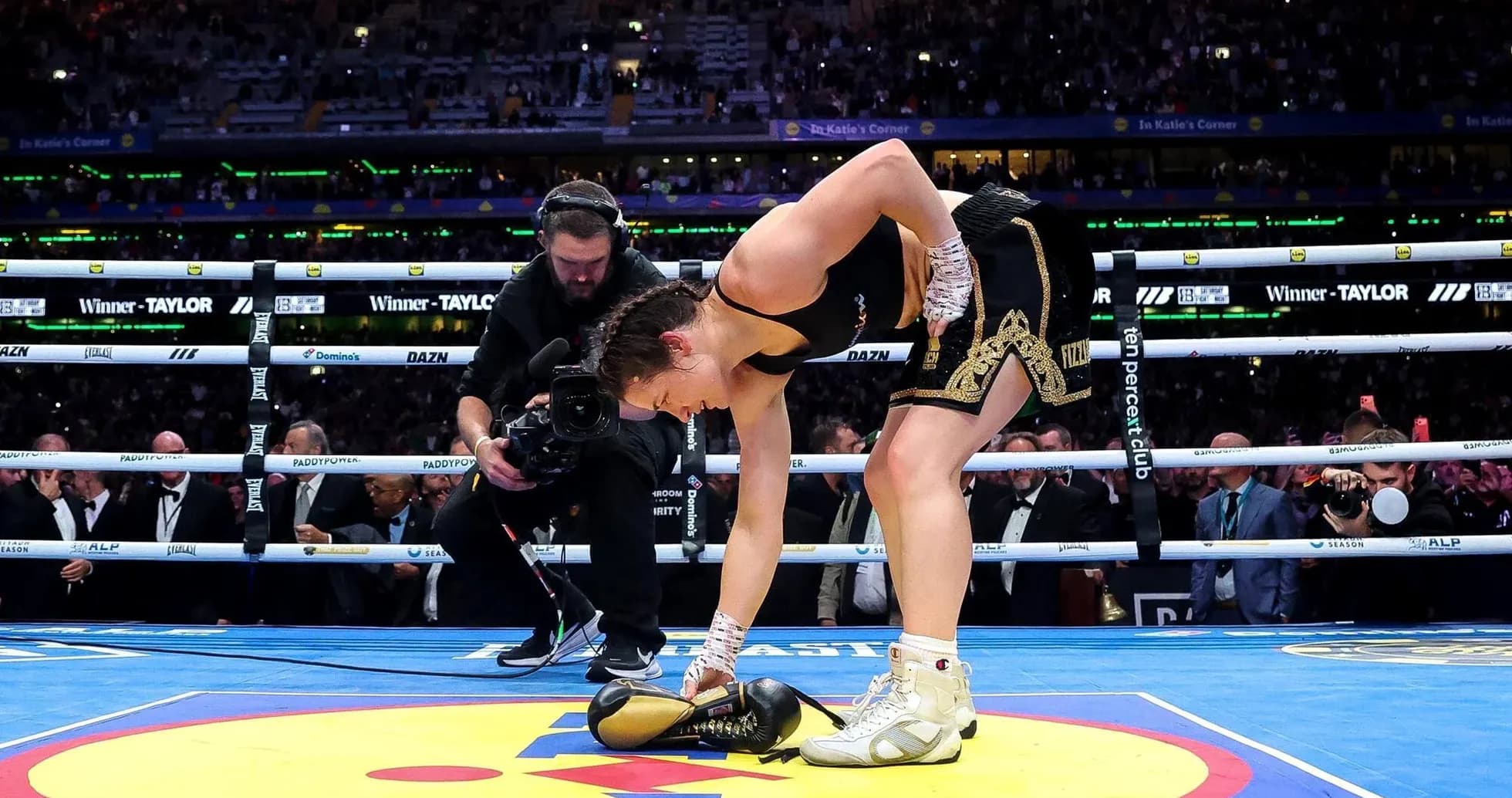
Katie Taylor stood on the canvas at Croke Park on Saturday night and stared into the great unknown that swallows every great athlete in the end.
The numbers, the stories, the wreckage are all familiar. Premier League footballers, NFL stars, champions from every code who walk away and find only bankruptcy papers, broken marriages and the hollow echo of what they used to be. They call retirement a sportsman’s first death for a reason.
Boxing has always understood that darkness better than most. Eddie Arcaro, the legendary American jockey, once said that when a jockey retires “he becomes just another little man”. Ray “Boom Boom” Mancini, a former WBA lightweight world champion, painted it even bleaker: since he stopped, he said, he eats less, weighs less, trains less and cares less. Both men carved out good second lives. Both still wrestled with the void.
In its own way, retirement might be the toughest opponent of all.
A farewell like no other
So what does Katie Taylor do now?
Alan Minter once joked that there are only two reasons boxers come back: they’re broke, or they need the money. Taylor should never have to lace a glove for either.
A purse of around €3m is expected from her Croke Park swansong. She took more than €7m from just the last of her trilogy with Amanda Serrano. And it isn’t just the money. Not even close.
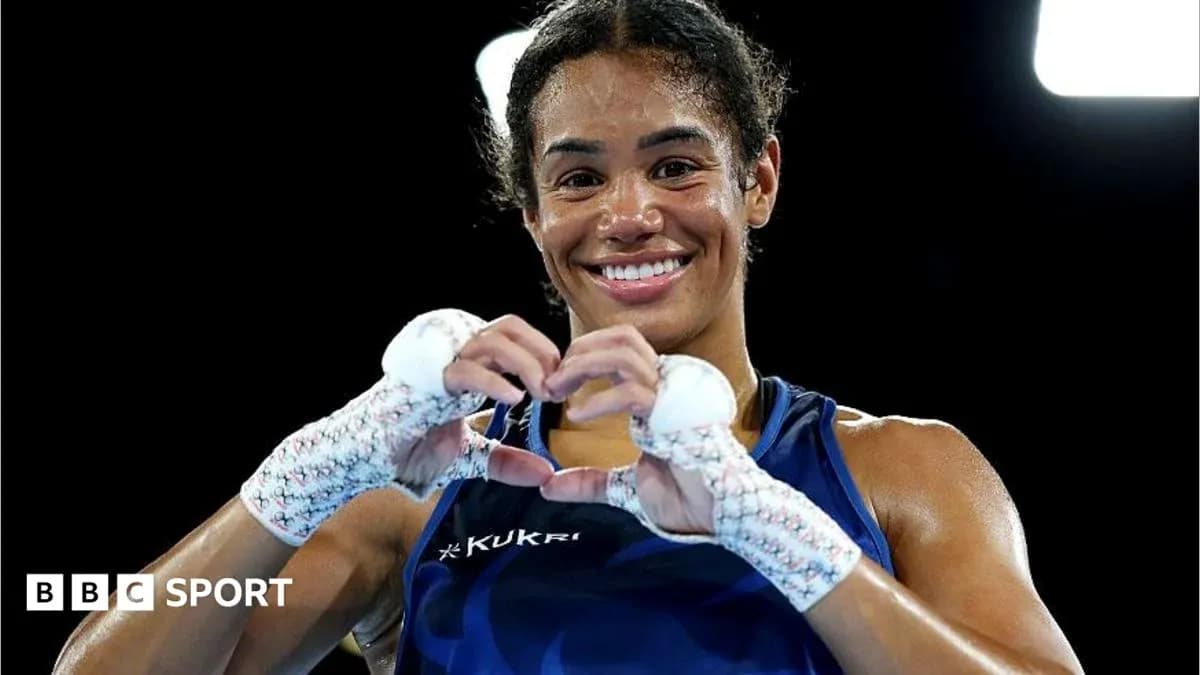
This was as close to a perfect exit as Irish sport has ever staged. As farewells go, it knocks Brian O’Driscoll’s 2014 Six Nations sign-off into second place. O’Driscoll left with a title and a lap of honour. Taylor left with something less tangible and far more powerful: the sense of a country rising as one to say goodbye.
If her long-time manager Brian Peters gets his wish, the next glimpse of Taylor won’t be under lights or between ropes but under strip lighting in parish halls. In Inisbofin, perhaps. In small towns and unlikely venues across Ireland, where she is expected to appear alongside Steve Bunce in a nationwide stage production titled “Her Story”.
“It's going to be quite magical,” Peters said.
The thought of Taylor voluntarily criss-crossing the country talking about herself feels at odds with the woman Ireland watched, often silently, for two decades. She built a career on privacy and understatement. Yet second acts rarely follow the script.
Who, in the middle of Saipan, would have predicted Roy Keane as a national TV darling and star of soft-drink adverts? Who saw Bill Belichick, the great hooded emperor of New England, stumbling through his post-Patriots existence with his aura stripped away?
Taylor has always been the opposite of that circus. Yet in the last week of her career she spoke more, and more freely, than at any point before. Eddie Hearn even joked about the length of her in-ring speech after she outclassed Flora Pili.
She has a voice. The question now is what she wants to do with it.
Beyond the ropes
Taylor explained on Sunday morning that she made a decision very early in her career: no talking, just boxing. Let the hands speak. Let the excellence do the work. She kept that vow almost to the end.
Those skills do not need to vanish with the final bell. All logic suggests she will stay in boxing in some form, and that simple certainty opens a hundred different doors. Coaching sits there as the obvious path. So does mentoring. So does a more strategic role in the sport she transformed.
Her impact on Irish boxing, male and female, is already carved into granite. You can measure it in medals and belts, but you feel it more in the way a generation talks about her. The sight of her sparring with ten-year-old Clodagh Keating last week said more than any speech. The next generation doesn’t just know her name. They move like her. They dream because of her.
When asked if a formal role in Irish boxing might be possible, Taylor smiled and pointed to a more practical obstacle. Her life is in Connecticut now. Her husband and their six children have to be part of any decision. A return to Ireland is not just a question of desire; it is a question of logistics, of schools and homes and lives already in motion.
So if boxing stays, it will share space with other pillars. Family, obviously. And faith.
Faith in the spotlight
Taylor’s religious beliefs have always been there, but in Croke Park they were impossible to miss. She walked to the ring to “All Hail King Jesus”, a choice that laid her convictions bare before a crowd that came for a fight and got a sermon in song as well.
Asked about it afterwards, she did not flinch. She spoke about clinging to her faith, about holding tight to what she believes is the word of God during the worst days of her career. The heartbreak of Rio 2016 loomed large in that story. The shadow that fell over her life and results after those Olympics was no secret. She credits faith with dragging her through.
“Look what God's done,” she said. “He's done the impossible in my lifetime and he's came through time and time again. And that's what I was saying in the ring afterwards and giving him all the glory and the honour for all that I've achieved.”
That open declaration lands differently in two places she calls home. In the United States, where sport and religion often march in step, her words slide easily into a familiar narrative. In Ireland, where the relationship with faith is fractured and shifting, such public devotion could have jarred.
It never did.
That might be the clearest measure of her standing. Taylor’s faith, so visible and so absolute, has never really been used as a stick to beat her with. The affection that poured from the horseshoe stands of Croke Park and out into the Dublin night drowned out any potential cynicism. She has become one of the very few figures in Irish life who seem to exist beyond the usual fault lines.
A nation’s mirror
Her status goes beyond medals and belts. It stretches beyond sport. In the Irish public imagination, there is no direct comparison. No one else quite occupies the same space: adored, scrutinised, yet somehow untouched by the usual bitterness that follows fame.
The strangest part is that nobody can fully explain why. Not the pundits. Not the public. Not even Taylor herself.
“I don't know, to be quite honest,” she admitted. “I think people, the whole country, has seen me and my good times and they have also seen me during my devastations as well. I think people really resonate with your vulnerabilities as much as your successes.
“They see me cope with the heartbreak of Rio. They see me cope with the heartbreak of the shadow of loss. They see me in the, just, personal difficulties as well. So yeah, I think my story is the story of everybody in the whole country.”
Maybe that’s it. Maybe the real bond lies not in the gold medals or the undisputed titles, but in the way she fell and got back up, over and over, in full view of a small island that knows all about starting again.
Her story, as the stage show will insist, is called “Her Story”. The truth is simpler.
It isn’t finished.