Katie Taylor: Champion of Women's Boxing
On the eve of her Croke Park homecoming, the bout that will close the book on a once‑in‑a‑generation career, the stories about Katie Taylor say as much about the people telling them as they do about her.
They speak about punishment and persistence, about a teenager who refused to be treated gently, and about a woman who dragged an entire sport into the light.
“She’s a girl – but she is a champion”
Eric Donovan remembers the first time he realised Katie Taylor was not to be handled with care.
They were teenagers, both orbiting the newly formed Irish team in 2003, both in and around the same weight. Sparring partners by necessity at first, then by choice.
“I was always very impressed by her from the start,” he recalls. She was the only girl in a room full of boys, but never the odd one out. Never fragile. Never looking for favours.
Those early spars were rough. Against male counterparts, they rarely flattered her. She took her share, maybe more. Paddy Barnes, conceding plenty of weight, went to war with her. The sessions were hard, honest, unforgiving.
Donovan admits he tried to pull his punches at the beginning. She was a girl. He was a teenage lad. It felt instinctive.
His coach, Zaur Antia, cut through that instinct in an instant.
“Eric, that’s very bad sparring. Very, very bad. Not good.”
Donovan protested. He was sparring Katie Taylor. Sparring a girl.
Antia snapped back. She might be a girl, but she was a champion. She wanted to be Olympic champion. She deserved seriousness, not protection.
That rebuke flipped a switch. Donovan was only 16 or 17, but his perspective shifted. From then on, Katie was simply another elite athlete in the gym. No allowances. No soft rounds. He went at full tilt; she matched him, punch for punch, speed for speed.
The spars stayed fierce but never dirty. Technical, high‑tempo, intense. She wanted it that way.
Back then, she was one of only a handful of women in Irish boxing. At elite level, she was essentially alone. Deirdre Gogarty had blazed a trail before her but had been forced to leave Ireland to pursue a career. Taylor stayed, picked up the mantle and smashed at the walls that had kept women out.
She won her first world title in 2005. When women’s boxing was left out of the Beijing Olympics, it broke her heart.
Two years later, at the 2007 World Championships in Chicago, she was invited to box an exhibition bout on finals night. In the dressing room, officials told her exactly what was at stake: she was going out to fight for women’s boxing to be included in the London Games.
The weight of a movement on her shoulders. She delivered a masterclass.
Donovan watched the reaction from some of Britain’s top amateurs – Frankie Gavin, Billy Joe Saunders, Luke Campbell, James DeGale. They could barely believe what they were seeing.
“Who’s this?” they asked.
“That’s my sparring partner,” Donovan replied.
From super‑fan to teammate
For Gráinne Walsh, Taylor was not a rival or a colleague at first. She was the reason Walsh ever laced a glove.
Walsh grew up a “full soccer head”, dreaming of a professional football career. Boxing wasn’t in the family. No lineage. No uncle with old fight posters on the wall.
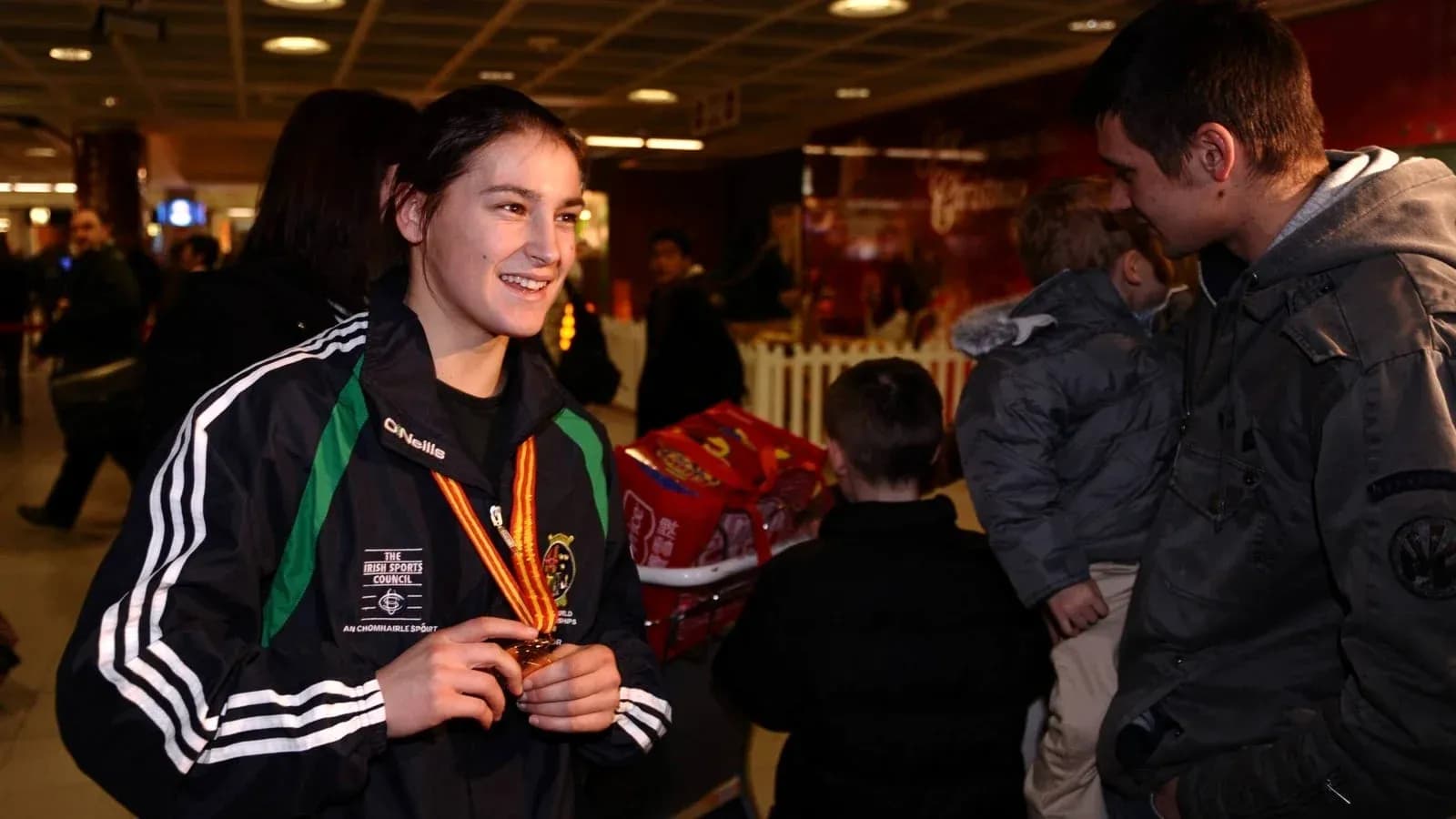
But she was curious about the sport, and in 2012, with no summer soccer league to keep her fit, she went looking for something new. A boxing club was opening across the road in Tullamore. Katie Taylor was coming to cut the ribbon.
It felt like a sign.
Taylor had just returned from the World Championships in China with a fifth world title. London 2012 was around the corner. Women’s boxing was about to step onto the Olympic stage for the first time.
Walsh met her that day and then glued herself to the television that summer. Those Games were monumental for boxing. For women’s boxing, they were a revolution.
She still marvels at Taylor’s ability to chase a dream that did not yet exist. There was no Olympic template for women. No clear path. Taylor fought to create one, battering down doors and dragging the sport into places it had never been allowed.
Walsh rode that wave. She credits Taylor for the platform she now stands on, for the opportunities that simply would not have been there without her.
Her admiration turned into obsession. Her club coach knew Antia, and Walsh begged for a chance just to watch Taylor train. She would sit quietly in the corner of the high‑performance unit, soaking in every movement, every drill.
Four years after she first stepped into a boxing gym, she made the Irish team. National titles followed. Then, in 2016, the World Championships in Kazakhstan – and a surreal moment.
Katie Taylor was no longer just the poster on the wall. She was Walsh’s teammate. Sitting beside her on the plane. Chatting between sessions.
Walsh was still the super‑fan, still fighting the urge to stutter and blush, but now she shared the tracksuit. She had stepped through the door Taylor had kicked open.
A night that shook the ExCeL
For commentator Marty Morrissey, Taylor’s London gold stands alone.
He has called All‑Ireland finals, watched Clare hurlers lift trophies that meant the world to him personally, but nothing quite matched the noise, the emotion, the history of that afternoon in the ExCeL Arena.
He described it on RTÉ Radio 1 as Katie Taylor edged a brutal, draining final. The Fields of Athenry rolled around the venue, echoing off the tight walls, Irish voices drowning everything else.
There was a flicker of doubt at the end. Taylor looked to her father Pete and to Antia, unsure if she had done enough. They reassured her. Moments later, the verdict confirmed it: Olympic champion.
The celebration took on a surreal twist. British army soldiers guarded every exit, yet the Irish fans, delirious with joy, posed for selfies with them. Old histories felt distant in that moment.
Up in the commentary positions, another odd scene unfolded. Jimmy Magee handled the television call. Morrissey took the radio. Then Kate Middleton appeared beside them, offering a royal hello at an Irish sporting high. Prince William was somewhere in the building, but they never crossed paths.
The night still had one more story to write. RTÉ bosses wanted Taylor live on television with Bill O’Herlihy. The problem was they couldn’t reach her. She wasn’t answering her phone; the Taylors were trying to keep the evening for themselves.
Pete Taylor told Morrissey they were doing no media. This was a private night.
Morrissey learned she was in the medical centre and spotted an opening – literally. A doctor’s coat and lanyard lay unattended. He slipped them on and walked in. Members of the Irish team burst out laughing. What on earth was he doing there?
He found Katie and Pete. Pete said no again. Katie understood what was being asked. She turned to her father.
“Dad, I think we should do the interview.”
That was that. They agreed.
Before she appeared on RTÉ, the Taylors headed to what they believed was the Irish embassy. A car took them to the address. Half an hour later, Pete rang Morrissey, flustered. The “embassy” was a pub. The welcome was enormous, but it wasn’t where they wanted to spend the night.
Another car, another dash across London. Eventually, Katie Taylor sat beside Bill O’Herlihy in the RTÉ studio, Olympic gold around her neck, a nation listening.
“A mad concept” that changed everything
Hugh Cahill grew up just down the coast from Taylor. She was from Bray, he from Greystones. Word filtered along the shoreline about a girl who was hammering lads in sparring.
It sounded exaggerated, a local myth inflated with every retelling. A girl boxer, more than holding her own against the boys? It was a mad concept then.
Cahill knew Pete Taylor first, the doorman at Jim Doyle’s on the seafront, a pub that sponsored Greystones Rugby Club. Only later did he see Katie in the gym, training with a ferocity that left no room for novelty.
At that time, plenty of people struggled to take women’s boxing seriously. It was treated as a curiosity, something to be indulged rather than respected.
Then they watched her fight.
By the time of the 2012 Olympic final against Sofya Ochigava, the tone had changed completely. Cahill was there in the ExCeL, the same night Morrissey remembers so vividly. He calls it, alongside Bernard Dunne’s 2009 world title win, one of the most seminal sporting events he has ever witnessed.
The arena felt like a nightclub – tight, loud, claustrophobic. Shouts and roars ricocheted off the walls. Almost nobody backed Ochigava. A handful of Russians tried to make themselves heard, but were swallowed by the Irish roar.
Cahill still believes most people don’t really know Katie Taylor beyond the basics. They know the medals, the faith, the quiet charity work. They admire her deeply. But the person? The private life? That remains largely hidden, even as her legacy towers over Irish sport.
“She was good, she was deadly”
To Mick Dowling, a two‑time Olympian and long‑time coach, Katie Taylor first arrived as Pete’s daughter.
Pete, a close friend, brought her to Mount Tallant Boxing Club in Terenure. Dowling saw a wiry, relentless youngster who never stopped punching.
She wasn’t a one‑punch knockout artist. She didn’t need to be. She was a bob‑and‑weave, slip‑and‑slide fighter, always on the move, always in your face. All action.
Her fitness stood out immediately. So did her attitude. She listened. She worked. She absorbed.
Pete’s influence in those early years, Dowling stresses, was enormous. His role in shaping her cannot be brushed aside.
“You could see the talent,” Dowling says. Like spotting a future star on a football pitch, the signs were obvious. Timing. Movement. Will.
She could take a shot as well. Not every fighter has a good chin. Taylor did. The trick in boxing is to avoid as many punches as possible, but when she had to take one, she took it and answered with more.
Dowling, busy travelling with the Irish team, watched her rise and knew exactly what he was looking at: a genuine, emerging star.
She proved him right, and then some.
Now, as Croke Park prepares to host the final act, the stories circle back to where they started – a girl in among the lads, refusing to be treated as anything other than a fighter.
She wanted respect. She demanded competition. She got both, and changed the sport in the process.
The question now is not what more she can do for boxing, but how long the echoes of what she has already done will keep drawing new fighters through the gym door.