Katie Taylor: From Bray to Boxing Greatness
Katie Taylor’s story has never followed a gentle curve. It has lurched, soared and clung on by its fingernails, from a makeshift gym in Bray to the blinding lights of Madison Square Garden and, finally, back home to an Ireland that longed to see her in the flesh.
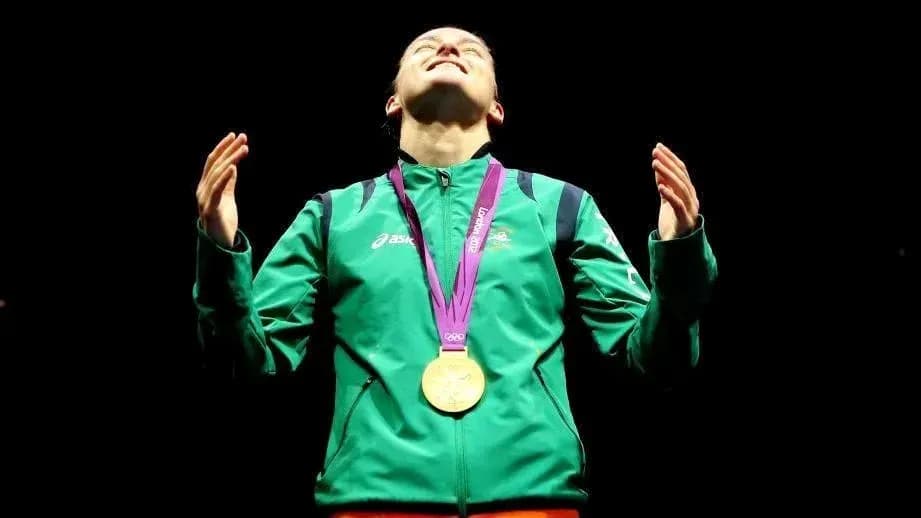
Long before the sold-out arenas and undisputed titles, Taylor was already a serial winner. Five world championships as an amateur, a reign of dominance that stretched across a decade, and then the moment that changed everything: London 2012. Under the Olympic rings, with a wall of Irish noise crashing down from the stands, she won lightweight gold. She was not just Ireland’s star of those Games; she was their only gold medallist, one of just 15 Irish athletes ever to stand on the top step of an Olympic podium in any sport.
Her father, Peter, the man who had guided her from childhood prodigy to global force, was there to share it. Their partnership had been the constant thread through the chaos of elite boxing – early mornings, lonely runs, endless rounds on the pads. In London, they embraced as champions together.
The professional game came calling, but Taylor did not wait for an invitation. She went after it. She walked into the office of Matchroom promoter Eddie Hearn and convinced him to take a chance on something British boxing had barely seen before: a female fighter as a headline act, not a novelty. Hearn signed her – the first woman on his books – and the landscape began to shift.
Her pro debut arrived at Wembley Arena in November 2016. It felt less like a cautious first step and more like a homecoming on foreign soil. Irish fans flooded the venue, flags draped over shoulders, voices hoarse before the first bell. Taylor delivered exactly what they had come for: sharp combinations, relentless pressure, a statement win that said she was not here to ease her way in.
From there, the stakes only climbed. In 2019, under the lights of Madison Square Garden, she stood on the brink of another piece of history – a chance to become Ireland’s first four-belt world champion. Across the ring waited Delfine Persoon, awkward, uncompromising and utterly unafraid of reputations. What followed was a brutal, breathless fight that pushed Taylor to the edge.
Persoon’s pressure never relented. Taylor, so often in control, found herself dragged into a storm. At times she looked one clean shot away from disaster. Yet she refused to fall. When the final bell sounded, both fighters bore the marks of a war, and the judges’ split decision went Taylor’s way. She had all four belts, but she also had a reminder: greatness in boxing rarely comes without walking through fire.
Three years later, she walked back into MSG for a night that would redefine women’s boxing. Amanda Serrano, a multi-weight champion and a ferocious puncher, had been linked to Taylor for years. Negotiations had stalled, restarted, collapsed, then sparked back to life. At last, in 2022, the deal was done. Two women, one sold-out Garden, top of the bill. No token slot on an undercard. This was their show.
The fight lived up to the wait. Ten rounds of shifting momentum, of Taylor dipping into reserves that only the truly elite possess. At one point she looked ready to unravel under Serrano’s onslaught, legs stiff, face marked, the crowd sensing a turning tide. Somehow, she steadied. She boxed, she traded, she refused to step back. Another split decision, another razor-thin escape, another night where staying on her feet meant everything.
Backstage, away from the chaos, she shared a quiet moment with her mother, Bridget – the figure who had stood beside her as loyally as any trainer or promoter. No belts, no cameras, just family. The kind of scene that never makes a highlight reel but explains why the fighter keeps walking back to the ring.
For all the glamour of New York and London, there was always an ache in Taylor’s story: nine long years without a fight in Ireland. An entire generation had grown up watching her on screens, not from the stands. That finally changed in November 2024, when she walked out in front of her own people again. It was more than a boxing event; it felt like a national occasion, a debt repaid.
By then, Taylor had climbed to the very summit. As undisputed light-welterweight champion, she sat on top of the sport, her legacy already secure. The temptation to walk away on her own terms, to close the book with all the belts and none of the regrets, hovered over every conversation about her future. She looked, from the outside at least, ready to sail off into retirement with nothing left to prove.
Yet the road called once more. She went back on tour, back into the cauldron with Serrano in 2024, this time under the open sky in Texas. Sixty thousand fans, a global audience watching live on Netflix, and the same familiar rivalry at the centre of it all. Taylor, the technician with the iron will. Serrano, the puncher who refused to be second best. The stage kept getting bigger; Taylor kept meeting it head-on.
As the final chapter approached, she chose to savour it. Fight week was no longer just about weight cuts and gameplans. She soaked in the attention, the gratitude, the understanding that there would not be many more weeks like this. In the middle of it all, she made time for a 10-year-old girl named Clodagh Keating, inviting her into the ring at a public workout, sharing drills, laughs, and a sliver of a dream.
It was a small gesture on a grand stage, but it captured the arc of Taylor’s journey. From the young girl in Bray needing doors to be opened, to the champion holding them wide for the next one to walk through.