Jessica Pegula Dominates Sofia Kenin at US Open
Jessica Pegula barely broke sweat. Sofia Kenin barely caught breath.
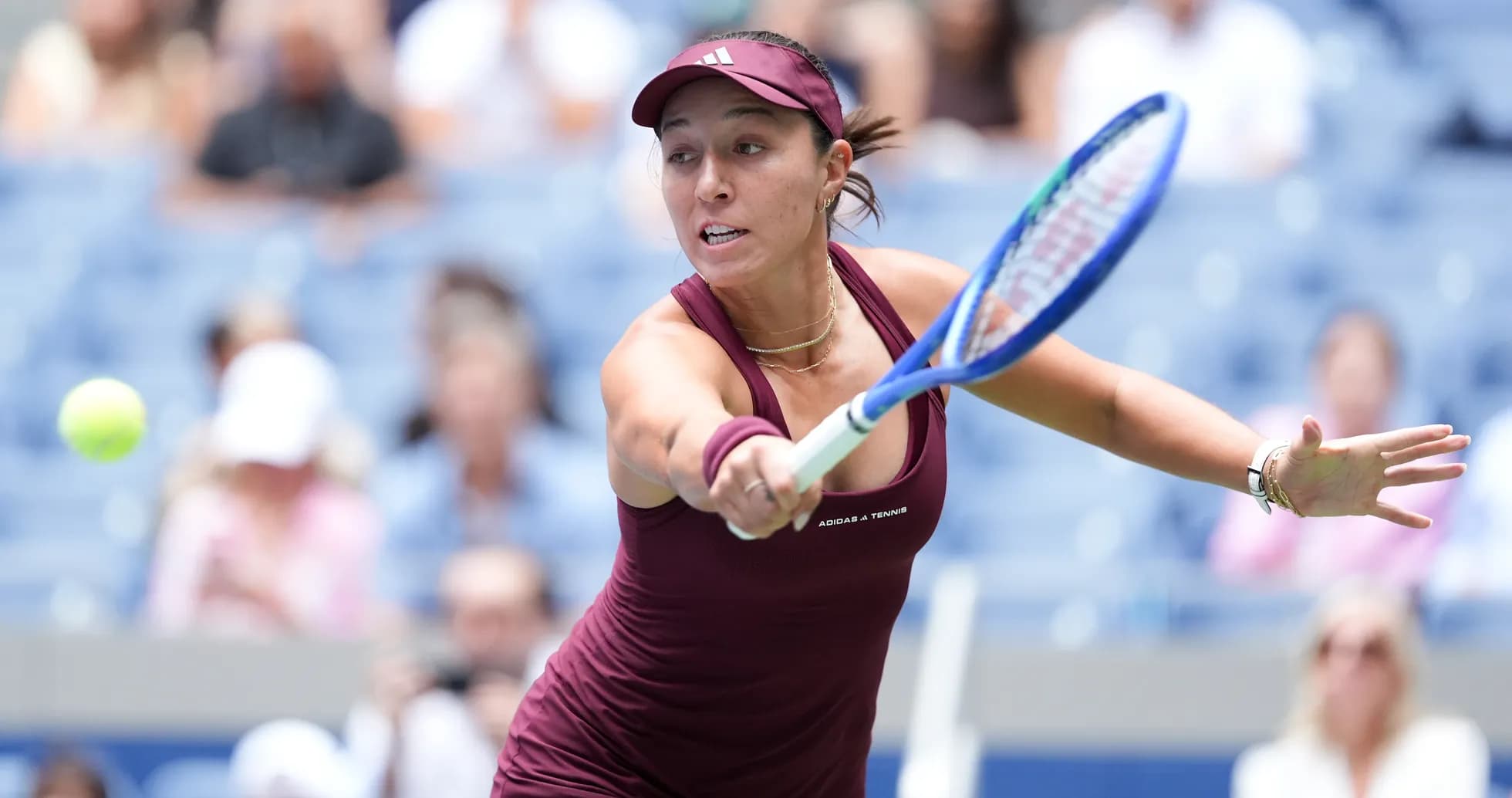
On a warm New York afternoon, the No. 3 seed tore through a potentially tricky second-round match at the US Open, dismantling the former Australian Open champion 6-3, 6-1 in just 56 minutes to reach the third round for the seventh straight year.
It was ruthless. It was efficient. And it looked exactly like the tennis of a woman eyeing not just a first Grand Slam title, but the No. 1 ranking.
Pegula’s clean, cold control
Pegula walked on court knowing the numbers: a first major trophy in New York, plus an early exit for Elena Rybakina before the semifinals, would send her to World No. 1 for the first time. Pressure like that can tighten shoulders.
It never touched her.
She improved to 47-12 on the season and 5-2 against Kenin, but the head-to-head line doesn’t tell the real story. Their rivalry had always been a grind — their first four matches, from 2016 to 2021, all went three sets. Pegula had won their last two in straights, yet Kenin still regularly dragged her into long, awkward battles.
Not this time. This was their most one-sided meeting by a distance, and Pegula didn’t allow Kenin even the illusion of a foothold. For the first time, she held Kenin to fewer than eight games.
“Every match we've played throughout the years has been very tough,” Pegula said on court. “Sonya's given me a lot of trouble in the past, she's a great player and a champion. I was just trying to stay focused on what I needed to do, and luckily was able to be pretty efficient out there today.”
Efficient is one word. Clinical might be closer.
Serve as a weapon, not a shield
The foundation of Pegula’s dominance this week has been her serve. It’s not the heaviest on tour, but right now it’s as precise as anyone’s.
In her opening-round win over Elena-Gabriela Ruse, she conceded only seven points on serve. That felt like an outlier. It wasn’t.
Against Kenin, she repeated the exact same stat: seven points lost on serve. This time, she didn’t face a single break point. Her five aces pushed her tournament total to nine, but the real damage came from placement and variety, not raw speed.
“I'm going for my spots,” she explained. “I'm going pretty big on second serves, I'm trying to mix up where I'm going and just trust that I can hit good serves in the moment. That's been a lot of work we've done off court, so really excited when I can practise something and it pays off in the match.”
Kenin never solved it. Pegula dictated with first strikes, stepped in behind her serve, and kept the scoreboard racing. Kenin, so often a clever problem-solver, simply ran out of answers.
Return game bites just as hard
The serve numbers will jump off the page, but Pegula’s return game carried the same edge.
Kenin opened the door with a double fault to hand over the first break, yet Pegula didn’t rely on gifts. Early in the second set, she dug in on a long return game, grinding through four break points before finally punching through for 2-0. The pressure finally told, and from there Kenin’s resistance sagged.
Pegula sensed it immediately. She pounced on the next service game, finding her sharpest backhand returns of the day to secure the double break for 4-0. The match, for all practical purposes, was over.
The scoreline — 6-3, 6-1 — felt fair. It might even have flattered Kenin.
From one finalist to another
Now the story turns to a compelling third-round clash with a familiar face and a familiar stage history.
Pegula, the 2024 US Open runner-up, will face the 2021 runner-up, No. 31 seed Leylah Fernandez. The Canadian, whose electric run to the final five years ago lit up Arthur Ashe Stadium, arrived in New York this year without a single Grand Slam win in 2026. She has found her footing again this week, beating Mananchaya Sawangkaew 6-4, 6-1 to reach the third round here for the third time.
Pegula leads their head-to-head 3-1, all on North American outdoor hard courts. The most recent meeting came in Miami this year, where Pegula cruised 6-2, 6-2. On paper, that sounds comfortable. On court, she knows better.
“I think she's tough to play,” Pegula said of Fernandez. “She plays a little bit unorthodox, likes to use her forehand and take the ball super early. When she's feeling it, it can be really tough to play against. I have had situations where I feel like I've played well against her and done well, but then sometimes if she's on and you start a little slow, she can really be super-aggressive and it's tricky to play against.
“It's hard. And then on top of that, being a lefty and returning her serve I think is always another hard part. There is definitely some stuff I'm going to have to work on and address probably tomorrow, and then hopefully I'm able to play well against her in the next round.”
Fernandez brings angles, early timing, and a crowd-pleasing flair. Pegula brings order, weight of shot, and the kind of quiet, relentless pressure that breaks opponents down over time.
Right now, though, Pegula also brings something else: the form of a player who looks entirely at ease with the biggest ranking prize in the sport dangling just in front of her.