Javagal Srinath: The Humble Journey of the Mysore Express
On an ordinary day in Bengaluru, the ‘Mysore Express’ waited for his stop.
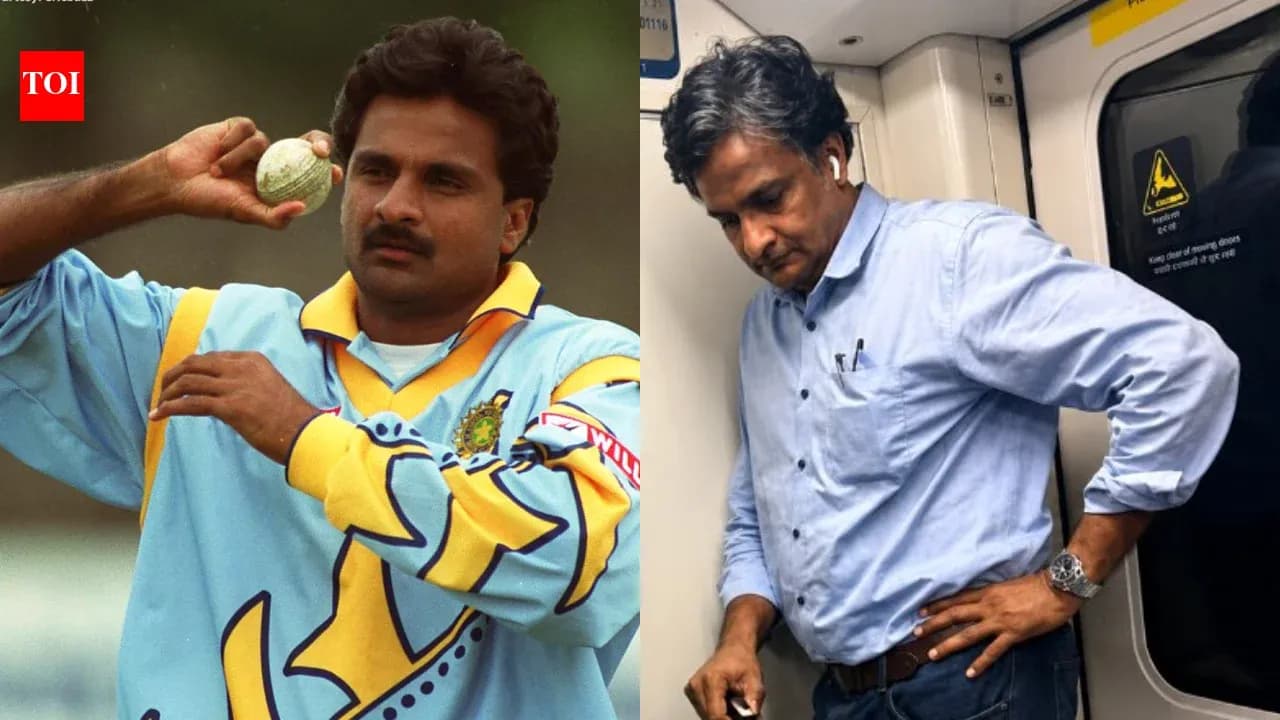
No security cordon. No autograph hunters. No TV cameras tracking his every move. Just Javagal Srinath, one of India’s finest fast bowlers, standing in a Namma Metro coach with a trolley bag by his side, dressed in jeans and a light-blue shirt, blending into the crowd like any other commuter.
The image, snapped discreetly and pushed into the slipstream of social media, has travelled far faster than any of his outswingers. Not because of what’s happening in the frame, but because of what isn’t.
No hint of stardom. No performance, no pose. Just a man on his way somewhere.
The ‘Mysore Express’ in the slow lane
For a generation of Indian fans, the nickname still carries a charge. The ‘Mysore Express’ was the spearhead of India’s pace attack in an era when reliable fast bowling felt like a luxury. From Karnataka’s cricketing nurseries to the Test arenas of the world, Srinath shouldered the load with a kind of quiet relentlessness.
He played 67 Tests and 229 ODIs for India, long before the age of viral clips and curated personal brands. His spells in the 1990s were often the difference between India hanging in a contest and being blown away.
Yet years after his retirement, it isn’t a dismantled batting line-up or a famous spell that has pulled him back into public conversation. It is this – a still frame of him inside a Metro carriage, no fanfare attached.
In the photograph, there is almost nothing to suggest that the man in view once opened the bowling for India. No jersey, no insignia, no one around him holding up a phone for a selfie. That very ordinariness is what has stopped people mid-scroll.
‘This is Srinath’
The reaction online was instant and affectionate. Cricket followers latched on to the picture as confirmation of something they felt they already knew about him – that the humility on the field was no act.
Comments poured in from people who said they had spotted him before in Bengaluru, moving around the city without fuss, without the bubble that tends to form around former internationals. No entourage, no visible need for attention. Just another familiar face at an airport, a café, a station.
As the image spread, fans widened the frame to include an entire Karnataka generation. They spoke of Anil Kumble, Rahul Dravid, Venkatesh Prasad and Srinath in the same breath, calling that group proof that “immense sporting success can coexist with absolute humility and grace.” It was less a nostalgic tribute and more a reminder of a particular culture – high achievement wrapped in understatement.
For many, the Metro photograph did something simple and powerful: it undercut the assumption that sporting fame must be followed by a celebrity lifestyle. Here was a man who had led India’s pace attack, now standing in a carriage like everyone else, his achievements tucked away, not displayed.
A familiar sight, quietly repeated
This is not the first time Srinath’s everyday journeys have made their way online. Another photograph, shared earlier by a fan, showed him waiting at Mysuru railway station, a bag slung over his back, looking like any other traveller killing time between trains.
That image drew similar admiration. People were struck by how completely he seemed to have stepped away from the trappings of his playing days, while never quite stepping away from the game itself.
The Bengaluru Metro photograph has followed the same path. It surfaced without context, the exact date unknown, and then began to circulate widely, picked up and reposted until it became a talking point in its own right. No caption could add much to it. The picture did the work.
Still in the game, just not at the crease
Srinath’s public life may look understated, but his connection to cricket remains formal and enduring. After walking away from international cricket, he did not drift into obscurity or commentary boxes. He took on the role of ICC match referee, trading the new ball for the regulations, the dressing room for the officials’ area.
It is a very different vantage point. No longer the man sprinting in from his mark, he is now the one ensuring the contest stays within the lines. Yet his presence at international venues keeps him stitched to the sport’s fabric, even if his name no longer appears on a team sheet.
For those who grew up watching him carry India’s pace burden through the 1990s, that duality is part of the fascination. On television, he is the official in a blazer, part of the game’s authority structure. On a random day in Bengaluru, he is the man in jeans on the Metro, one hand on his luggage, another on the rail.
No fanfare. No ceremony. Just a former fast bowler moving through his city, reminding everyone that sometimes the most striking image of a sportsman comes long after the last ball is bowled.