Japan Hosts India for Historic T20I Match
On the edge of a typhoon, with clouds rolling in over Sano, Alan Curr was doing a job that has nothing to do with his title.
The Japan Cricket Association COO was out on the ground on Sunday morning, hauling covers off the wicket, then shifting to hospitality tents, then to security checks. One man trying to turn a 500-seat, postcard-pretty venue into a stage fit for the reigning T20I world champions.
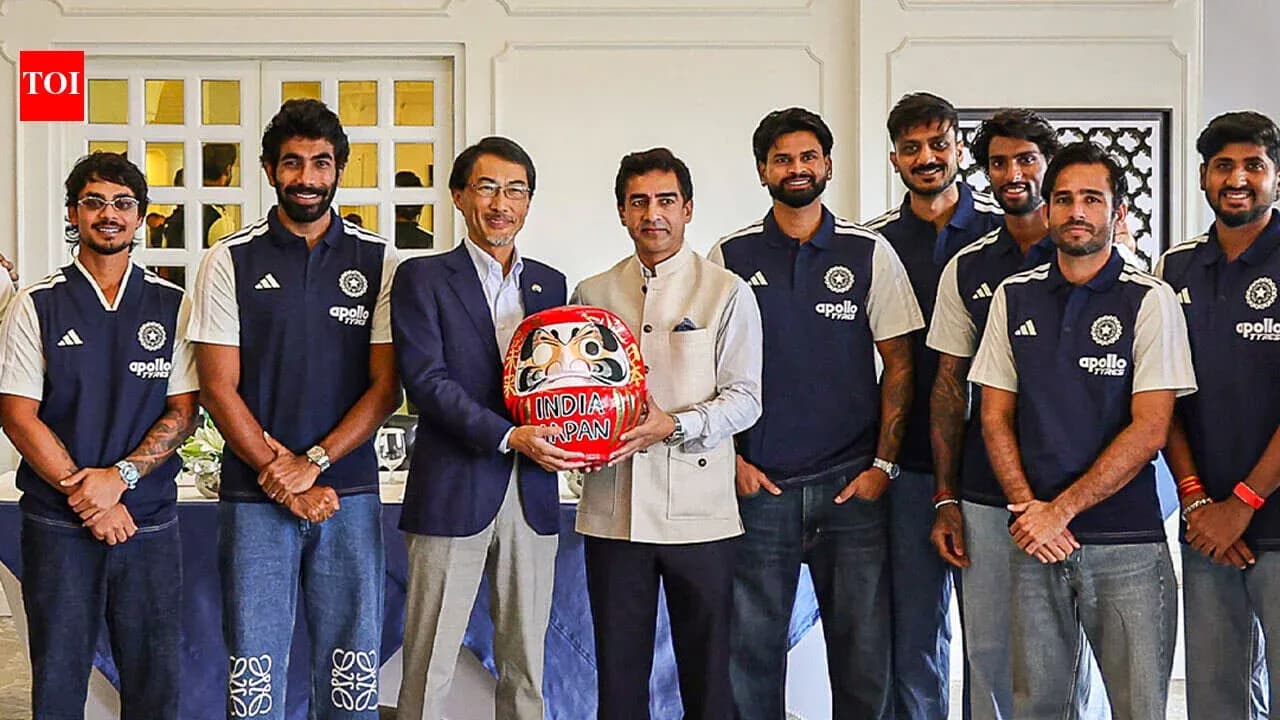
If the weather holds, India will walk out there on Tuesday to face Japan in the country’s first-ever men’s senior international against a Full Member. For Japanese cricket, just getting India to Sano is already a landmark. The result is almost a subplot.
“A lot of success has almost already happened,” Curr says. India have agreed to come. Japanese media are suddenly curious. People in a baseball-obsessed nation are about to hear the word “cricket” on prime platforms. For a sport that has existed here since the 1870s, this feels like its loudest introduction in decades.
Baseball, Football, Sumo, Basketball, Golf, Tennis, Boxing – they own the landscape. Cricket has lived in the margins. This week, it gets a shot at the main stage.
World champions in Sano
Japan are not strangers to international cricket. The men’s and women’s teams have featured at age-group level, the country has played in Under-19 World Cups, and Japan’s women have faced India and Pakistan at youth level and represented the nation at the Asian Games.
But this is different.
“It certainly helps to say that the reigning world champions, the No. 1 ranked team in the world, are coming to Japan,” Curr says. That line alone opens doors. It sparks curiosity in broadcasters, in sponsors, in parents who might otherwise steer their children straight towards a baseball diamond.
The JCA’s target is clear: the mainstream Japanese sporting audience. And the timing could hardly be better. Cricket returns to the Asian Games in Aichi-Nagoya just days after India’s visit, giving Japan a powerful hook. The sport will sit alongside disciplines the country already understands.
“The Asian Games gives cricket legitimacy that it didn’t have before,” Curr says. “You can’t be what you can’t see.” For once, Japan will be able to point to a major multi-sport event and say: that’s cricket, and we’re in it.
Kaizen on the outfield
This week’s spectacle rests on a decade of quiet graft.
When Curr arrived in 2014, Japan had around 3,000 registered players. Today, that number has climbed to about 8,800. The Japan Cup, the domestic T20 competition, has exploded from barely a dozen teams to more than 80. The 40-over league now stretches across four divisions.
“Kaizen is the word,” Curr says. Continual improvement. Small steps, repeated relentlessly. That’s been the JCA’s philosophy. But every so often, a moment comes along that can jolt the curve upwards. India in Sano is one of those.
Around that steady growth, a culture has started to form. A community league here, a school programme there, a national team making quiet progress in the background. Tuesday’s T20I is not the beginning of Japanese cricket. It’s the point where the rest of the world finally looks up and notices.
Winning hearts, not just overs
Nobody inside the JCA is under any illusion about what awaits their players.
“This India team is pretty good,” Curr says, almost deadpan. For Japanese cricketers who have never faced this level of skill and intensity, the gap will be brutal. The scoreboard could be harsh.
So they are measuring success differently.
Curr points to Japan’s women’s side at the Asian Games. After playing India, they stayed back, thanked supporters, mingled with fans. They left an impression that had nothing to do with the margin of defeat.
That, he says, is the identity he wants the men’s team to project. Hard cricket, but open faces. A sport that feels welcoming, not distant. “We want cricket to be played hard but also be accessible and friendly,” he says. “We want cricket to be fun.”
If thousands of first-time spectators leave Sano remembering not just India’s stars but the way Japan’s players carried themselves, that will be a win the JCA will gladly bank.
How clay turned into a contest
This historic fixture did not begin with a grand strategy document or a marketing brainstorm. It began with dirt.
Eighteen months ago, the JCA decided to relay the turf square at Sano. They turned to Sri Lanka Cricket, whose groundsman flew to Japan to identify the right clay. The same type of surface later went into the Asian Games venue in Nagoya.
Once those pitches were laid and tested, a simple question followed: if Japan now had international-quality wickets, why shouldn’t the world’s best use them?
In March, with the work complete, Japan drafted a proposal and sent it to every Full Member, timing it to land before the ICC conference in Edinburgh. Most such letters disappear into the noise of global scheduling. This one did not.
Talks with the BCCI began there. To Curr’s surprise, they moved quickly. “The BCCI were really keen to have an opportunity to train,” he says. India needed a base before the Asian Games, a place to prepare rather than sit idle for nearly a week before their knockout match. Sano offered practice facilities. Then, as the relationship warmed, it offered a match.
It is, Curr insists, huge credit to India that they embraced the idea and saw value in building a relationship with the JCA. For Japan, it is validation that the years spent sweating over infrastructure and participation numbers are starting to mean something on the global stage.
Now, the last variable is the sky. A typhoon looms, the covers are ready, and everyone in Sano is checking the forecast as often as the team sheets.
If the rain stays away, Japan will step out to face the world champions on a square born from a search for clay, in front of a crowd that may be seeing cricket for the first time, in a match that could echo far beyond the boundary.
India vs Japan, a T20I once unthinkable, now sits on the schedule. The question is no longer whether Japan belongs in the conversation. It’s how far this moment can push the sport in a country that is only just starting to look.