Imam-ul-Haq's Injury Controversy: Accusations and Impact on Pakistan Cricket
At Lord’s, where reputations are usually carved in stone, one of Pakistan’s senior batters found his questioned in public instead.
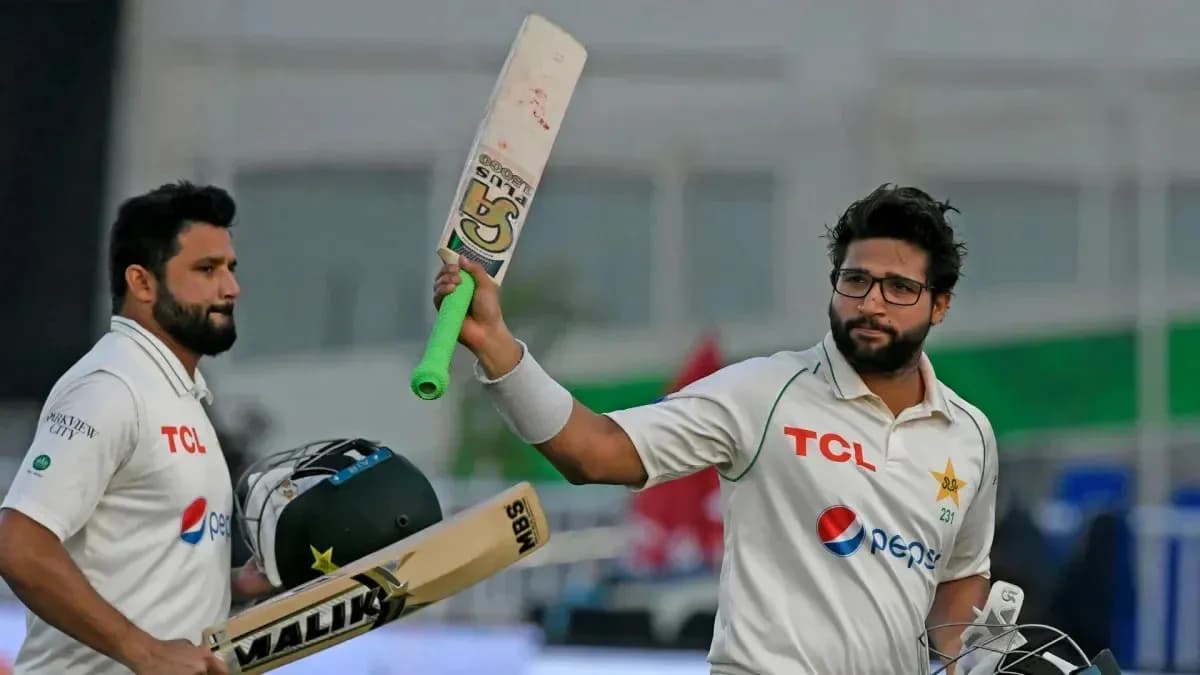
Imam-ul-Haq, already under scrutiny after a heavy defeat at Leeds, walked off with a left calf strain on the opening day of the second Test and did not return to bat in Pakistan’s first innings. The Pakistan Cricket Board moved quickly to clarify the situation, confirming via scans that the opener had suffered a low-grade strain and was under the care of the team’s medical staff. His availability, they said, would depend on how quickly he responded to treatment.
That should have been the end of it. It wasn’t.
Wasim lights the fuse
Into the vacuum of another Pakistan batting crisis stepped former chief selector Mohammad Wasim, who chose this moment, mid-series, to level a remarkable accusation at Imam’s character.
“In 2022 Multan test, the physio warned me in advance that he is going to fake an injury soon. And he did that,” Wasim claimed, suggesting a pattern of behaviour from the left-hander, using injuries as a way to sit out matches.
No documentation. No corroboration. Just his recollection of a private warning from two years ago, aired while the player in question is again sidelined, this time with an injury confirmed by medical imaging.
The timing could hardly be more incendiary. Pakistan are struggling, their batting brittle, their tour already fraying at the edges. Their most experienced available opener goes down hurt at Lord’s, and instead of a debate about technique or selection, the conversation veers into questions of honesty and intent.
Collapse on the field, noise off it
Imam’s absence was only one piece of a grim second day for Pakistan. England’s attack tore through them for just 110, seizing a 180-run first-innings lead that underlined the gulf in control and composure between the sides.
Ollie Robinson was relentless, returning figures of 4 for 11 from 13 overs, six of them maidens. Jofra Archer, back in the Test arena, added 3 for 26 from 11.2 overs, his pace and hostility too much for a line-up already short on confidence. Josh Tongue chipped in with two wickets. Only Gus Atkinson went wicketless, and even he could afford it with the damage done at the other end.
Pakistan’s innings lasted just 37.2 overs. England, bowled out themselves for 290 earlier in the day, suddenly found their total towering in comparison. By stumps, the hosts had moved to 81 for 3 in their second innings, stretching the overall lead to 261 before bad light dragged everyone off.
The cricketing story was clear enough: Pakistan’s top order, shorn of experience and belief, had folded again in conditions that demanded discipline. Yet the narrative around them became something else entirely.
A serious charge, thin on proof
Wasim’s comments cut far deeper than routine criticism of form or selection. To accuse a current international of “faking” injury strikes at the core of professional trust, the bond between player, team management and medical staff.
Fitness, workload management and player availability are legitimate areas for a former selector to interrogate. Pakistan’s recent history is littered with questions about conditioning, soft-tissue injuries and players drifting in and out of series. A serious, evidence-based conversation on those issues would be fair game.
This was something different. A single anecdote, aired years later, without supporting detail and without any formal complaint on record, now placed against a backdrop of a scan-confirmed strain at Lord’s. The effect is to cloud everything: the medical team’s judgment, the player’s integrity, even the seriousness with which Pakistan handle injuries.
For Imam, it is reputational damage in real time. For Wasim, it is a gamble with his own credibility. For Pakistan cricket, already reeling from technical flaws and tactical uncertainty, it is a needless diversion.
Distraction from deeper problems
Pakistan’s collapse at Lord’s did not need a conspiracy theory to explain it. Their batters misjudged length, played away from the body, and failed to adapt to a pitch that demanded patience. That has been the story of too many overseas tours, long before Imam’s name ever entered the frame.
The structural issues are obvious: an unsettled top order, a revolving door of combinations, and a recurring inability to bat time in seaming conditions. Coaching setups change, selection panels rotate, but the same vulnerabilities keep resurfacing.
Turning the spotlight onto an unproven allegation of feigned injury risks obscuring those realities. It shifts the debate from systems and standards to whispers and innuendo, from how Pakistan can compete in places like Leeds and Lord’s to whether one of their senior players truly wants to.
If Wasim genuinely holds evidence of a broader pattern, the proper route is clear: present it through formal channels, let it be tested, and let the board and medical staff respond. A throwaway line in a media interview does nothing to fix Pakistan’s batting, and everything to inflame a dressing room already under pressure.
England’s bowlers have exposed enough cracks in this touring side. Pakistan cannot afford to widen them from within.