Human vs Robot MMA Fight: A Historic Showdown
The bell rang in San Francisco and, for a few surreal minutes, it looked like a scene ripped straight from a sci‑fi storyboard.
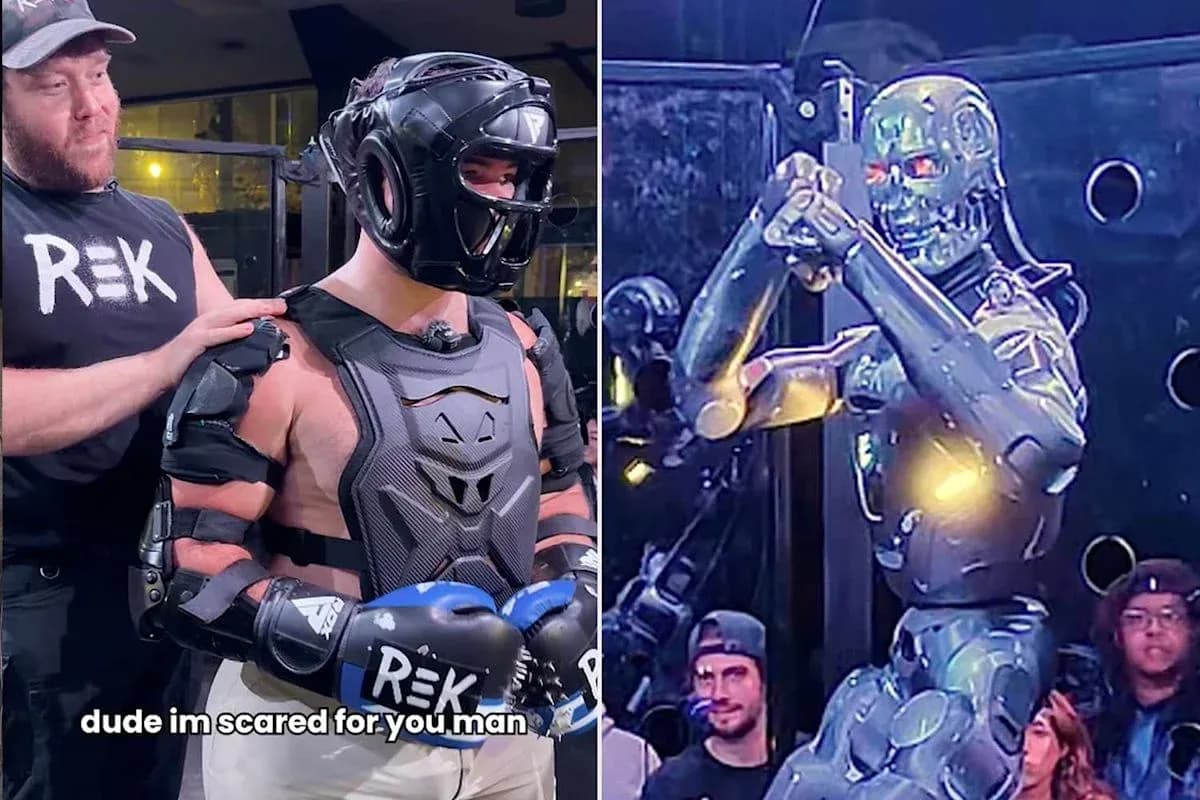
On one side: Frankie LaPenna, 29-year-old influencer and content creator. On the other: a six-foot humanoid machine called the Rekbot, a Terminator-style figure built by robotics startup REK.
They met on Friday, Sept. 18, in what is being billed as the first human vs. robot MMA fight — a stunt with the polish of a prizefight and the undertone of a tech demo.
A ring, a robot, and a warning
Backstage footage posted to Instagram set the tone. The Rekbot stood in the corner, metal frame coiled and ready, as a man in a REK T-shirt and baseball cap turned to LaPenna.
"I'm scared for you, man," he told him.
LaPenna walked in anyway.
The opening exchanges were surprisingly even. The human and the machine traded blows, LaPenna showing enough movement and timing to avoid turning the night into a one-sided beating. For a spell, the influencer did what he had promised in the buildup when he replied to REK’s promotional post on Instagram with a defiant line: "Human wins. I've seen the movies before."
Then the robot landed.
A thudding roundhouse kick whipped through the air and caught LaPenna flush, sending him flying across the ring. The clip spread quickly online — not just because a robot had dropped a human, but because of how disturbingly normal it all looked. No glitching, no slapstick. Just a clean, violent technique delivered by a machine.
“We just made history”
REK wasted no time framing the spectacle.
"We just made history with the first Human VS Terminator robot fight," the company posted on X afterward, praising LaPenna for giving "it his all."
The next day, the tone grew even grander: "Last night was a turning point in history, a striking moment to behold. Thank you everyone for coming!"
Behind the bravado sat a clear purpose. The event served as a live-action showcase for REK’s virtual reality game, which throws human players into combat against remote-controlled humanoid robots like the Rekbot. What looked like a glimpse of an autonomous future was, in reality, a highly choreographed present.
After the fight, it was revealed that the Rekbot had been controlled by a human operator. The robot wasn’t thinking for itself. Someone, somewhere, had their hands on the controls.
That didn’t stop the questions.
“Didn’t we have, like, 6 movies about this?”
Once the footage hit social media, the commentary wrote itself.
"Didn't we have, like, 6 movies explaining why this is a bad idea?" one Instagram user asked, echoing the obvious nod to the Terminator franchise that inspired the robot’s comparison to a T-800.
Another viewer went a step further: "I promise you this video will go down in history as the tipping point."
One comment cut to the heart of the visual unease: "Suddenly the human skeleton seems very fragile."
What might once have been dismissed as a gimmick now lands differently in an era where robotics and AI are moving at speed. A man getting blasted across a ring by a steel-framed fighter doesn’t feel like a distant fantasy. It feels like a test run.
Not even “the final boss”
REK, for its part, leaned into the theater.
On X, the company teased that the Rekbot "wasn't even the final boss," hinting that bigger, more advanced machines — or more elaborate events — are already in the pipeline. "More" is coming "soon," they promised.
The fight may have been a promotional stunt for a VR game, but it also served as a live experiment in public appetite. How comfortable are people watching a human square up to a robot, even one driven by another human? How far can this go before the novelty turns to unease?
PEOPLE reached out to REK and representatives for Frankie LaPenna for further comment but did not immediately hear back.
For now, the image lingers: a human fighter, flung across a ring by a machine that looks uncomfortably familiar. If this wasn’t the final boss, the obvious question hangs over whatever comes next — how long before the robot in the cage doesn’t need a human behind the controls at all?