Holger Rune's Comeback: From Setback to Basel Resurgence
Holger Rune is only three tournaments into his comeback, but the signs are already hard to ignore.
The results column still looks scruffy. The tennis does not.
From brutal setback to Basel resurgence
Rune’s first steps back were always going to be awkward. After easing himself into competition at the Davis Cup, he chose Japan as the stage for his official ATP Tour return – and was promptly swept aside by Kyrian Jacquet. It was a flat performance, so flat that Rune felt compelled to apologise for it.
Shanghai did not bring the turnaround on paper either. Another first-round exit, another early flight. Yet this time there were hints of the old fire: longer rallies, more conviction on serve, a body that looked less like it was testing itself and more like it was trusting itself again.
The real shift arrived in Basel.
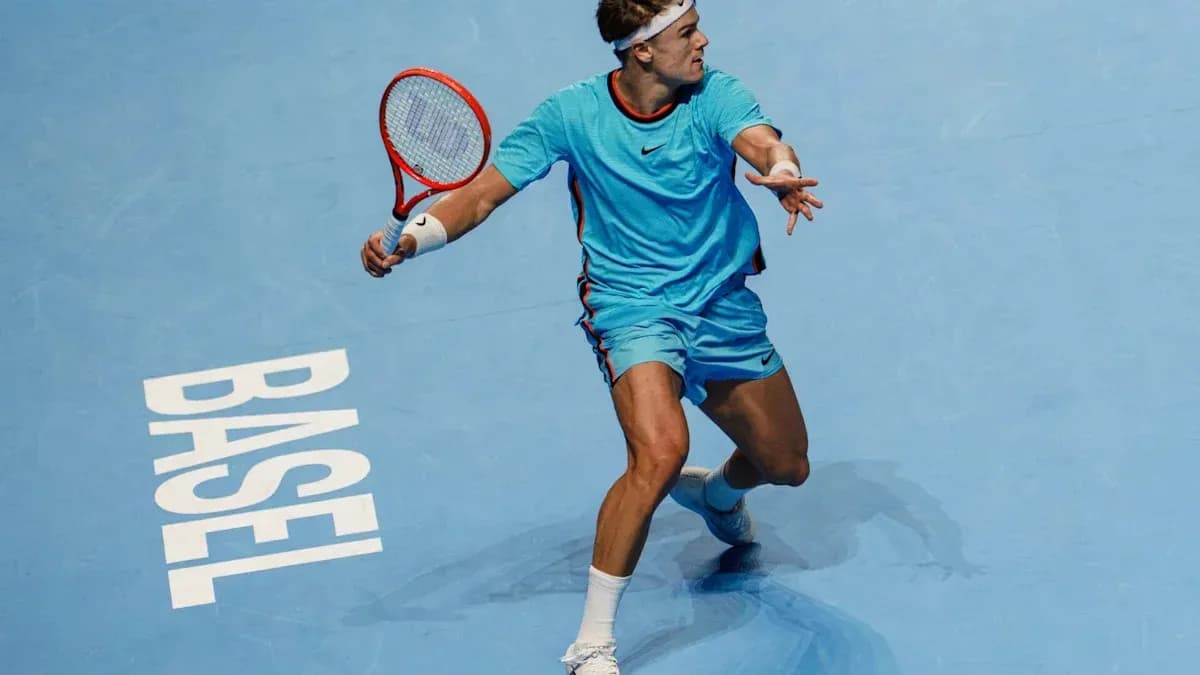
On the indoor courts in Switzerland, those scattered flashes of quality finally joined up into something more solid, more threatening. Rune’s movement sharpened, his baseline game grew heavier, and the confidence that once made him one of the sport’s most dangerous young players began to seep back in.
Grinding wins, real progress
His decision to pull out of Brussels earlier in the autumn had been met with near-unanimous approval. After almost a year out, forcing the issue would have been reckless. He chose patience instead.
Basel showed why that call mattered.
Rune’s first win back came the hard way, in a three-set scrap against Quentin Halys. He had to go all the way to a deciding-set tiebreak, outlasting the Frenchman in a match that tested both lungs and nerve. For a player returning from a serious injury, that kind of victory counts double: it proves the body can hold, and the mind can still close.
He backed it up in style. Hubert Hurkacz arrived in Basel in form, armed with that huge serve and a run of strong results. Rune took him down the same way he had Halys – in another deciding-set tiebreak – and this time the win carried a different weight. This wasn’t just a player happy to be back on court; this was a contender taking out one of the circuit’s in-form forces in a physical, high-pressure battle.
Those two matches alone underlined what his fitness work has restored. The timing may still be imperfect, the rust not completely gone, but the underlying level – the ball-striking, the competitive edge – clearly remains.
A three-set defeat to Valentin Vacherot did little to puncture that momentum. It stung, as any loss does, yet it felt like a bump in a road he is now finally travelling again, not a detour back to the treatment room.
Give him a clean off-season and the picture shifts quickly. By the time the tour lands in Australia, Rune could arrive not as a question mark, but as a genuine threat for titles once more.
A brutal 348-day wait
To understand why his recent steps forward matter so much, you have to look back at how long he stood still.
The injury that derailed his rise came at the Stockholm Open semi-final, when he led Ugo Humbert by a set. One bad moment, one horrific Achilles injury, and everything stopped on 18 October 2025.
The numbers that followed are stark. Rune did not play another official ATP Tour match until 1 October this year. That is 348 days away from the regular grind, 11 months and 13 days of rehab, doubt, repetition and waiting.
His story has unfolded in the same season that has seen Carlos Alcaraz endure a heavily discussed five-month absence and Jannik Sinner shut down his year early. Both have rightly drawn sympathy and headlines. Yet in terms of sheer time lost, the Danish star has quietly suffered more than either.
Even when he finally stepped back onto the tour, the wait for a win dragged on. Rune had to endure a 373-day drought at ATP Tour level before he could finally close out Halys in Basel and feel that rush again – hand raised, match secured, ranking points banked.
That is what makes these early, imperfect, hard-fought results so significant. They are not just numbers on a page; they are proof that a long, lonely year is starting to pay him back.
The question now is not whether Holger Rune will feel like himself again.
It is how dangerous he can become once he does.