Harriet Dart Claims First WTA Title in Guangzhou
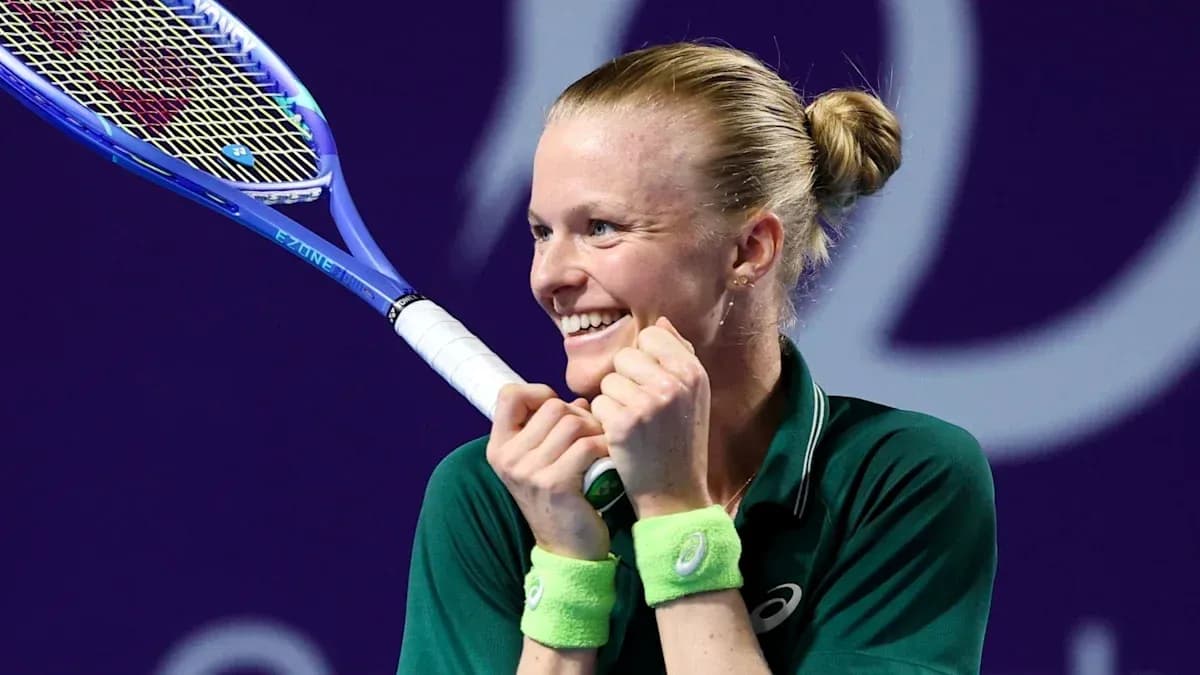
Harriet Dart had waited a long time for this. Thirty years old, battle-hardened, often on the fringes of the conversation, she finally stepped into the spotlight in Guangzhou and refused to leave without the trophy.
On a humid afternoon in China, the British number five came from a set down to beat fast-rising Austrian teenager Lilli Tagger 4-6 6-3 6-4, claiming the first WTA Tour singles title of her career and the biggest win of her life.
She finished it the way every player dreams of finishing a first title: with a service winner, collapsing to the court as the ball flashed past Tagger and the moment crashed over her.
A final that would not let go
This was not a procession. It was a scrap.
Tagger, just 18 and already a 2025 French Open junior champion, walked into the final brimming with belief, having taken out seven-time major champion Venus Williams earlier in the week. She played like it in the opening set, swinging freely, taking the ball early, and punishing anything short from Dart.
The Austrian teenager grabbed the first set 6-4, and the pattern felt ominous. Dart has seen promising weeks unravel at this stage before. Not this time.
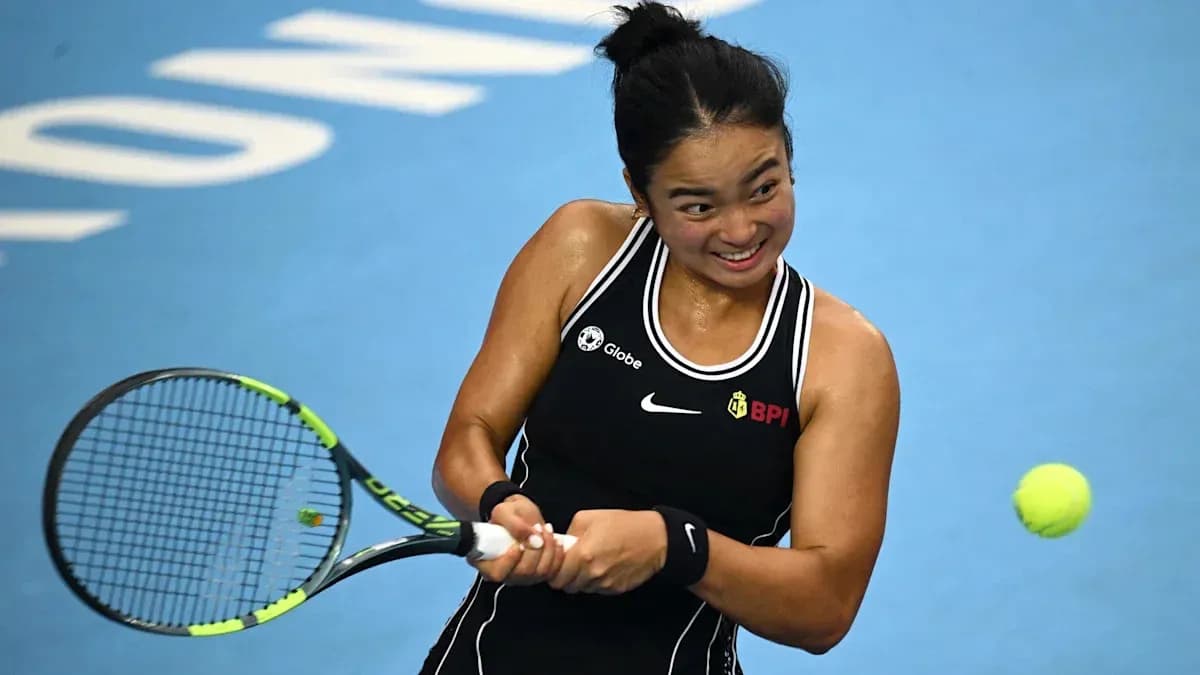
She tightened her length, found heavier depth, and began dragging Tagger into longer, more physical exchanges. The British player’s resilience, the defining trait of her week, surfaced again. She broke once in the second set, protected her serve under pressure, and levelled the match 6-3 with a steeliness that spoke of scars and experience.
The decider turned into a test of nerve as much as shot-making.
Twice Dart surged ahead. Twice Tagger reeled her back, refusing to be overawed by the occasion or the opponent’s momentum. At 3-3, the final hung in the balance. The rallies grew tighter, the margins finer.
The pressure finally told.
Dart broke for a third time in the set to lead 4-3, this time with a mix of depth and discipline that left Tagger stretching and scrambling. She then held serve to move within a game of the title, the finish line suddenly close enough to touch yet still agonisingly fragile.
Championship points, lost and found
The ninth game encapsulated Dart’s journey.
Returning for the match on Tagger’s serve, she carved out two championship points. On the second, with the court yawning open and a mid-court ball begging to be dispatched, she pushed it into the net. A nightmare miss, the sort that can haunt a player for months.
But Dart did not unravel. She reset.
Tagger escaped that game, but the sense of inevitability had shifted. Dart had stared down the moment, flinched, and then steadied. Serving again for the title, she refused to let the ghosts in. No panic, no retreat.
On her third championship point, she went for it. First serve. Clean, bold, and final.
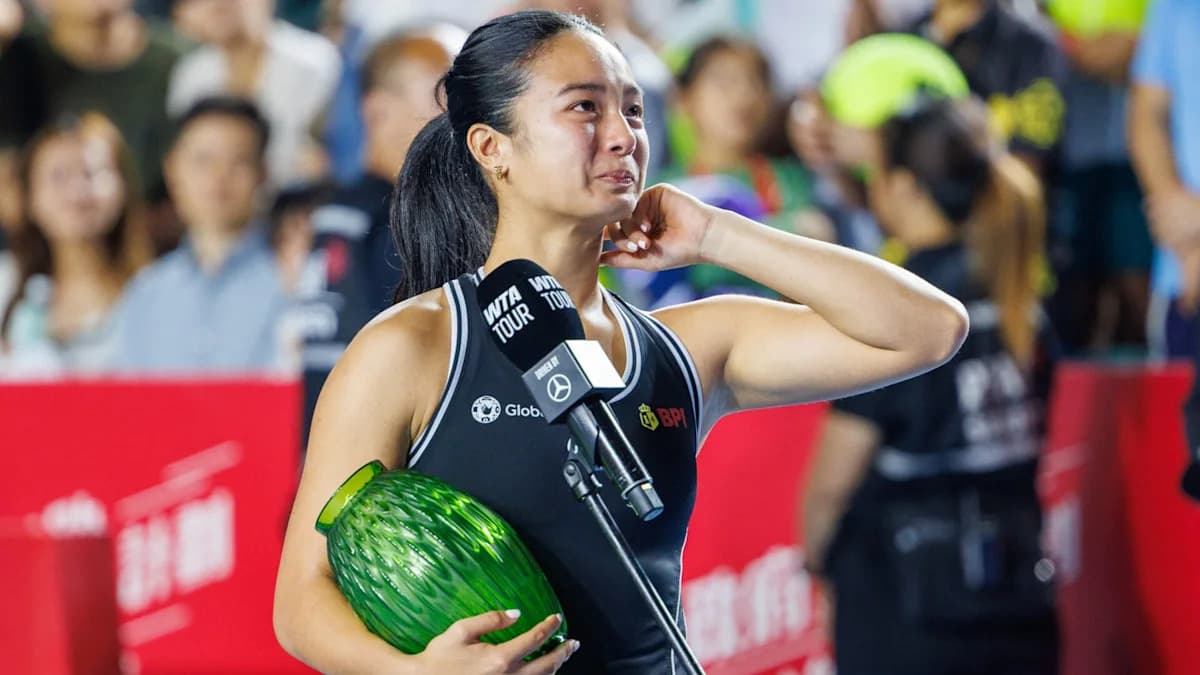
Tagger barely laid a racquet on it. Dart dropped to the court, tears and relief mixing with the roar from her team. Years of grind and doubt, repackaged into one perfect swing.
From qualifying to champion
This was not a week built on a kind draw or a one-off surge. Dart came through qualifying just to make the main draw at this WTA 250 event, then played seven matches in all to lift the trophy. Four times in those seven, she lost the first set. Four times she turned the match around.
Her run in Guangzhou felt like a condensed version of her career: setbacks, rethinks, slow climbs, and finally a breakthrough.
The reward is more than silverware. The title lifts Dart back inside the world’s top 100, a vital threshold in the sport’s hierarchy. It also secures her a direct place in the main draw of the Australian Open in January, sparing her the uncertainty and physical toll of qualifying in Melbourne.
For a player who had reached a career-high ranking of 70 in 2024, on the back of a Wimbledon third round and a US Open second round, the last two seasons have been a grind. She has spent long stretches outside the top 100, fighting for points on lower-tier circuits, trying to rediscover the level that once pushed her onto show courts at the Slams.
Guangzhou suggests that work is paying off.
The Bartoli effect and a hard-court surge
Behind this resurgence sits a familiar name. Working with former Wimbledon champion Marion Bartoli has clearly sharpened Dart’s game and mindset. The numbers tell their own story.
Since Wimbledon, Dart has won 19 of her 24 tour-level matches on hard courts, a formidable return that has driven her late-season surge. Across the entire WTA Tour this year, she now owns 23 wins from 34 matches, the highest winning percentage of her career.
The ball is coming off her strings with more conviction. The shot selection looks cleaner. The belief, once fragile, now feels anchored in results rather than hope.
Tagger, for her part, leaves Guangzhou with a statement week of her own, capped by a win over Venus Williams and a mature performance in her first tour-level final. Even in defeat, she recognised the scale of Dart’s achievement, telling her at the trophy ceremony that it “wasn’t fun to be on the other side of the court today” and praising the Briton’s season.
A new chapter, not a one-off
Titles at this level do not guarantee anything. The tour moves fast, rankings fluctuate, and form can disappear without warning. Dart knows that better than most.
But this feels different. Not a shock run from nowhere, but the crest of a sustained rise across the second half of the season. A player who has spent months learning how to win tight matches finally held her nerve on the biggest stage she has known.
From qualifier to champion, from outside the top 100 to a Grand Slam main draw berth, Harriet Dart leaves Guangzhou with more than a trophy. She leaves with proof that her ceiling may not yet be fixed — and with a season-opening major in Melbourne now offering a very different kind of opportunity.