Harriet Dart Wins Guangzhou Open with Marion Bartoli's Support
Harriet Dart’s phone would not stop buzzing. Messages, missed calls, notifications piling up as the reality of what she had just done in Guangzhou began to sink in.
Some had to wait. One call could not.
Before anything else, Britain’s new WTA champion rang home – her parents Nick and Susie, watching with friends at their north London tennis club, and her sister Phoebe. Only once she had heard the emotion down the line did she move on to the next name in her contacts list.
Marion Bartoli.
A Grand Slam champion in her corner
Dart’s partnership with the 2013 Wimbledon champion has been one of the quieter storylines of the season. It no longer is.
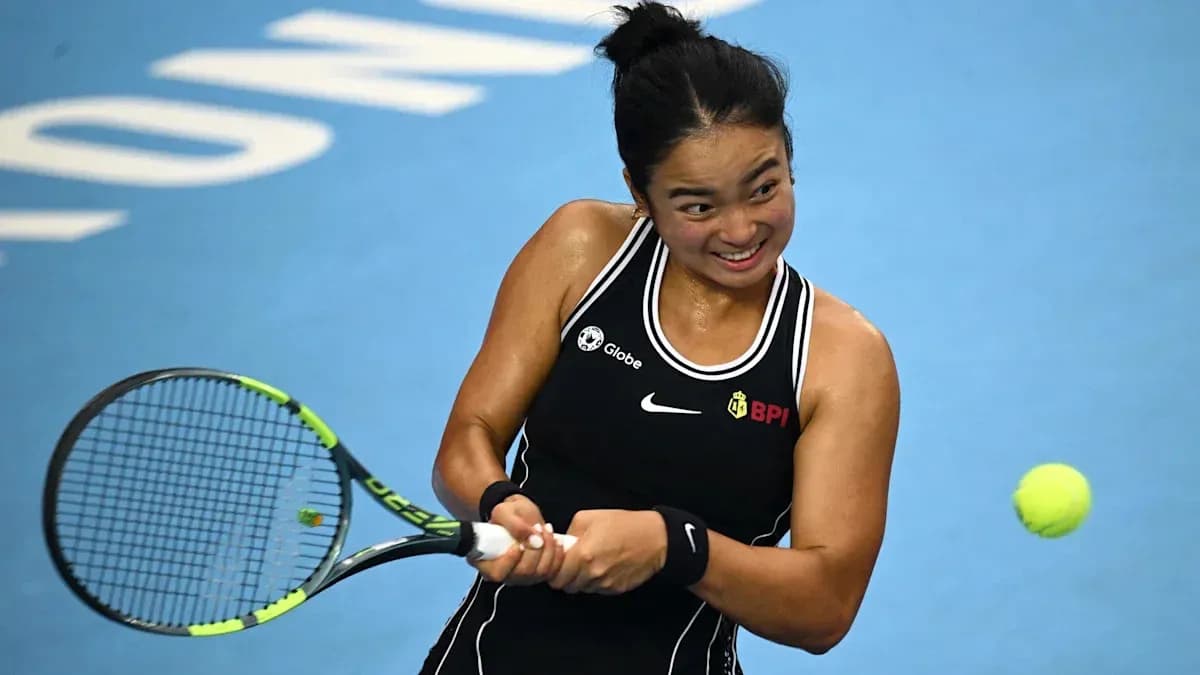
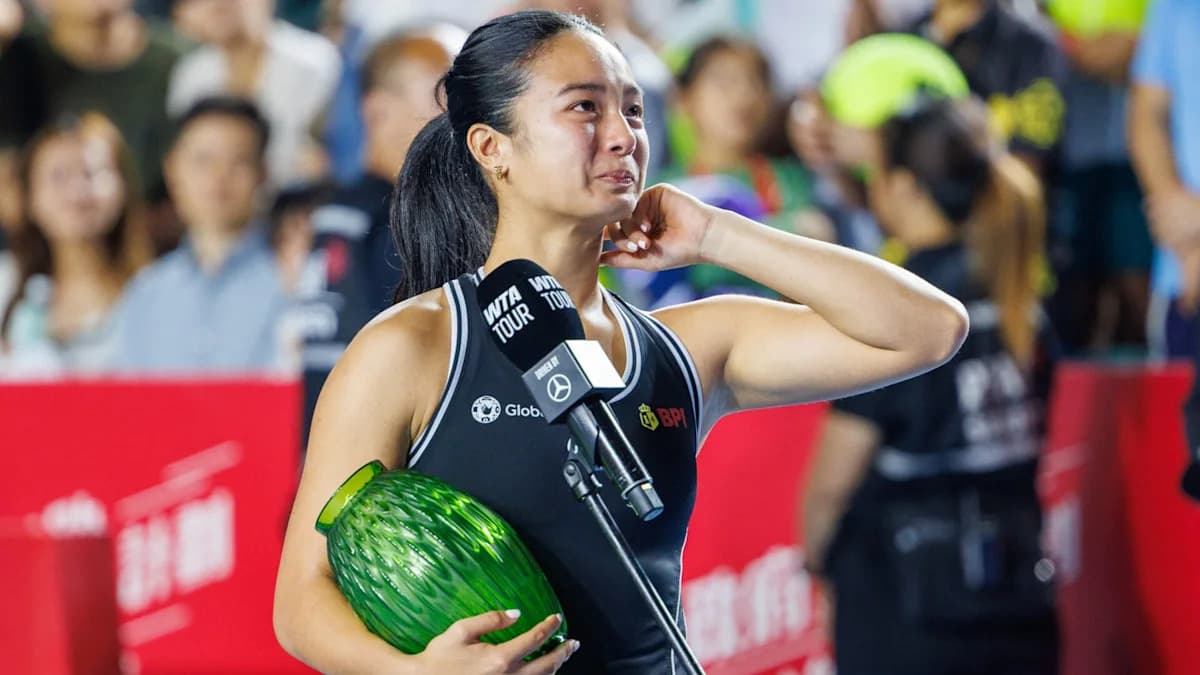
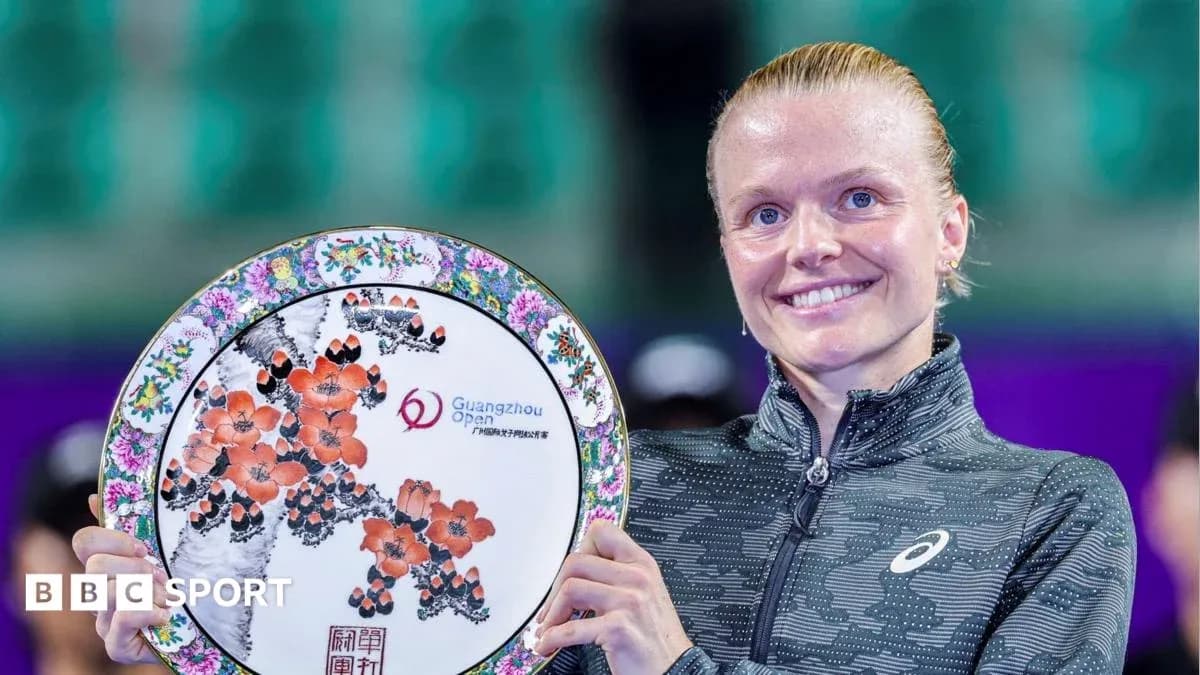
Working part-time with Bartoli since the start of the year, Dart has gone from a player drifting outside the top 160 to a title winner on the main tour. On Sunday, with Bartoli following from home, the 30-year-old sealed the biggest moment of her career by beating Austrian teenager Lilli Tagger to win the Guangzhou Open.
“It’s been quite incredible to work with Marion, and I was really fortunate she was open to working with me,” Dart told BBC Sport from China, still processing the scale of it all.
The pairing makes sense in ways that go beyond rankings and results. Both are based in Dubai, which has allowed them to put together intense training blocks when Dart is not travelling. Bartoli, now 42 and juggling a young family, cannot be on the road full-time, but she has been present at key points of the year, especially around the Grand Slams.
And she can still hit. Dart laughs about it, but the benefit is real: a former world number seven on the other side of the net, striking the ball “really well” and setting a standard every practice session has to meet.
Above all, Dart says, Bartoli’s belief has changed something fundamental.
“She really believes in me – that means the world to me,” Dart said. “Seeing a Grand Slam champion having that belief has made me believe a lot more in myself.”
Winning without the coach on site
Guangzhou, intriguingly, was a week Dart had to navigate largely on her own.
Bartoli stayed back, sending observations and notes from afar. On the ground, Dart travelled with her fitness trainer Dario Gonfiantini and her boyfriend Stephen Falck. No coach in the box. No constant courtside guidance.
So she problem-solved. She adjusted. She fought.
By the end of the week, she was holding a WTA 250 trophy and staring at a new projected ranking of 83rd in the world, the reward for a blistering second half of the season.
Since Wimbledon, Dart has won 19 of 24 matches on hard courts at tour level. Across the entire WTA season, she has 23 wins from 34 matches – the best winning percentage of her career.
The numbers tell one story. The manner of those wins in Guangzhou tells another.
This is a player who has been picked apart in the past. Opponents circled the second serve, waited for the double faults, leaned on the pressure moments. Dart’s ranking, which had slid outside the top 100 for much of the past two seasons despite a career-high mark of 70 earlier in 2024, reflected those vulnerabilities.
In China, she stared them down. Time and again, she had to come back from behind. Time and again, she held her nerve.
Those old questions about her mentality did not disappear overnight. She answered them, point by point.
Work ethic finally meets reward
Inside British tennis, nobody is surprised by the graft behind this surge.
“She’s always had a fantastic work ethic and has always set the bar high with her professionalism,” said Great Britain Billie Jean King Cup captain Anne Keothavong. “But there is certainly more belief and confidence now. She’s in a very good place.”
Keothavong has seen the grind up close. Dart has been a regular in and around the national squad for years, often on the fringes of big moments rather than at the centre of them.
“She’s been grinding away on the tour for a long time and it’s great to see someone who has put in a lot of time to succeed and win a big title,” Keothavong added.
Dart was named in Keothavong’s squad for September’s Billie Jean King Cup Finals, though she did not play in the tie. What she did do was strike the ball so cleanly in practice that it stuck in the captain’s mind. That level, carried back onto the tour, has now delivered silverware.
For Dart, Bartoli’s influence runs deeper than tactics or technique.
“More than anything, Marion is just a great person. She cares about me as a person first and foremost, as well as improving me as a tennis player, of course,” Dart said. “It’s been invaluable and amazing for her to share her experiences to make me better.
“I’ve learned a lot from her and look forward to continuing to learn more. I hope we will be able to spend more weeks together next year.”
A surge in British momentum
Dart’s breakthrough does not stand alone. It slots into an increasingly positive picture for British women’s tennis as the Asian hard-court swing winds down.
Sonay Kartal reached the final of a WTA 1000 in Wuhan. Katie Boulter pushed through to the semi-finals of a WTA 250 in Osaka. Back home, teenager Hannah Klugman captured the biggest title of her young career at the Wrexham Open, a W100 event on the Challenger circuit.
“The way they’re all performing towards the end of the season – at whatever level – has been impressive,” Keothavong said. “It’s not easy at this time of the season because there has been a lot of tennis played, but they’ve all capitalised and risen to the occasion.
“It’s great reward for all their hard work and is encouraging for British tennis.”
For Dart, that encouragement now comes with something more tangible: a trophy, a rankings climb, a sense that 30 is not a closing chapter but the start of something else.
She has spent years as the player on the outside looking in, the one with the awkward second serve and the nagging doubts. In Guangzhou, with her coach half a world away and her family watching from a clubhouse in north London, she rewrote that script.
The belief Bartoli lent her now feels like something she owns. The question is no longer whether Dart belongs at this level.
It is how far, and how fast, she can go from here.