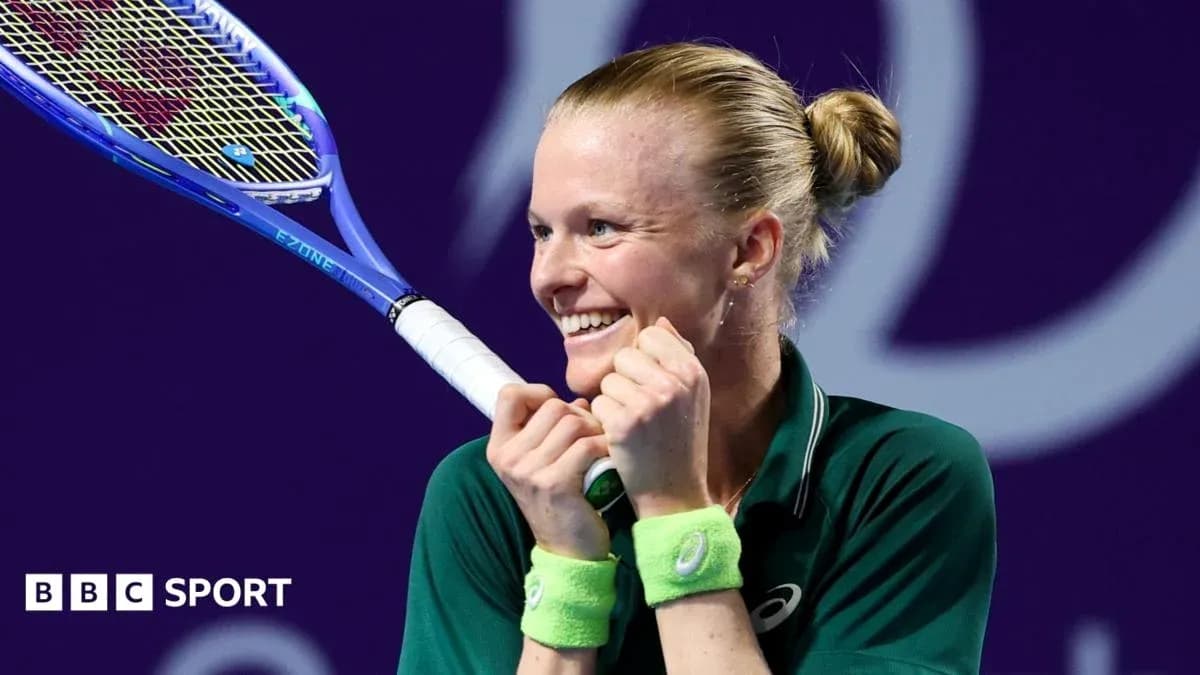
Harriet Dart Wins First WTA Title at Guangzhou Open
Harriet Dart climbs the mountain at last.
The 30-year-old Briton, who has spent much of the past two seasons peering in from outside tennis’s top tier, finally has a WTA Tour singles title to her name after a gutsy, nerve-shredding win at the Guangzhou Open.
She did it the hard way. Again.
From qualifier to champion
Dart arrived in Guangzhou as a qualifier, the world number 115 and Britain’s number five, quietly tucked into the draw at a WTA 250 event where the headlines seemed reserved for others. She leaves with the trophy, a place back inside the top 100, and a guaranteed spot in the Australian Open main draw.
That’s not just a good week. That’s a career shift.
In Sunday’s final she faced 18-year-old Lilli Tagger, one of the most exciting teenagers on tour and already the 2025 French Open junior champion. The Austrian had knocked out seven-time major winner Venus Williams on her way to the final and came in ranked 53 in the world, brimming with confidence and pace.
Tagger struck first.
Dart dropped the opening set 6-4, her resistance clipped by the teenager’s fearless hitting. It was familiar territory: behind on the scoreboard, under pressure, the match threatening to run away from her.
This is where Dart has changed.
A final that refused to settle
The second set turned on resilience and stubbornness. Dart dug in, tightened her patterns, and began to ask Tagger more questions with every rally. The errors crept in from the younger player, the court suddenly looking smaller, the targets narrower. Dart broke, held her nerve, and levelled the match 6-3.
The decider was a test of nerve as much as skill. Dart twice went ahead, twice saw her lead wiped out by Tagger’s refusal to fold. The Austrian kept swinging, kept coming, the kind of opponent who doesn’t yet understand when she’s supposed to back off.
At 3-3, the pressure finally cracked.
Dart broke for a third time in the set to lead 4-3, then held serve to stand one game away from the biggest win of her life. It should have been straightforward from there. It wasn’t.
Serving at 3-5, Tagger stared down two championship points. Dart had the match on her racquet, an inviting mid-court ball on the second of them. She dumped it into the net. A moment that has haunted many a player.
The old Dart might have spiralled. This version reset.
Tagger escaped that game, but the British player didn’t let the chance slip twice. Serving for the title at 5-4, Dart earned a third championship point and this time nailed it, sealing victory with a service winner.
She dropped to the court, overcome, before rising to celebrate with her team. Years of grinding on the fringes of the tour, of qualifying draws and near-misses, finally had a defining payoff.
A season turned on its head
This title is not a bolt from the blue. It’s the summit of a climb that began months ago.
Dart, who reached a career-high ranking of 70 in 2024 after runs to the Wimbledon third round and US Open second round, had since slipped out of the top 100 and into the sport’s grey zone – good enough to threaten, not secure enough to breathe.
Working with former Wimbledon champion Marion Bartoli has changed that trajectory. The improvements have been visible: cleaner ball-striking, clearer intent, more belief when the scoreboard leans the wrong way.
Since Wimbledon, Dart has been one of the most efficient operators on hard courts. She has won 19 of 24 tour-level matches on the surface in that stretch, and now sits at 23 wins from 34 matches overall on the WTA Tour this season – the best winning percentage of her career.
The Guangzhou run distilled that progress into one week. Seven matches, four of them comebacks from a set down. The final against Tagger fit the pattern: first set lost, resolve hardening, match turned.
Tagger herself recognised it in defeat, telling Dart on court that “it wasn’t fun to be on the other side” and praising the Briton’s year. Coming from a teenager who has just beaten Venus Williams, that respect carries weight.
Looking ahead
The rewards are tangible. A trophy. A ranking surge back into the top 100. A direct ticket to Melbourne, where Dart will no longer need to scrap through qualifying rounds just to reach the main stage.
More important is the shift in how she will walk into locker rooms and onto courts. She is no longer the dangerous floater or the qualifier on a hot streak. She is a tour-level champion, with a hard-court record to back it up and a signature week that proves she can navigate the pressure of a final.
For years, Harriet Dart has been a name on the fringes of British tennis conversations, often overshadowed by bigger rankings and bigger reputations. In Guangzhou, she stepped out of that shadow.
The question now is no longer whether she belongs at this level. It’s how far this late surge can carry her in a season that suddenly looks very different.