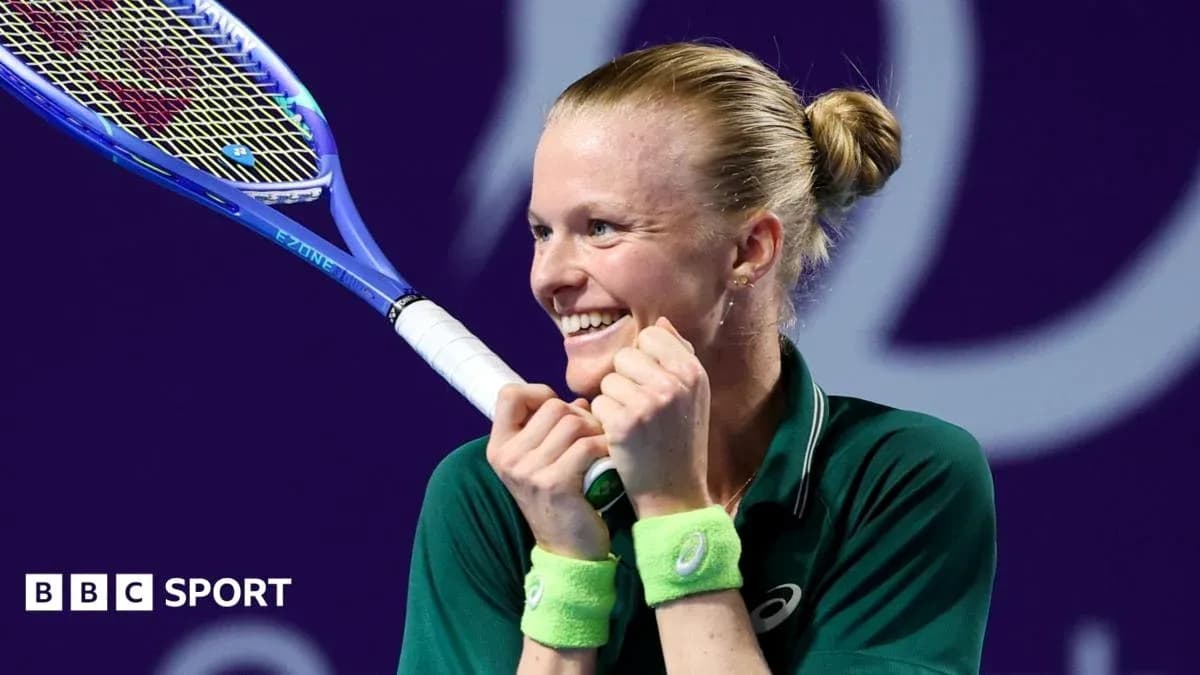
Harriet Dart Claims First WTA Title in Guangzhou
For years, Harriet Dart has lived on the fringes of tennis’ top tier – close enough to taste it, too often just out of reach. In Guangzhou, she finally kicked the door down.
The 30-year-old Briton captured the first WTA Tour singles title of her career with a gutsy 4-6 6-3 6-4 victory over Austrian teenager Lilli Tagger in a tense, nervy final that said as much about Dart’s resilience as it did about her tennis.
When the final service winner fizzed past Tagger and into the court, Dart dropped to the hard court in disbelief, then in joy. This was not just another match. This was a career pivot.
A final played on a knife-edge
Tagger, only 18 but already one of the tour’s fast risers, struck first. The 53rd-ranked Austrian, the 2025 French Open junior champion and fresh from a statement win over seven-time major champion Venus Williams earlier in the week, took the opening set 6-4 and looked every bit the player with the higher ranking and the lighter shoulders.
Dart, ranked 115 and Britain’s number five, had come through qualifying just to reach this WTA 250 final. She had already spent the week living on the edge, and she went back to that familiar place again.
The response was immediate. Dart tightened the screws on serve, found better depth off the baseline and began to drag Tagger into longer, more physical rallies. The reward came with a 6-3 second set, and suddenly the match felt like a street fight.
The decider turned into a test of nerve.
Twice Dart broke to lead, twice Tagger hit back. At 4-3, the pressure finally told. Dart earned a third break of the set, stepping inside the baseline, taking the ball early, refusing to let the teenager dictate. She held for 5-3 and stood one game from the biggest win of her life.
Tagger, though, refused to fold. Serving at 3-5, she faced two championship points. Dart had done the hard work, created the opening, then saw a mid-court ball sit up begging. She dumped it into the net.
It could have haunted her. It didn’t.
Tagger escaped that game, forcing Dart to serve for the title at 5-4. The tension was thick, the rally patterns tight. Dart rebuilt, point by point, and when a third championship point arrived, she didn’t blink. A bold service winner sealed it, and with it a first WTA trophy.
A season’s surge rewarded
This title is no outlier plucked from nowhere. It crowns a superb second half of the season in which Dart has quietly rebuilt both her ranking and her belief.
She reached a career-high of 70 in 2024, buoyed by a run to the Wimbledon third round and the US Open second round, but then slipped outside the top 100 and stayed there for most of the past two seasons. The margins at that level are unforgiving: a few early losses, a dent in confidence, and the climb back can feel endless.
The partnership with former Wimbledon champion Marion Bartoli has changed that trajectory. Under Bartoli’s guidance, Dart has sharpened her aggression without losing her trademark grit. The numbers tell the story: since Wimbledon she has won 19 of 24 tour-level matches on hard courts, and her overall WTA record this season stands at 23 wins from 34 matches – the best winning percentage of her career.
Guangzhou distilled that progress into one week. Dart came through qualifying and then, time and again, came from behind. Beating Tagger after losing the first set marked the fourth time in seven matches she turned a deficit into victory. The hallmark has been the same in every round: resilience, recovery, refusal to go away.
A door opens to Melbourne
The tangible rewards are significant. The Guangzhou title lifts Dart back inside the world’s top 100, a crucial threshold for any player trying to plan a season rather than chase it.
Most importantly, it secures direct entry into the main draw of the Australian Open when the first Grand Slam of the year begins in January. No qualifying minefield, no early scramble in the Melbourne heat. A place at the top table from day one.
For Tagger, this week still marks another step forward in a rapidly accelerating career. For Dart, it feels like something more: not a breakthrough at 18, but a vindication at 30.
She leaves Guangzhou not as a plucky qualifier or a dangerous floater, but as a WTA champion with a hard-court record to back it up. The question now is no longer whether Harriet Dart belongs at this level.
It’s how far, and how fast, she can go from here.