Gable Steveson Faces Stunning Loss in MMA Debut
Gable Steveson’s first real taste of MMA adversity was savage and sudden.
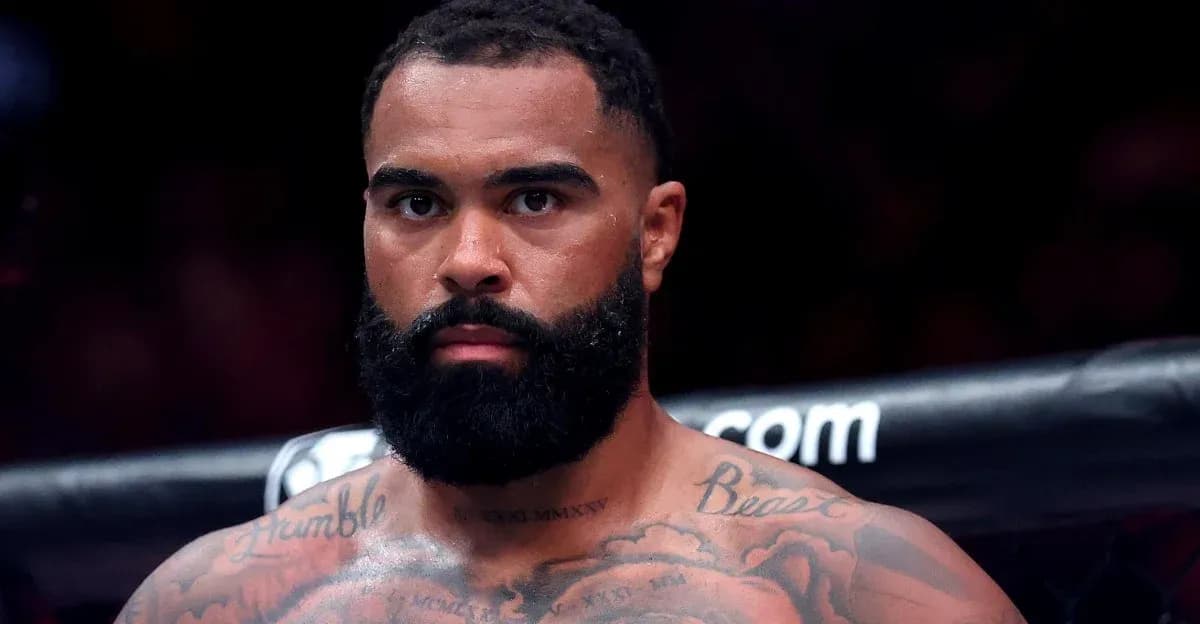
The Olympic gold medalist walked into UFC 331 in Los Angeles as a -2400 favorite, billed as a generational talent crossing over to take the heavyweight division by storm. He walked out 12 seconds later, unconscious on the canvas, the victim of one of the most stunning upsets in UFC history.
Sean Sharaf, an underdog in every sense, needed only one clean shot. After a brief opening exchange, Steveson stepped in, Sharaf read the entry, and a sharp counter left hand detonated on the chin. Lights out. No controversy, no debate. Just a brutal reminder that MMA humbles everyone.
The shock inside the arena was immediate. The hype train had barely left the station before it derailed. For Steveson, this wasn’t just a loss. It was a viral moment, a clip destined to be replayed every time his name comes up for the foreseeable future.
His manager, Abe Kawa, moved quickly to frame the narrative. On Sunday, Kawa released a statement on Instagram, not to make excuses, but to put Steveson’s disaster in context — and to tie his name to some of the sport’s most revered champions.
“It’s OK that Gable got caught,” Kawa wrote. “It’s OK that he was booed. It’s OK his opponent talked shit. It’s OK that the world is kicking him when down. It’s the life he chose. Islam got clipped. Arman has lost. DJ has lost. GSP lost. DC lost. Jose Aldo lost. All went on to have absolutely legendary careers. We stand by our guy. He will be back real soon, and he will be great!”
The message was clear: this is a stumble, not a ceiling. Kawa name-checked Islam Makhachev, Arman Tsarukyan, Demetrious Johnson, Georges St-Pierre, Daniel Cormier, Jose Aldo — all men who tasted defeat and still carved out legendary résumés. In Kawa’s eyes, Steveson belongs on that path, not on the scrapheap of overhyped prospects.
But the punch wasn’t the only thing people were talking about.
Steveson’s reaction to his first MMA loss drew almost as much fire as the knockout itself. Instead of staying in the octagon for the official decision, he turned and walked out, heading to the back before the result was read. The optics were ugly. For many fighters and fans, it crossed an unwritten line of respect.
Daniel Cormier, one of the very names Kawa invoked as an example of resilience, publicly blasted Steveson for the walkout. He wasn’t alone. Past and present fighters lined up to criticize the way the heavyweight handled the moment, arguing that greatness is measured not just in dominance, but in how you stand there when everything falls apart.
On the other side of the story, Sharaf had the kind of night every underdog dreams about. He didn’t just knock off a blue-chip prospect; he detonated the narrative and cashed in while doing it. The UFC rewarded him with a total of $100,000 in bonuses, a life-changing haul for a man many expected to be a footnote on Steveson’s rise.
One man left with questions swirling around his future. The other left with money in his pocket and a career-altering highlight.
For Steveson, the road back is already being mapped out by those around him. His manager insists this will be a mere bump, a harsh but necessary chapter in a long career still to come. The raw tools, the wrestling pedigree, the athletic upside — none of that vanished in 12 seconds.
What did change is the illusion of inevitability.
Now the Olympic champion has to prove he’s more than a prospect and more than a marketing push. He has to prove he can take a loss, absorb the criticism, and respond like the men Kawa mentioned — not just in the cage, but in the way he carries himself when the lights are brightest and the crowd is loudest.
The next time Gable Steveson walks toward the octagon, the question won’t be about his potential. It will be about his character.