Fouzi Lekjaa on AFCON Dispute and 2030 World Cup Ambitions
Fouzi Lekjaa is not blinking.
With the Court of Arbitration for Sport date of 8 October closing in, the president of the Royal Moroccan Football Federation has nailed Morocco’s colours to the mast over the storm surrounding the 2025 Africa Cup of Nations final against Senegal: this is a legal battle, not a political one, and Morocco is in it for the long haul.
In a wide-ranging interview with “Jeune Afrique”, relayed by “Al-Shorouk”, Lekjaa laid out Rabat’s stance with unusual bluntness. The crisis over the AFCON final dominated the conversation, but it sat alongside another major ambition: Morocco’s push to host the 2030 World Cup final.
AFCON dispute: Morocco digs in
Lekjaa insists Morocco’s position in the dispute with Senegal stands on one foundation only: the laws and regulations of the competition. No backroom deals, no side agendas.
From the Moroccan federation’s perspective, Senegal crossed a clear line in the final when players and coaching staff left the pitch. For Lekjaa, that is not a minor disciplinary issue. It cuts straight to the heart of how international tournaments are supposed to function.
He underlined that FIFA has since tightened some of its rules, increasing sanctions in similar situations. To him, that evolution only underlines the core of Morocco’s argument: respect the regulations or accept the consequences. Allowing such behaviour to pass, he believes, would erode the integrity of elite competition.
Morocco’s response has been to double down on the legal route. Lekjaa made it clear the federation will keep knocking on the doors of the “competent bodies” to defend what it sees as its rights and to push for rules that apply equally to everyone, regardless of the badge on their chest.
CAS hearing: just one stop on a longer road
The 8 October hearing at CAS has been circled on calendars across African football, but Lekjaa is keen to cool any expectation that it will provide an instant, definitive verdict.
He framed the session as one step in a potentially lengthy process. The file can trigger more hearings, more exchanges, more legal argument. The case may stretch on before any final ruling lands.
Morocco, he stressed, is prepared for that. The aim is not a quick fix but a decision that, in its eyes, locks in a culture of respect for the regulations that govern both continental and global competitions. Until that happens, the federation intends to stay exactly where it is: entrenched in its legal position and pushing its case.
Morocco’s eye on the 2030 World Cup final
From the courtroom to the global stage, Lekjaa then shifted to another major front: the 2030 World Cup, which Morocco will co-host with Spain and Portugal.
Here, the message was more diplomatic but no less determined. Morocco, he said, is fully aligned with every FIFA requirement: inspection visits, evaluation procedures, the technical and logistical criteria that will decide which cities and stadiums stage the biggest matches.
Within that framework, though, he insists Morocco will fight for what it believes it has earned—the right to host the World Cup final as Africa’s representative in the bid. Ambition, he argued, does not clash with respect for the process. The country will make its case, loudly if needed, but within the channels FIFA has drawn.
The subtext is clear. Morocco wants more than just to be a co-host. It wants the showpiece, the night when the world stops and watches.
Backing Infantino, pushing for stronger governance
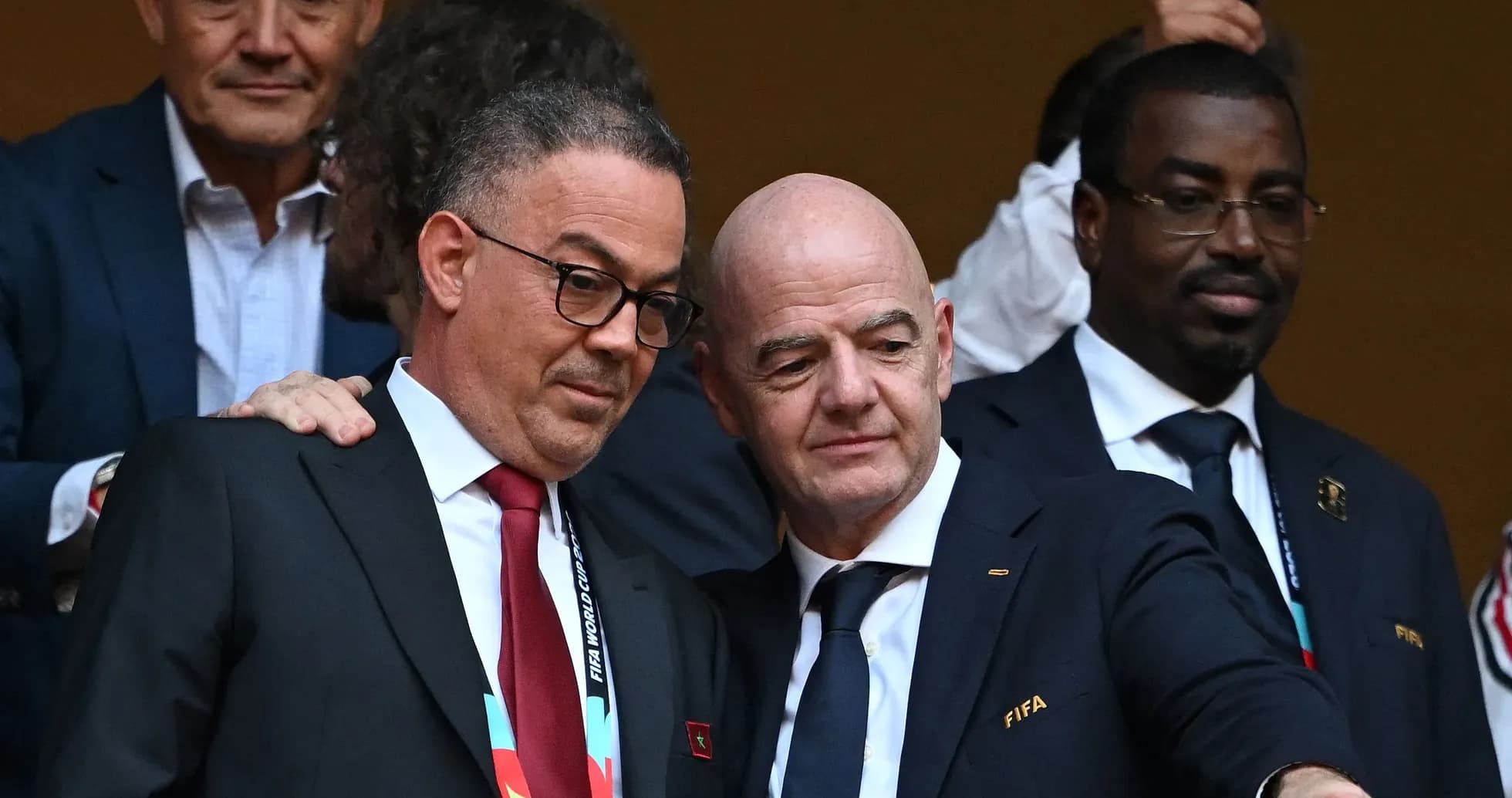
Lekjaa also addressed his support for FIFA president Gianni Infantino, a stance that often draws scrutiny in African football circles.
His explanation is rooted in a broader view of the sport. He backs Infantino, he said, because he believes in football’s power to bring people together, to bridge divides that politics cannot. That does not mean, he stressed, a blank cheque for the way world football is run.
He spoke of the need to strengthen governance, balance, and transparency inside FIFA. Personalities matter less to him than the architecture of the institution. The goal, as he sees it, is a robust system capable of managing competing interests without losing its sense of fairness.
In that sense, his legal fight over AFCON, his push for the 2030 final, and his stance on Infantino all point in the same direction: a game ruled by clear laws, strong institutions and, crucially, the will to enforce both when the stakes are highest.
The next move comes in Lausanne on 8 October. The real question is how far Morocco—and African football with it—is prepared to go once that first verdict arrives.