Flora Pili: From Dublin Defeat to World Champion
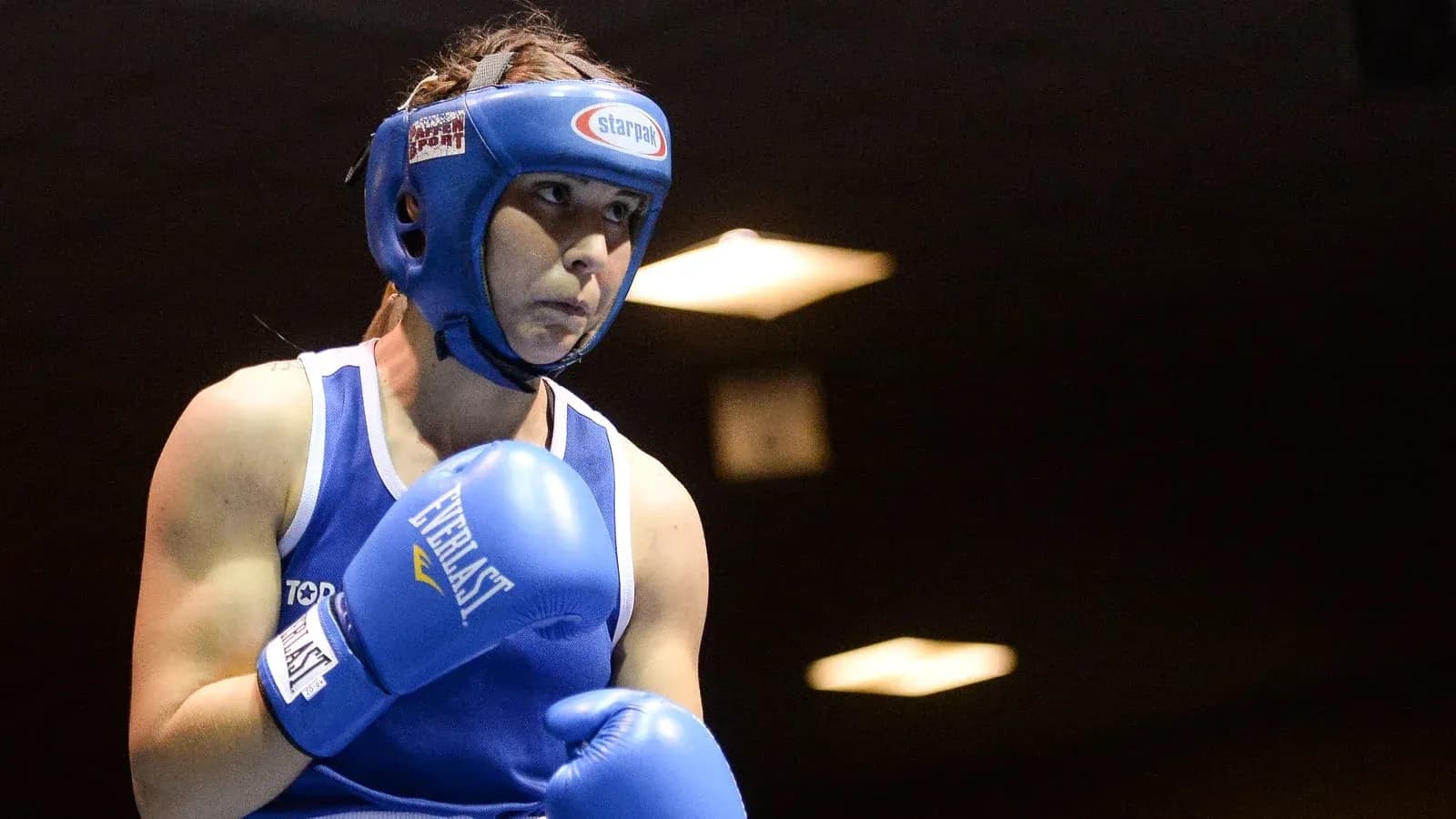
On a damp Dublin week seven years ago, a teenage French visitor slipped almost unnoticed through the doors of the National Boxing Stadium. Her name was misspelled on the bout sheet – “Flora Pile” – and her assignment was brutal: Kellie Harrington, on home canvas, in an International Elite Round Robin.
Harrington beat her 5-0. Then Italy’s Irma Testa, another future Olympic medallist, beat her. Twice.
It was the kind of week that sends some young fighters home for good. For Flora Pili, it became the scar tissue on which a career was built.
From sobering lesson to world title
Pili had pedigree before Dublin ever humbled her. She was French Youth Champion in 2015 and, four years later, climbed to the top of the domestic tree as French Senior National Champion at Super Lightweight in 2019.
Outside France, though, the amateur returns were modest. No Olympic Games. No medals on the big continental stages. Her best European result: a quarter-final exit at the European Under-22 Championships in 2019. Respectable, not remarkable.
So she changed course.
At 21, in late 2019, Pili turned professional. Quietly. No fanfare, no grand declarations. Just a new ledger and a new start.
She has not lost since.
Twelve fights, twelve wins. The venues tell their own story of a career built far from the sport’s glare: mostly small halls and local shows in France, with brief excursions to Rumelange in Luxembourg and Padua in Italy. Her last three outings have all been in Saint-Avold, her hometown in north-east France, close to the German border. Familiar faces, familiar surroundings, steady progress.
In December last year, that low-key rise finally produced a belt that travels. Pili edged Serbia’s Jelena Janicijevic by majority decision to claim the vacant IBO World Super Lightweight title. It was not a result that shook the sport, but it did change her status. From prospect to world champion, at least in name.
Still, in Ireland, she remained a ghost. To anyone outside the most obsessive boxing circles, Flora Pili might as well not have existed. No Olympic backstory, no viral knockouts, not even a Wikipedia page to sketch out the basics.
Then her name appeared in giant letters behind an empty top table at Croke Park.
From anonymity to Croke Park
Reporters filing into the Croke Park press conference in June saw it first: “TAYLOR V PILI” splashed across the backboards. The opponent for Katie Taylor’s homecoming on one of sport’s most storied stages was a fighter most of the room had never written about, never interviewed, barely heard of.
Eddie Hearn reached for history to frame the moment. He recalled that Muhammad Ali had been the last to fight at Croke Park, back in 1972. In that story, Ali’s opponent was Al “Blue” Lewis – the name that lingers mainly in the memories of boxing obsessives and in the footnotes of trivia quizzes.
Pili walks into Dublin this weekend cast in that same role. The outsider. The quiz question. The one you only get right if you really, truly pay attention.
Her own team could scarcely believe the call when it came.
Christian Cherchi, her Italian coach, did not dress it up. They were stunned. This was not just another booking; this was Matchroom, Croke Park, Katie Taylor.
“This is not a boxing fight... it is a historic event,” Cherchi said, recalling the moment they were contacted. “We were in a bit of shock when we received the message – ‘are you interested in fighting Katie Taylor?’
“I didn’t even call Flora to ask. I said, ‘Yes, it will be an honour!’ Because it was a no-brainer.”
The chance was too big to pause over. Too big to risk losing to hesitation.
A legend on one side, a blank slate on the other
If Taylor is the finished novel, read and re-read across a decade, Pili arrives as an unopened book. The Irish icon is a global star, Olympic champion, undisputed world champion, the face of women’s boxing. Pili is the unknown title on the undercard of the sport’s library, her story still largely unread.
At the press conference, Hearn urged her to address the room in French. She did, with Cherchi stepping in as interpreter. No bombast. No trash talk. Just a clear-eyed acceptance of where she stands and what this night means.
“Obviously, yes, I followed Katie Taylor’s career. She’s a legend of women’s sport. I’m coming here with all my team to make a name for myself.”
There it is. The heart of it.
For Taylor, Croke Park is about legacy, about bringing a great career back to where it began, about staging a landmark night in front of her own people. For Flora Pili, it is something far simpler and, in its own way, just as stark: the chance to step out from the shadows of old defeats and forgotten small-hall wins and write her name into boxing’s memory.
She has been here before, in a way – a young French fighter walking into a Dublin ring, facing a home favourite with medals and momentum. The first time, on the South Circular Road, she left with nothing but hard lessons.
This time, under the lights of Croke Park, she walks in as a world champion with everything to gain and a single, towering question in front of her: will Ireland remember her as just another name on Taylor’s record, or as the night the unknown refused to play her part?