England’s New Pace Pack Echoes 2005
Marcus Trescothick has seen this movie before. Back then he was at slip, living every ball as a snarling, fearless pace quartet tore into Australia and dragged the Ashes back to England in 2005. Now, as interim head coach, he stands on the dressing-room balcony and watches another foursome beginning to stir similar memories.
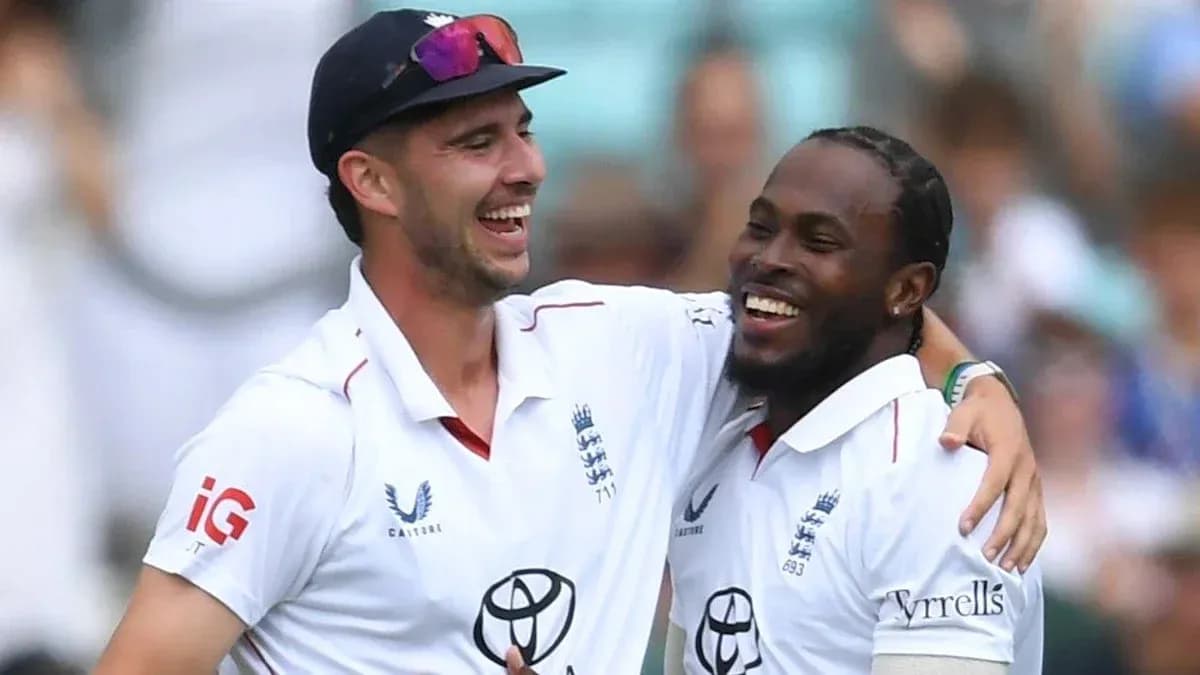
Ollie Robinson, Jofra Archer, Gus Atkinson and Josh Tongue have just bowled England to a series win over Pakistan, halting an ugly run of only two victories in 10 Tests and delivering the country’s first series triumph since 2024. In the aftermath of Ben Stokes’ retirement, when the talk was of voids and imbalance, England have stumbled upon something far more valuable: a fast-bowling unit that looks like a proper attack, not a collection of parts.
Trescothick, who shared a dressing room with Stephen Harmison, Matthew Hoggard, Simon Jones and Andrew Flintoff during that fabled 2005 summer, did not dodge the comparison.
“We do have some real skill, and you look back to 2005 and the sort of comparisons of Harmy, Fred, Simon and Hoggy, you could easily make those sort of comparisons,” he said. It was not nostalgia for nostalgia’s sake. It was a man who knows what a title-winning engine room looks like, recognising familiar shapes.
A Different Kind of Firepower
The context could hardly be more different. Stokes’ retirement as captain closed one of the most dramatic chapters in England’s modern Test history and ushered Joe Root back into the job. It also ripped out the all-rounder who had been the side’s natural balancing act. Without Stokes’ overs, the question was blunt: how do you stack the XI?
For now, England have gone heavy on seam. Four frontline quicks, no specialist spinner, and Dan Lawrence’s part-time off-breaks as a safety net. It is a selection call that would have been unthinkable in some eras. In this one, it feels like a deliberate bet on relentless pace and control.
Archer, Tongue and Atkinson bring the heat. All three can push into the 90s, and Trescothick made no attempt to hide his satisfaction at that kind of raw weaponry. “What we do have is three guys bowling at 92 miles an hour, which is really nice to have in your armoury and to have the potency in what you're trying to do,” he said.
Then there is Robinson, the outlier in speed, the metronome in a world of thunderbolts. Often operating below 80mph with the wicketkeeper standing up, he has quietly become the summer’s most ruthless operator. Accuracy, subtle movement, unerring discipline: 23 wickets at an astonishing average of 8.3 tells its own story. Where the Stokes–Brendon McCullum era leaned heavily into raw pace, Robinson’s recall after more than two years out of Test cricket has rounded out the attack, giving England a different angle of attack and a different kind of menace.
“We've got a good contrast in what we're trying to do at the moment,” Trescothick said. The contrast is the point. One bowler hurries you, another needles away at a length, another bangs it in from awkward height. It is not just about speed guns; it is about asking a new question every over.
The Shadow of 2005 – and the Ashes Carrot
Mention 2005 to any England fan and the images come flooding back: Harmison’s opening over at Lord’s, Jones hooping it at Trent Bridge, Flintoff at Edgbaston with ball and bat, Hoggard nibbling away in the gloom. That quartet did not just take wickets; they changed the mood of a nation.
Michael Vaughan, the captain who marshalled that attack, knows better than anyone how high that bar sits. Writing on Monday, he drew a firm line in the sand: this current group, he said, can only be compared with his bowlers when they win a major series. Romantic parallels are one thing; legacy is another.
But Vaughan did not dismiss them. Far from it. He believes they are “certainly capable of doing something really special, and winning back the Ashes for England next summer.” That is the prize now being dangled in front of Robinson, Archer, Atkinson and Tongue. Not just dismantling Pakistan at home, but taking down Australia when the urn is on the line.
The noise around them will only grow if they keep hunting in a pack like this.
Trescothick’s Brief, Ruthless Mandate
For Trescothick, this is a curious interlude. He is the caretaker, the man in charge for this series before Stephen Fleming takes over in the winter. Yet his fingerprints are already on an important shift: from drift and uncertainty to back-to-back wins and a clear plan with the ball.
England now head to Edgbaston for the third Test, starting on 9 September, with a 3-0 sweep in their sights. The squad for Birmingham will be named in the coming days, and the temptation to rotate is obvious. Seven pace bowlers were in the group at Lord’s. One of them, Brydon Carse, has been removed from consideration after an incident outside a nightclub in Derby, with no expectation he will be picked again until police and the Cricket Regulator have completed their investigations.
Behind the frontline four sit Sam Cook, Sonny Baker and Matthew Fisher. Between them, they own just four Test caps. They represent promise, not yet trust.
Trescothick sounded in no mood for experimentation. “First and foremost I want to win the series 3-0, and I think if you're going to do that you want to play the most consistent team possible,” he said. That is the coach talking like an opener again: bank your runs, take no unnecessary risks, finish the job.
The schedule has been unforgiving. England’s quicks finally have four or five days to let bodies heal and minds clear before Edgbaston. Only when the medical reports land will Trescothick know how hard he can push them again. But he left no doubt about the priority. “Once we know that then we'll be able to make that decision, but emphasis massively on winning the series 3-0.”
The comparisons to 2005 will keep coming if this attack keeps knocking teams over. The real question is whether this is just a bright summer cameo, or the start of another era-defining pace cartel with an Ashes mission of its own.