England’s New Pace Cartel: Echoes of 2005
England’s new pace cartel is starting to sound familiar. Not just to opposition batters, but to one man who lived through the gold standard.
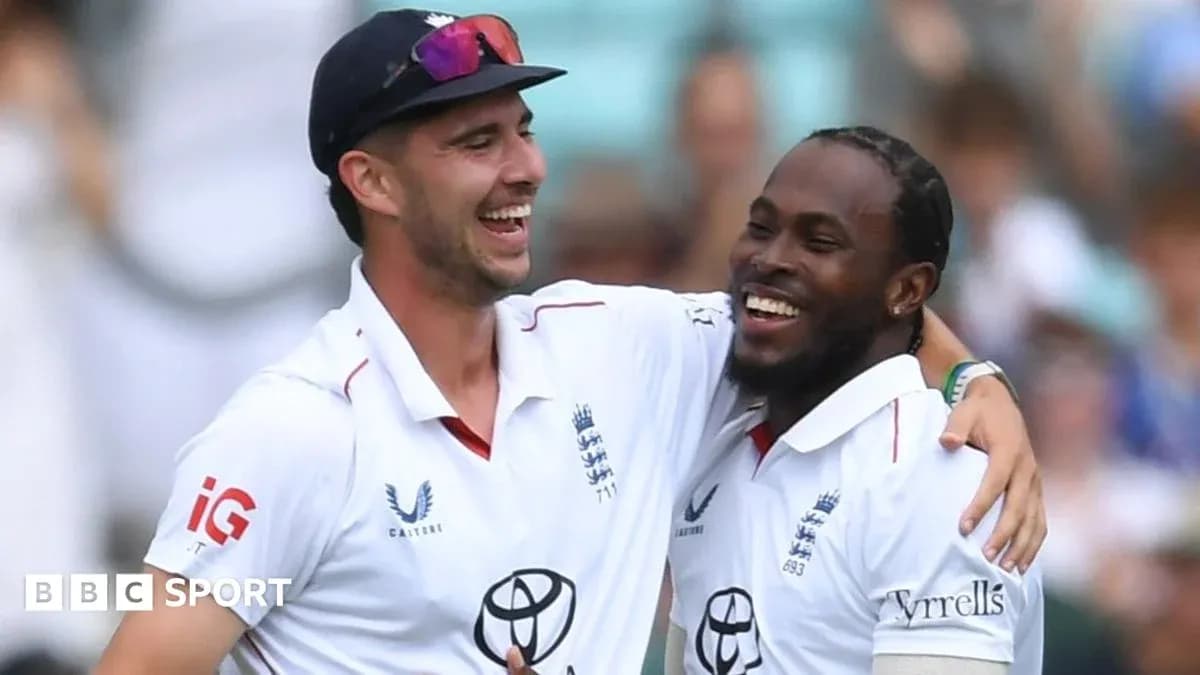
Marcus Trescothick, interim head coach and veteran of 2005, sees echoes of the Ashes-winning quartet that terrorised Australia in the current attack of Ollie Robinson, Jofra Archer, Gus Atkinson and Josh Tongue.
He was in the dressing room when Stephen Harmison, Matthew Hoggard, Simon Jones and Andrew Flintoff ripped through Ricky Ponting’s side and dragged the urn back to England. Now he is the man overseeing a very different era, yet one that suddenly feels charged with the same kind of fast-bowling menace.
“We do have some real skill,” Trescothick said, drawing the line between past and present. “You look back to 2005 and the sort of comparisons of Harmy, Fred, Simon and Hoggy, you could easily make those sort of comparisons.”
It is not just nostalgia talking. This new foursome has already bowled England to a series win over Pakistan, stitching together back-to-back victories to end an ugly run of only two wins in 10 Tests. It is England’s first series success since 2024, and it has arrived in the immediate aftermath of Ben Stokes’ retirement and the end of his turbulent reign as captain.
Root returns, balance restored
Stokes’ exit forced England into a rethink. Joe Root stepped back into the captaincy, but the bigger question sat on the team sheet: how do you balance an XI without the all-rounder who held everything together?
For now, the solution is unapologetically seam-heavy. Four frontline quicks, no specialist spinner. Dan Lawrence provides part-time off-breaks if conditions demand it, yet the plan is clear – let the quicks decide matches.
Under Stokes and former head coach Brendon McCullum, raw pace often trumped everything. The radar could wander as long as the speed gun flickered. This version of England looks different. Archer, Tongue and Atkinson still bring the heat, but Robinson’s recall after more than two years out of Test cricket has reshaped the attack.
He rarely touches 80mph. The wicketkeeper often stands up. There is no snarl of 92mph bouncers, just relentless accuracy and subtle movement. It has been devastating. Robinson has taken 23 wickets this summer at an astonishing average of 8.3, turning supposed support spells into match-defining bursts.
“We’ve got a good contrast in what we’re trying to do at the moment,” Trescothick said. “What we do have is three guys bowling at 92 miles an hour, which is really nice to have in your armoury and to have the potency in what you’re trying to do.
“And the more that they play together and the more experience that everyone gets together, then it fits into place to how you want it to be.”
The pressure finally told against Pakistan. Different angles, different speeds, different questions every over. It is exactly what that 2005 group brought: Harmison’s hostility, Hoggard’s swing, Jones’ reverse, Flintoff’s heavy length. This time, it is Archer’s intimidation, Atkinson’s energy, Tongue’s aggression and Robinson’s control.
Vaughan’s challenge
The comparisons, though, come with a warning from the man who captained that legendary side.
Writing in the Telegraph, Michael Vaughan argued that this current crop can only truly be measured against 2005 once they win a major series of their own. The bar is high, and rightly so.
But he also left the door wide open for them.
“They are certainly capable of doing something really special, and winning back the Ashes for England next summer,” Vaughan wrote.
That is the tantalising prospect. A home Ashes on the horizon, a fresh fast-bowling group already delivering series wins, and a coach who has felt what it is like when the country tilts towards its quicks.
Clean sweep on the line
Before any Ashes talk gathers real pace, there is immediate business. England head to Edgbaston on 9 September, chasing a 3-0 clean sweep over Pakistan. The squad for Birmingham will be named in the coming days, with Trescothick weighing up whether to stick or twist.
At Lord’s, England carried seven pace bowlers. Brydon Carse was initially part of that group before being removed following an incident outside a nightclub in Derby. He is not expected to be considered again until police and the Cricket Regulator conclude their investigations.
In his absence, Sam Cook, Sonny Baker and Matthew Fisher stand as the reserve seamers. Between them, they have only four Test caps. Temptation lingers: give one or two a run in a dead rubber, build depth, look to the future.
Trescothick does not sound in the mood for experiments.
“First and foremost I want to win the series 3-0, and I think if you’re going to do that you want to play the most consistent team possible,” said the 50-year-old.
The schedule has been unforgiving. England’s quicks now have four or five days of rest, a rare breather after a congested period. Their bodies will dictate how bold Trescothick can be.
“We’ve got to see how they all pull up from this game,” he said. “Once we know that then we’ll be able to make that decision, but emphasis massively on winning the series 3-0.”
So the equation is simple. Protect the bowlers, but trust them. Keep the unit together, let the rhythm build, and chase the sweep.
If this really is the beginning of another great English pace era, Edgbaston is not a place to ease off. It is a place to hammer the point home.