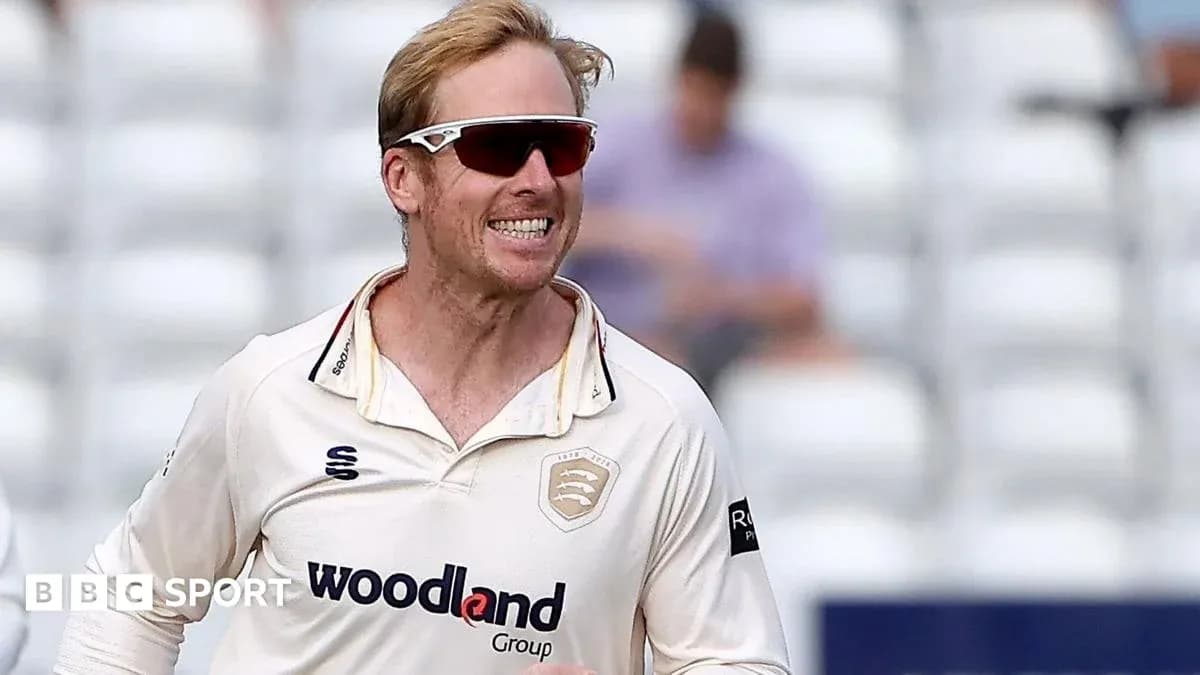
Dean Elgar's Farewell Hundred Leads Essex's Charge Against Surrey
Dean Elgar walked into Chelmsford knowing the finish line is in sight. He batted as if he had no intention of going quietly.
On the eve of his 280th first-class appearance, the 39-year-old had confirmed this would be his final season. A day later, he produced a defiant, old‑fashioned hundred that dragged Essex into control and left relegation-threatened Surrey staring at trouble.
By stumps on day two, Essex’s 279 all out had been sharpened by a ruthless burst with the ball. Surrey, already dismissed for 183 in the first innings, staggered to 51-4 in their second, still 45 runs behind and clinging on.
Elgar’s farewell statement
This has not been a vintage summer for Elgar. By his own standards, he has scratched rather than strutted, passing fifty only three times before this innings – and twice of those against Surrey. But this was the Elgar of his prime.
The nervy, fidgety left-hander who had been peppered by Dan Worrall in fading light on day one disappeared with the new morning. As the pitch eased from its mischievous opening-day behaviour, Elgar settled, then imposed.
He took 191 balls to reach 113, a pugnacious, stubborn, utterly characteristic effort. Along the way he moved beyond 19,000 career red-ball runs, a landmark that tells its own story. The shots were not extravagant, but they were sure. He threaded 14 fours, picked his moments, and when Worrall dropped short, Elgar rocked back and short-armed a pull for a low, skidding six that briefly silenced Surrey’s spearhead.
At the other end, Tom Westley looked a different player from the man battered the previous evening. The pair added 47 for the second wicket, Westley easing into his work before falling lbw to Worrall after a long, considered decision that suggested the ball might just have brushed leg stump.
Charlie Allison then settled into a quieter supporting role. He was compact, selective – until Lawes offered width. A crisp drive through the covers for four was followed next ball by a muscular pull for six over midwicket, a sudden injection of tempo that lifted Essex and drained Surrey.
The partnership between Elgar and Allison was the backbone of the innings: 111 runs across 29 overs, control and accumulation rather than chaos. It took a sharp piece of work to break it. Allison, on 49, pushed at Rahul Chahar and offered a chest-high chance to second slip. Chahar had his first wicket. Surrey finally had a crack.
Elgar kept going. He reached fifty with a glide down to third man off Matt Fisher, the sort of nudged boundary that has littered his career. Three figures came with his 12th four, punishing what amounted to a spinner’s long hop from Chahar through midwicket. It was a classic Elgar hundred: no fuss, no theatrics, just weight and will.
His end, when it came, felt almost gentle by comparison. Looking to repeat the treatment against Surrey’s other spinner Mahipal Lomror, he tried to work the ball through the leg side and instead chipped a simple catch to short midwicket. Four hours and a quarter at the crease, 113 runs, 14 fours and that one six. A farewell statement, not a farewell lap.
Chahar cuts Essex down to size
Elgar’s dismissal at 218-3 should have been a platform for Essex to bat Surrey out of the contest. Instead, it opened the door to a collapse that briefly shifted the mood.
Six balls after Elgar walked off, Matt Critchley followed, cramped by Tom Lawes and undone by the angle. From there, Chahar took over.
The Indian leg-spinner, who had already prised out Allison, began to dismantle the lower order with skill and nerve. Michael Pepper edged to slip. Two balls later, Zaman Akhter drove loosely to wide mid-on. Either side of tea, the pattern repeated.
Simon Harmer cut straight to point. Jamie Porter nicked behind. Sam Cook’s off stump was rattled. Essex tumbled from 218-3 to 279 all out, the last seven wickets costing just 61 runs. Chahar finished with 6-80, the ninth five-wicket haul of his career, a performance that kept Surrey’s deficit to 96 and prevented the game from racing completely out of their reach.
For a moment, that felt like a small victory for Surrey. It did not last.
Surrey slide again
Any satisfaction Chahar and Surrey might have taken from limiting the lead evaporated once their top order walked back out.
Harmer, who had watched Chahar spin through his teammates, responded with venom. Dom Sibley, usually so secure, pushed forward and popped a catch to short leg. Rory Burns, trying to sweep, misjudged and was trapped lbw. Two senior men, gone early. The mood darkened.
The pressure tightened. Ollie Pope, Surrey’s marquee batter and the man they needed to anchor the resistance, tried to force the issue. Instead, he offered a leading edge back to Cook, who accepted the return catch and roared away. On a day of retirements and revivals, it felt like a gut punch.
Surrey’s problems deepened with the final act of the evening. To the last ball of the day, Fisher edged into the slips, where Shane Snater completed the catch. Surrey closed on 51-4, the scoreline as stark as the situation.
Heavyweights fighting at the wrong end
For much of the last decade, Essex and Surrey have traded blows at the top of Division One, six titles between them, often defining the shape of an English summer. This season has been different. Both have stumbled, both have spent more time glancing down the table than up it.
Yet this match still carries the feel of a heavyweight contest – only now the stakes are survival, not supremacy.
Essex, with Elgar’s farewell hundred in the bank and their bowlers prowling, hold the advantage. Surrey, once again leaning on their depth and reputation, must find a response from somewhere.
If they do not, a season that began with title talk could end with a very different kind of reckoning.