Daniil Medvedev's Fiery Performance at the Vienna Open
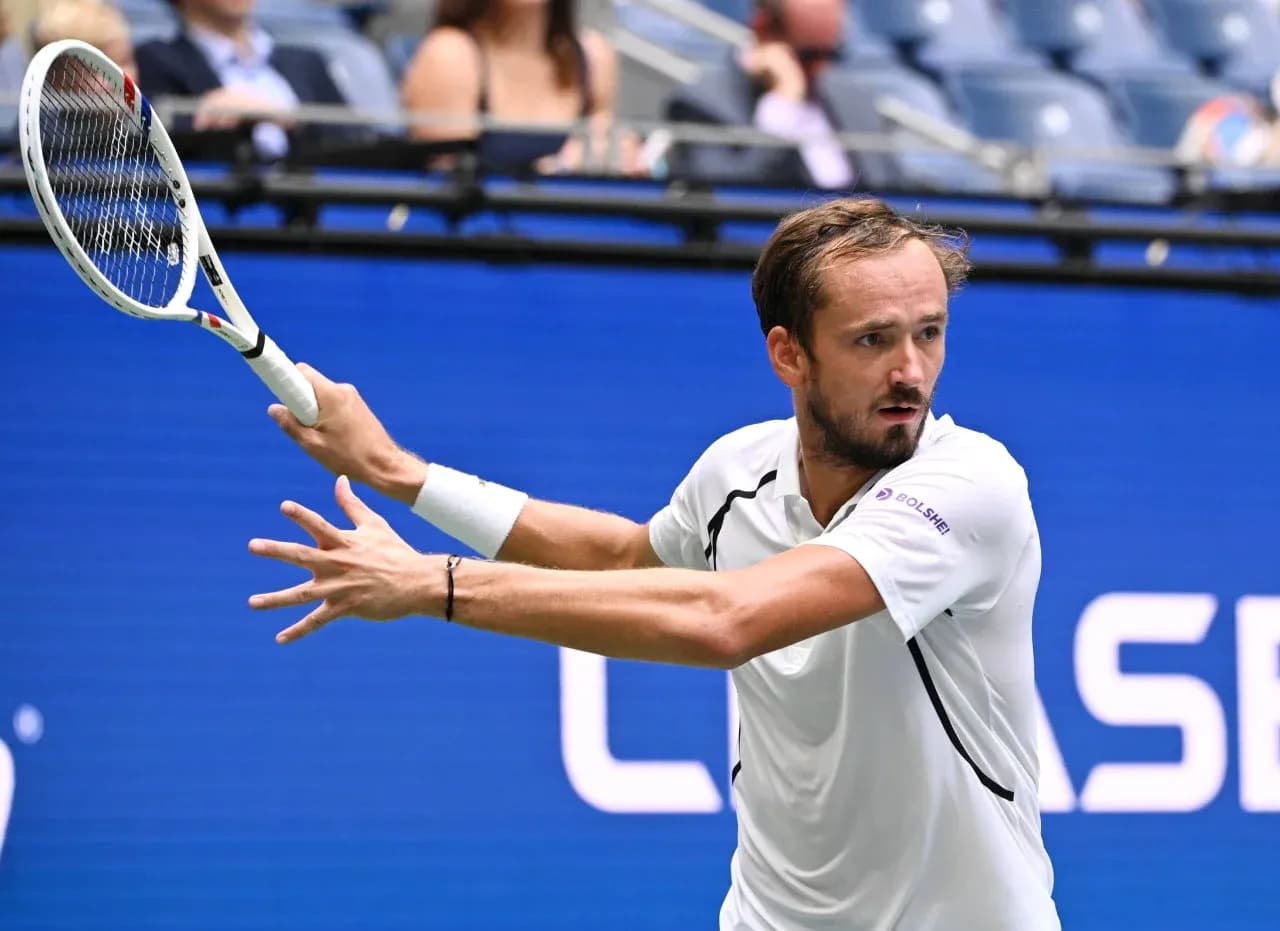
Daniil Medvedev has never hidden his temper from a tennis court. Usually, it’s the racket that pays. In Vienna, it was his own hand.
Midway through a fraught third set against Cameron Norrie at the Vienna Open, the former World No. 1 turned his frustration inward, hammering his fist into the court during a changeover and firing a sharp, sarcastic shot at the ATP in the process.
“If you hurt yourself, at least you don’t get the fine,” Medvedev was heard saying. “The ATP likes it when people get hurt.”
It was a barbed line delivered at 0-2 down in the decider, the Russian visibly boiling as a match he had struggled to control threatened to slip away. No racket smash this time. No splintered graphite. Just bare knuckles and a hard surface.
A temper finds a new target
Racket destruction has long been part of tennis’ darker theatre, and Medvedev has often been cast in a leading role. His meltdown in Monte-Carlo this year, after a brutal 6-0, 6-0 defeat, ended with his racket reduced to wreckage.
That sort of scene now comes at a cost. With racket-smash incidents piling up across the tour, the ATP has tightened its racket-abuse regulations. Umpires can escalate from a warning to point and game penalties, and once the match is over, the bills arrive.
A basic racket smash typically draws fines in the $5,000–$10,000 range. Damage the court, the net, or, worse, put ball kids, officials, or fans at risk, and the numbers climb quickly.
Medvedev knows those rules all too well. He has become one of the more frequent visitors to the ATP’s disciplinary ledger. At the China Open, he was fined his entire tournament earnings after being defaulted from his semifinal against Novak Djokovic for accidentally hitting a fan with a ball.
So players have started finding a loophole of sorts. If the racket is sacred, the body becomes the outlet.
Andrey Rublev, Medvedev’s compatriot and close friend, has often been seen smashing his racket into his own legs, sometimes hard enough to draw blood. In Hangzhou, during a match against Hugo Gaston, Rublev punched the advertising boards so fiercely that his hands began to bleed, yet he played on and won.
In Vienna, Medvedev followed a similar path. Instead of risking another fine, he pounded his fist into the court, vented his anger, then somehow turned all that fury into focus.
From the brink to the quarterfinals
For a while, it looked like the outburst would be the defining moment of his night. Norrie had him pinned. Medvedev trailed 0-3 in the deciding set, his game misfiring, his patience stretched.
He clawed back to 3-3, only to falter again. Another dropped service game, and suddenly Norrie stood at 5-3, serving for the match and holding match point. The arena felt the shift. Medvedev, again, was one point from the exit.
That’s where his pedigree kicked in.
Under pressure, he dug in, saved the match point, and broke Norrie’s serve to drag himself back from the edge. The tension eased, but only slightly. Both men held serve to force a tiebreak, the kind of narrow corridor where big reputations can either shrink or harden.
Medvedev’s hardened.
The former US Open champion controlled the breaker from the first point, using his experience and precision to suffocate Norrie’s resistance. He raced through it 7-1, completing a comeback that had looked unlikely when he was punching the court in despair.
From 0-3 down in the third and a match point against him, he walked off a winner and into the quarterfinals.
Mannarino next, Turin in sight
Waiting for him there is Adrian Mannarino, a player whose unorthodox left-handed game has often bothered opponents and who knows Medvedev’s patterns well. Their head-to-head is tight: Medvedev leads 5-4, but he has taken five of their last six encounters.
Form is on the Russian’s side. He has collected two titles and reached two semifinals in his last four events, a surge that has solidified his status near the top of the game again. He sits at World No. 5 with 3,760 points and holds fifth place in the Race to Turin.
A deep run in Vienna would all but lock in his spot at the ATP Finals in November, the stage where his flat, relentless baseline game has so often translated into hard, indoor success.
The question now is simple: can he keep channelling that fire into his tennis, rather than into the court beneath his feet?