Dana White's Strategy in Boxing: Targeting Ryan Garcia and David Benavidez
Dana White isn’t just dabbling in boxing. He’s laying siege to it.
With Ryan Garcia and David Benavidez each one fight from free agency, Zuffa Boxing and TKO have quietly built a corridor straight to two of the most valuable names in the sport. The route hasn’t been direct. It’s run through Conor Benn and Jai Opetaia — two fighters sold as centerpieces, but in truth, deployed as weapons.
Garcia’s wandering eye
The fracture between Ryan Garcia and Oscar De La Hoya is no secret. It’s been hairline for years, widening with every disagreement, every lawsuit, every public jab. Garcia has long looked over the fence at other promoters, searching for someone who would not just cash his name, but crown it.
He got his first real taste in April 2023.
The Gervonta “Tank” Davis fight, promoted by PBC on Showtime, was a monster. 1.2 million pay-per-view buys. A $22.8 million gate. A full-scale, big-league rollout that made Garcia feel like the star he believes he is. When the dust settled, he sued Golden Boy in an attempt to break free.
He failed then. But the clock kept ticking.
Now there’s only one fight left on his Golden Boy deal. The landscape looks very different, and Zuffa has made sure of it.
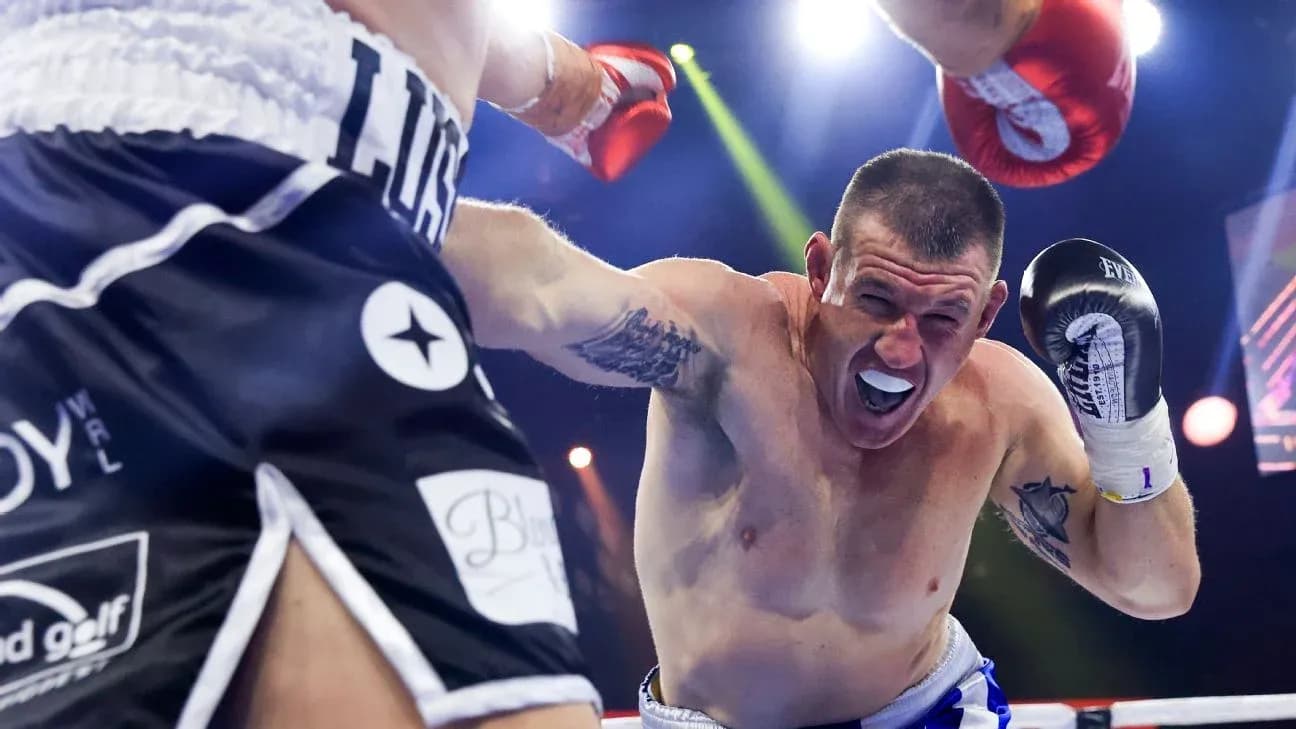
TKO and Zuffa paid Conor Benn more than $30 million across two fights, a staggering figure that made headlines on its own. But the money wasn’t just for Benn. It was for proximity to Garcia. Their fight became another mega-event, slickly promoted, heavily pushed, and perfectly framed to make Garcia feel, once more, like the center of the boxing universe.
Garcia has said he loved working with Dana White’s Zuffa. On Monday, speaking to Uncrowned, he made that clear again. The timing could not be better for Zuffa. This is the sales pitch before the contract expires, and it’s being delivered in high definition.
The Garcia-Benn event told its own story. Officially, it was a Ring Magazine-funded show. In reality, to anyone following the build-up or watching on Paramount+, it looked and felt like a TKO/Zuffa production. Dana White fronted it like a classic fight promoter, talking, pushing, selling — not just the fight, but the idea of Ryan Garcia as a Zuffa fighter.
Oscar De La Hoya? Invisible. No presence in the build-up, no face at ringside, no role on fight night. That wasn’t an oversight. It was strategy. Public perception now ties Garcia to Zuffa and Paramount+. The groundwork has been laid. Zuffa is already showing Garcia — and the wider audience — what his career could look like under its full control.
Breaking Eddie Hearn’s heart
Conor Benn’s role goes deeper than one big fight. His signature was a direct shot at Eddie Hearn and Matchroom, and it landed flush.
Benn wasn’t just another name on Hearn’s books. Alongside Katie Taylor and Anthony Joshua, he was one of Matchroom’s homegrown pillars — a fighter who debuted under Hearn, who he defended fiercely through multiple failed drug tests for clomiphene, and who many assumed would never walk away.
When Benn did, the message reverberated through the industry: nobody is untouchable. If Benn can leave, anyone can. Every fighter under Hearn, or any rival promoter, is now fair game. If the old guard can’t match the money or the vision, they risk watching their stars cross the aisle.
Bob Arum once warned: “Don’t fall in love with your fighters because they will break your heart.” Hearn just lived that lesson. De La Hoya has lived it. Arum learned it decades ago. It’s harsh, but it’s how this business works.
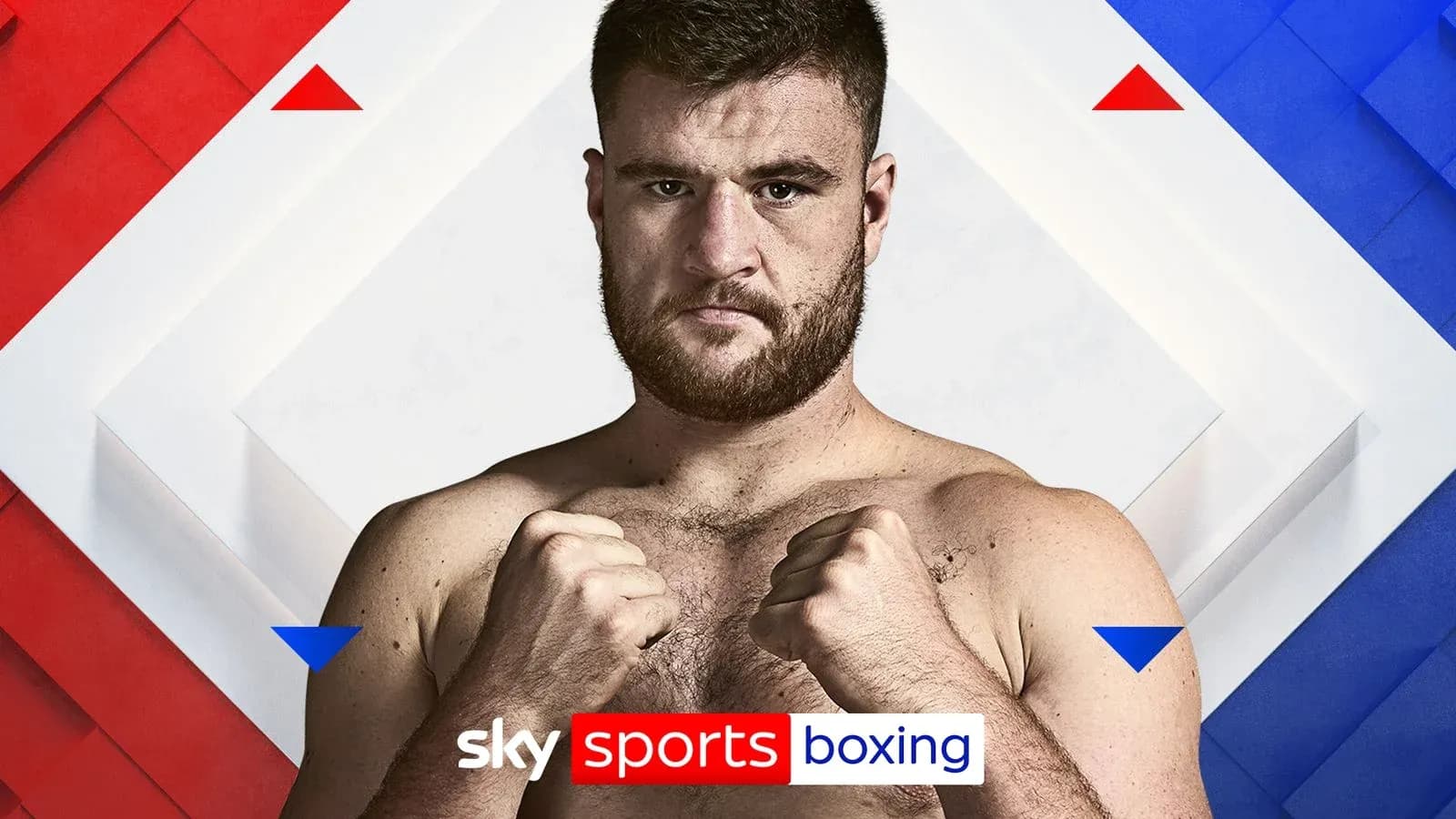
Benn’s value to Zuffa extends beyond the personal blow to Hearn. He’s a major star in UK boxing, and his arrival helped Zuffa lock down a lucrative UK television deal with Sky Sports, expanding its footprint in one of the sport’s most important markets.
That was one flank secured. The other came in the co-feature.
Opetaia, Benavidez and the next move
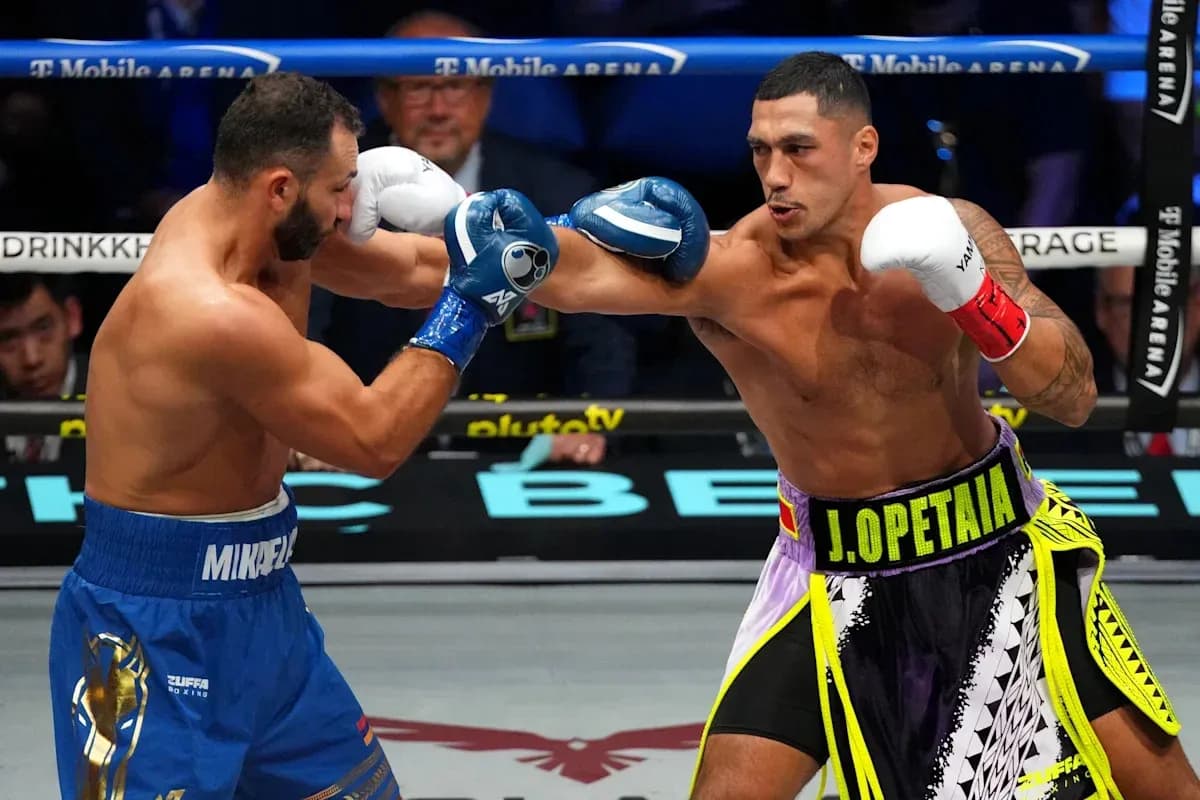
On the Garcia-Benn undercard, Jai Opetaia did his part. He broke down Noel Mikaelian and stopped him in nine rounds, then wasted no time calling out David Benavidez. Benavidez, seated at ringside, stepped into the ring for a face-off that felt less like a spontaneous moment and more like a carefully staged preview.
Benavidez has just one fight remaining with PBC and promoter Sampson Lewkowicz. Dana White has made it plain: “The Mexican Monster” is on his hit list.
Benavidez’s career has been a study in frustration and ambition. At 168 pounds, he became the most proven contender without securing the fight he wanted most — Saul “Canelo” Alvarez. He moved up to 175, chased the elite in Dmitry Bivol and Artur Beterbiev, and again saw those doors stay shut. Now he’s at cruiserweight, with a clear path to the division’s top man.
That top man is Opetaia.
Benavidez has already shown he’s a legacy fighter. He doesn’t cherry-pick. He hunts the best, he chases danger, he leans into the matchups people say he can’t win. Offer him Oleksandr Usyk at heavyweight and you get the sense he’d nod and sign. That’s his nature.
Zuffa knows that. It has Opetaia, it has money, and it has a potential showcase ready-made. The carrot is dangling.
Garcia and Benavidez have already talked about sharing a card next May. If Zuffa can land Garcia once he hits free agency, it immediately strengthens its hand with Benavidez. Even a one-fight deal might be enough — one night under the Zuffa banner to show Benavidez the scale, the reach, the financial upside of switching teams. Garcia has already had that glimpse. The effect is obvious.
Opetaia vs the belts
Jai Opetaia isn’t just bait for Benavidez. He’s also a battering ram in Zuffa’s long, simmering conflict with boxing’s sanctioning bodies.
Dana White’s war on the alphabet organizations has quieted publicly as Zuffa has done more business with the IBF, WBC, WBA and WBO. But the endgame hasn’t shifted. The goal is still to challenge their power, their fees, their grip on legitimacy.
Opetaia has been blunt about his ambition: he wants every belt, undisputed status, the full set. The sanctioning bodies have not exactly rolled out a red carpet. The IBF stripped him in March. On Saturday, he beat WBC champion Noel Mikaelian, only for that belt to be declared vacant within 48 hours.
To the public, it looks absurd. The consensus best cruiserweight in the world, and he’s standing there without a recognized world title. The IBF and WBC have a lot of explaining to do.
Opetaia has done more than complain. After the IBF stripped him, he filed a lawsuit accusing the organization of unlawfully taking his title in retaliation for his decision to sign with Zuffa. That turns him from a victim of the system into a direct legal challenge to it.
For Zuffa, Opetaia is no longer just a world-class fighter. He’s a case study and a vehicle — proof of what’s broken, and a means to attack it from the inside.
The endgame: post-Canelo America
Conor Benn and Jai Opetaia were huge signings, but they were never the final objective. Benn gave Zuffa a bridge to Garcia and a chance to humiliate Hearn. Opetaia opened a lane to Benavidez and a platform to confront the sanctioning bodies.
The real prize sits just over the horizon.
Ryan Garcia and David Benavidez are poised to become the two defining American faces in the post-Canelo era. Zuffa hasn’t secured either man yet. Their contracts still belong elsewhere. But before free agency has even officially begun, Dana White has moved the pieces into place.
The board is set. The money is there. The platform is proven.
TKO’s war on boxing is still in its opening phases. The question now is simple: when the bell rings on Garcia’s and Benavidez’s freedom, which corner will they walk to?