Coco Gauff's Remarkable Serve Transformation at US Open 2023
Twelve months ago, Coco Gauff stood alone in the rain on the US Open practice courts, serving into the grey. No crowd, no roar, just a young star wrestling with a shot that had turned on her at the worst possible time.
That image summed up her 2023: a two-time major champion in everything but paperwork, betrayed by the yips on the one stroke she needed most.
On Tuesday in New York, the picture changed.
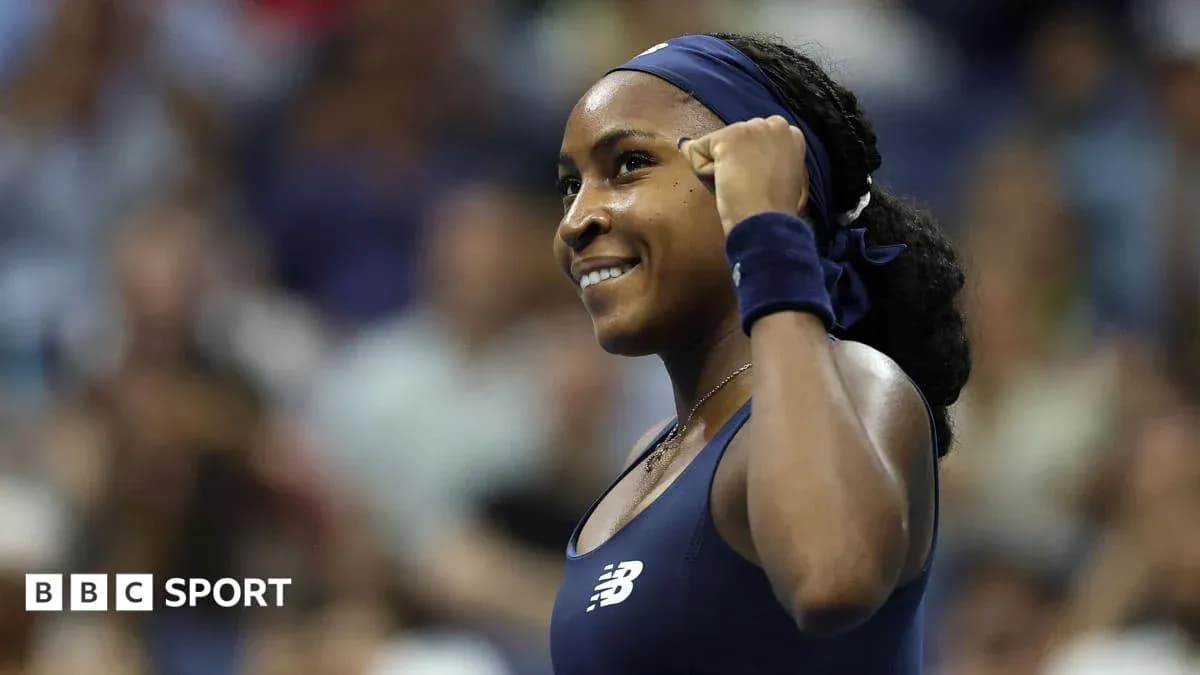
Gauff walked onto court for her first-round match against Turkey’s Zeynep Sonmez with a very different weapon in her hands. The serve that once made her flinch now anchored a 6-3 6-4 win and set an unmistakable tone for her US Open campaign.
She opened with a statement: a hold to love in under 90 seconds. A 112mph ace down the middle, an unreturned first serve, another ace. Game over almost before Sonmez had settled into her return stance. The message was blunt. This is not last year’s Coco Gauff.
“Now it’s like I can look back a year on and think, ‘Oh, wow, it’s a big difference’,” said the fourth seed, who sounded as relieved as she did satisfied. “It feels good to come into a tournament feeling confident on that shot finally.”
That confidence has been hard-earned. On the eve of this event last year, Gauff made a ruthless call and reshaped her coaching team, bringing in biomechanics specialist Gavin MacMillan, the same expert who helped Aryna Sabalenka tame her own serving demons.
It was a bold move, bordering on brutal timing. She arrived at her home Slam under a spotlight that never really dims, having just sprayed double faults across the Cincinnati Open. To then tinker with technique in New York, of all places, invited scrutiny and risk in equal measure.
The gamble bit back. Gauff looked tense throughout the 2023 tournament, exited in the fourth round and at times was reduced to tears on court. Every toss, every second serve, felt like an examination.
“Obviously last year I knew all the eyes were going to be on the serve,” she admitted. “Gavin is so great at what he does, I felt a lot of pressure to kind of prove that. It didn’t really show within the first two weeks, which is normal.”
Normal, perhaps. But brutal in real time.
The work has continued away from the cameras. MacMillan simplified the moving parts: a steadier toss, no longer drifting too far in front; a straighter wrist; a cleaner, more repeatable motion. The result is not perfection—she still throws in the occasional double fault—but a serve that now feels like a weapon rather than a liability.
The evidence surfaced earlier this month in Cincinnati, where that rebuilt delivery helped drive her to the title. Data from the tournament showed Gauff landing serves closer to the lines while still maintaining her trademark pace. Accuracy up, speed intact. That’s the holy grail for a modern power server.
Against Sonmez, those gains were obvious from the first ball. In the opening set, whenever Gauff landed a first serve, the point almost felt over. She won 93% of those points, suffocating any hope the world number four’s opponent had of establishing a rhythm.
The pressure told quickly. Gauff broke, controlled the baseline, and pocketed the first set with minimal fuss. The serve didn’t just win her points; it freed up the rest of her game, allowing her to swing with authority on the return and in rallies.
Second Set
The second set brought a test she might have failed a year ago.
Gauff broke for 1-0 but her level dipped just enough to invite Sonmez in. The Turk clawed back to 2-2 and then, suddenly, held three break points for a 4-2 lead. The match hung there, on the edge of a momentum swing.
Twelve months back, this is where the doubts would have crept in. Tosses would have shortened, arms tightened, double faults crept onto the scoreboard.
This time, Gauff reached for the shot that used to scare her.
She fired a precise ace out wide. Then a 115mph first serve that never came back. The danger evaporated. The hold was more than just a game on the scoreboard; it was a line drawn under the past.
That gritty hold at 2-3 became the hinge of the match. Gauff broke immediately for 4-3, the return game suddenly energised, and closed the door with a final show of serving authority.
Serving for the match, she uncorked a trio of unreturned first serves, each just shy of 120mph, to bring up three match points. Sonmez cracked on the first after a brief rally, and Gauff walked to the net with the kind of calm that comes only when you trust your foundation.
“Psychologically, I’m now going to go for the ace, or I know I can hit the serve and the return is probably not going to come back,” she said. “Last year I literally was like I hope I make it in. It’s such a big difference knowing almost every serve I’m trying to basically hit 110, 115, 120mph if I can.”
That shift—from hoping it lands to daring it to fly—is the real story of her opening win.
The serve will be tested again in the next round, where Gauff faces either Spain’s Paula Badosa or Australia’s Daria Kastakina. Different styles, different puzzles, but the same central question: can the stroke that once drove her into the rain now carry her deep into the New York night?